



Dubai and the wider UAE have continued to refine their visa and residency system, with changes affecting tourists, property owners, Golden Visa holders and people travelling across the Gulf.
Some of the developments below were introduced during 2026, while others were launched earlier and remain particularly important this year. The distinction matters: not every rule being discussed as a “2026 visa change” actually began in 2026.
1) Six more nationalities can qualify for UAE visa-on-arrival
©Photo edited by Canva.com
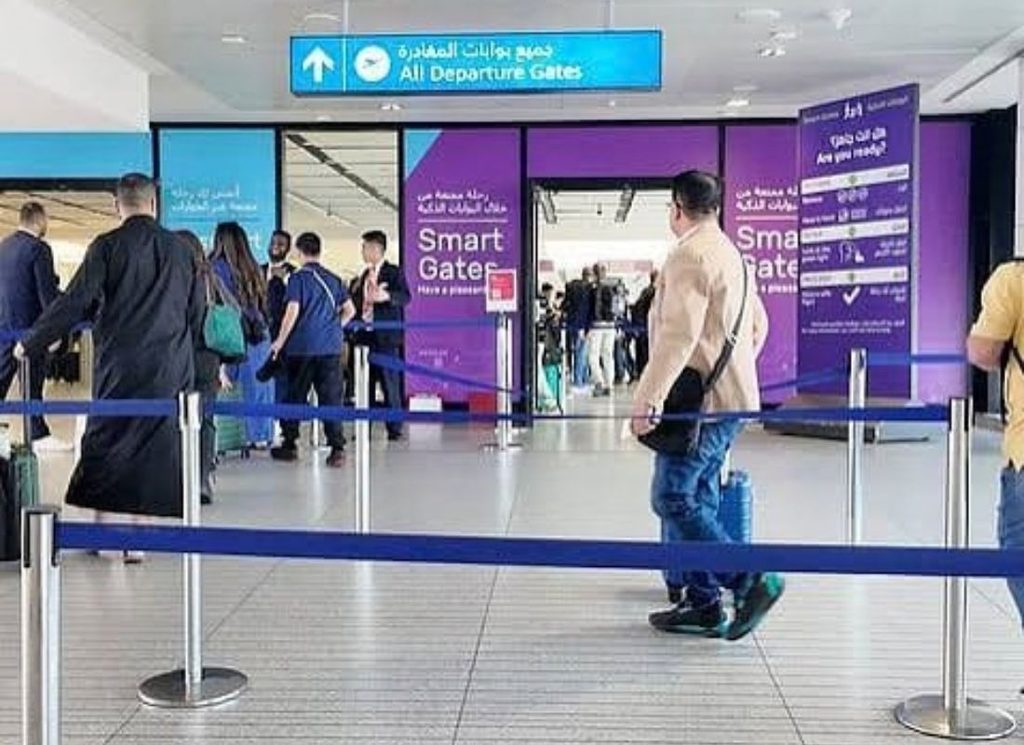
The UAE expanded its visa-on-arrival eligibility in June to nationals of Indonesia, Vietnam, Thailand, the Philippines, Kenya and South Africa, alongside Indian nationals who were already covered by the relevant scheme.
However, this does not mean every passport holder from those six countries automatically qualifies.
The facility applies to ordinary passport holders and eligible accompanying family members who meet specific overseas visa or residency requirements. Depending on the qualifying document, this includes people holding valid visas, residence permits or US Green Cards from specified countries and regions such as the US, UK and EU, as well as qualifying residence permits from Canada, Australia, New Zealand, Japan, South Korea and Singapore.
Eligible travellers can obtain either a 14-day or 60-day entry visa. The 14-day option can be extended once, while the 60-day visa is single-entry and non-extendable.
Applies to: Eligible nationals of six newly added countries plus existing eligible Indian nationals | Destination: UAE
2) Dubai tourist visas have a 48-hour processing target
Dubai’s GDRFA currently lists an expected completion time of 48 hours for both 30-day and 60-day single-entry tourist visas once the application requirements are complete.
Applicants need a valid passport, photograph, travel ticket, and UAE-valid medical insurance. Certain nationalities are also asked to provide a national identity card.
There is an important detail for travellers: these standard single-entry tourist visas are processed through accredited tourism establishments, rather than simply being a visa that every visitor applies for independently through the same channel.
The 48 hours should therefore be treated as the authority’s expected processing timeframe, not a guarantee that every application will be approved within exactly two days.
Visa duration: 30 or 60 days | Expected processing: 48 hours after a complete application
3) Dubai has eased its two-year property owner visa rules

©Photo edited by Canva.com
One of the more significant Dubai-specific residency changes concerns property owners.
The previous AED750,000 minimum property value requirement for a sole owner seeking Dubai’s two-year property-linked residency has been removed. A person who solely owns a qualifying Dubai property can now apply without that previous minimum value threshold, subject to the rest of the residency requirements and authority approval.
For jointly owned property, the current threshold is different: each qualifying owner must hold a share worth at least AED400,000.
This should not be confused with the real-estate Golden Visa. That is a separate long-term residency route and continues to have its own investment requirements, including the AED2 million real-estate threshold under the Golden Residency framework.
4) Golden Visa holders have wider support while travelling abroad
Golden Visa holders now have access to a dedicated package of UAE consular services while overseas.
One of the most useful is an electronic return document for valid Golden Visa holders whose passport is lost or damaged abroad. The Ministry of Foreign Affairs says the single-use document can be issued electronically and allows the holder to return to the UAE.
There is also a dedicated 24/7 support channel, assistance during emergencies and crises abroad, inclusion in relevant evacuation support, and help coordinating the repatriation of a deceased Golden Visa holder to the UAE. Some of these services can also extend to eligible dependants.
These services were originally introduced in late 2025 rather than being a brand-new 2026 policy, but they remain an important part of the Golden Visa package this year.
5) Golden Residency covers a much wider range of talent

©Photo edited by Canva.com
The UAE Golden Residency programme is no longer something relevant only to major investors.
The current federal framework includes routes for public and real-estate investors, entrepreneurs, scientists, healthcare specialists, leading education professionals, skilled senior professionals, humanitarian pioneers, outstanding students and exceptional talents. Exceptional-talent routes also include areas such as culture, arts, innovation, sport and digital technology.
Dubai has also developed targeted nomination and support initiatives. Exceptional educators working in private education, for example, have access to a Dubai Golden Visa nomination pathway, while Creators HQ supports eligible international content creators with access to Golden Visa opportunities.
That does not mean anyone working in those sectors automatically receives a Golden Visa. Each pathway has its own nomination, qualification, professional achievement or income criteria.
6) The UAE has added new purposes for visit visas
The UAE’s current visit-visa framework also includes several specialised entry purposes aimed at emerging industries and different types of visitors.
A package announced by ICP introduced four additional visit-visa purposes covering artificial intelligence specialists, entertainment, events, and tourists travelling through cruise ships and leisure boats.
The events category can cover visitors attending activities such as festivals, exhibitions, conferences, seminars and sporting, cultural, religious, educational or economic events, subject to the required host or sponsor documentation.
Rules were also updated for other entry categories, including truck drivers, visits to relatives or friends and people exploring business opportunities.
These reforms were announced in September 2025, so it would be inaccurate to describe them as newly created in 2026. What matters for travellers is that they form part of the visa framework being used now.
7) The single GCC tourist visa is getting closer — but it is not live yet

©Photo edited by Canva.com
The proposed GCC Grand Tourist Visa could eventually allow international visitors to travel across the six GCC countries using one unified tourist permit.
The countries involved are the UAE, Saudi Arabia, Bahrain, Kuwait, Oman and Qatar.
In September 2026, GCC Secretary-General Jasem Mohamed Albudaiwi said the unified visa would launch “soon”, indicating that work on the project continues. But no official launch date, application portal, final price, or confirmed validity period was announced with that statement.
So, for now, travellers should continue following the individual entry rules of each GCC country. Any website claiming that the unified GCC visa is already generally available should be treated cautiously until the GCC authorities announce its formal launch.
8) Dubai residency transactions can be linked to unpaid traffic fines
Dubai residents should also be aware of the link between certain immigration transactions and outstanding traffic fines.
GDRFA Dubai introduced an electronic linkage with Dubai Police’s traffic system under which residents with outstanding fines may need to clear them before completing residency procedures such as renewal, cancellation or status changes.
The system was introduced as a pilot in July 2025, rather than as a brand-new 2026 rule. Residents with large outstanding amounts were also advised that instalment options may be available depending on their circumstances.
Anyone approaching a residency transaction should therefore check for outstanding fines before starting the process rather than discovering an issue at the final stage.
Dubai and the UAE’s visa system is becoming broader and more specialised, but the details matter. A visa-on-arrival expansion may carry residency conditions, a 48-hour processing target does not guarantee approval, and a proposed GCC-wide visa is not yet the same thing as a launched service. Checking the specific eligibility rules for your visa category remains essential before making travel, property, or residency decisions.