


Anyone who is old enough to remember the TV show “Mr. Ed” about a talking horse probably has the theme song seared permanently into their brain: “A horse is a horse, of course, of course.” The song is catchy, but it also implies a flatness and sameness that the titular Mr. Ed, who could communicate with his owner on a different level, didn’t possess.
Anyone who has stood next to an Arabian horse knows how far from standard they are. They have a commanding presence and intelligence far beyond that of other horses.
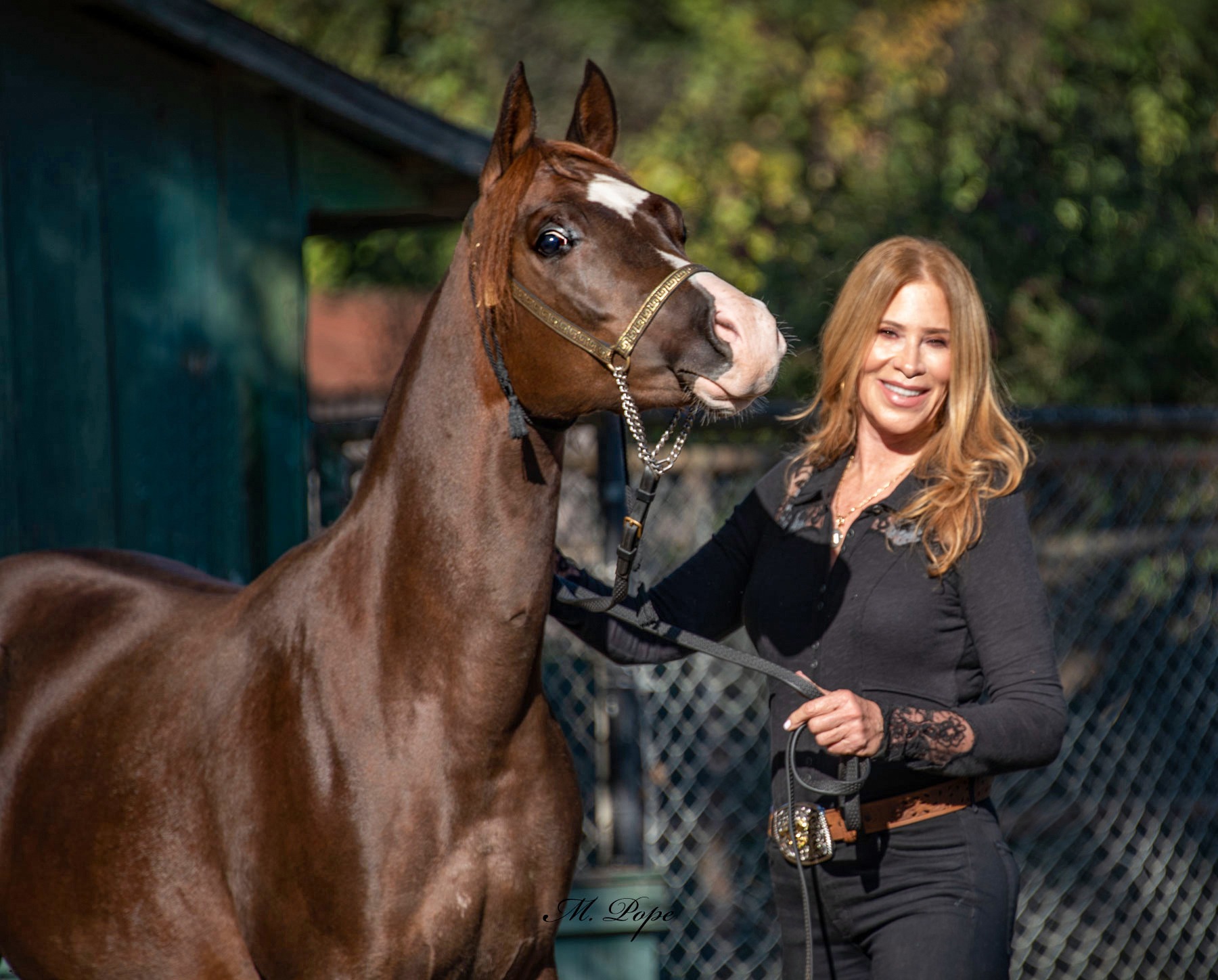
Ann Lesley Smith, a philanthropist from California, knows this well. Her prized Arabian stallion, Amir Fadjur Salaam, is a prime example of the kind of human-like understanding and empathy that Arabian horses possess. “It is a personality that has been cultivated over thousands of years,” she explains.
Now, Smith is drawing inspiration from Amir to find her power, finding purpose in helping others and elevating him into an international symbol of peace.
Coming into her own and embracing serenity
Like others, Smith’s story did not always follow a straight, pedestrian line. She has been a radio host, a chaplain, a musician, a vineyard owner, and, now, an equestrian and messenger of peace.
Each role Smith has played in her life has been distinct, showing the outside world that she is someone who has refused to stay within the lines. Much like her beloved Arabian horse, Amir, Smith has range and curiosity.
When Smith found Amir, the connection was instant. “His presence and understanding are things you can practically see in his eyes,” says Smith.
Amir’s legacy was impressive, but it was his lived expression and empathy with humans that mattered far more. “While pedigree is important with horses, it doesn’t ultimately define who a horse will become,” Smith says.
As a direct descendant of one of the most celebrated horses in recent history, The Fabulous Fadjur, Amir’s pedigree is indeed impressive. Considered the model of what an Arabian horse should be, Amir inherited many of Fadjur’s qualities in both looks, elegance, and personality.
Opening her heart, home, and the world to Amir’s influence
For Ann, the possibilities seemed endless when she thought about the good Amir could bring to the world. “It inspired me and set me on a new path with a new purpose,” Smith explains.
That new purpose first involved her California estate, set among the rolling hills of wine country. Smith opened up her home to people seeking a reset from burnout or just a place to soak in some quiet away from the hustle and bustle of daily life.
Smith knew about the transformative power of being among the free-roaming Arabian horses, and especially knew the influence that Amir could have on others. Amir has also inspired her to think beyond the walls of her home.
“For thousands of years, Arabian horses were considered so special that they were used as symbols of goodwill between countries,” Smith explains.
Smith believes Amir could bring that tradition back, acting as an ambassador of peace in times that sometimes feel hopelessly divided. She even believes that Amir could be a workbench for the world of technological advancement.
“Arabian horses are so distinctive because they have had empathy and understanding ‘programmed’ into them over thousands of years,” Smith explains. “I believe that today’s AI developers could look to horses like Amir as inspiration for how to instill more human-like characteristics into current assistive technologies.”
Pushing back against narrow definitions of people and of breeds
Like her beloved Arabian horses, Ann Lesley Smith has never been just one thing. She has spent her life pushing back against narrow definitions, the idea that one career, one goal, or one life experience can define us. Today, Amir serves as Smith’s guidepost because he is the living, breathing embodiment of breaking stereotypes and narrow definitions.
“Arabian horses are not just workhorses, simple animals, or to be relied upon for speed and endurance, Smith says. “They are so much more. Amir understands you. He can feel what you feel and takes cues from simple signs like subtle body language.”
For Smith, it is an empathy and understanding that the world could use more of. “I like inspiration that comes from unexpected places,” she explains.
Amir’s story, like Smith’s own, is one of nuance. A horse doesn’t read its own pedigree and simply follow suit, and neither should human beings.
“None of us is just one thing,” explains Smith. “If we allow ourselves to embrace freedom and understanding, it could change the world.”