



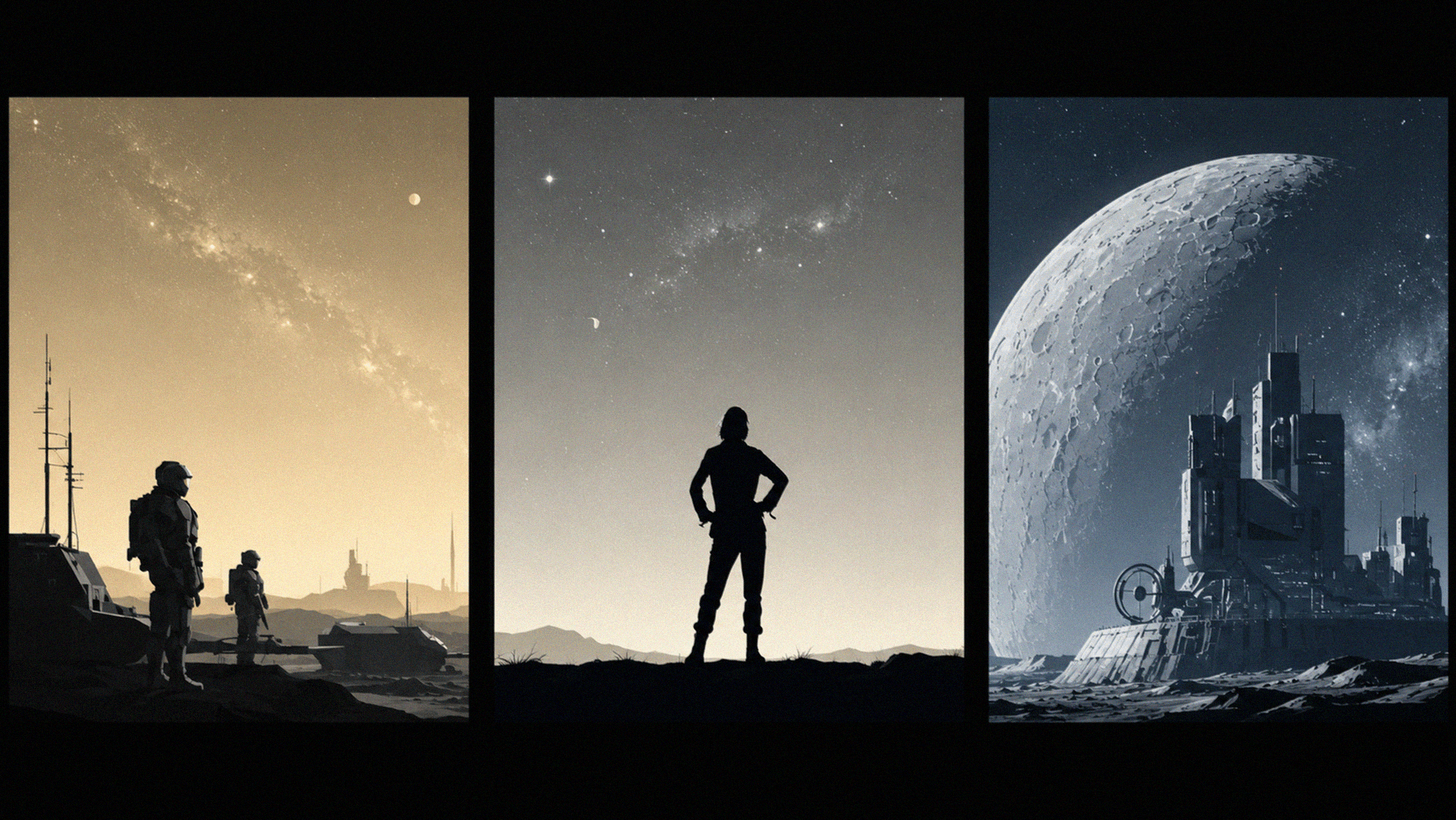
There is a quiet shift happening at the edge of the galaxy—and it isn’t being driven by traditional corporate publishing houses.
For decades, sprawling science fiction sagas were largely the domain of major publishing imprints. Today, readers searching for immersive worldbuilding, expansive universes, and distinctive voices are increasingly discovering independent authors who are building loyal audiences, earning national literary recognition, and proving that ambitious space opera can thrive outside the traditional publishing model.
What’s striking about the current wave of independent space opera isn’t just the quality of the writing—it’s the go-to-market thinking behind it. A number of the genre’s most notable independent authors didn’t come up through creative writing programs or literary agencies. They came from marketing, brand strategy, and tech analysis, and they’re applying those disciplines to book launches with unusual results.
Among the most influential architects of this movement is A.K. DuBoff. Often referred to as the “Queen of Space Opera,” DuBoff pioneered the rapid-release model within independent science fiction—publishing interconnected series on a fast, frequent cadence that kept readers continuously engaged with an expanding universe, rather than waiting years between installments the way traditional publishing schedules typically demand. Her success demonstrated that an independent author could sustain a large-scale galactic universe while cultivating a devoted international readership, creating a model that many newer authors have since studied and adapted.
Christian Hurst, a corporate Executive Creative Director, took a different approach: he treated his debut as a brand launch. Hurst has said in interviews that his background in brand marketing and design—not his creative writing experience—was the real advantage in bringing Lily Starling and the Voyage of the Salamander to market, from Big Five–caliber cover design to the advertising strategy behind the series. The approach appears to be working: the book was named a Gold Medalist for “Best First Book – Juv/YA” at the 2026 Independent Publisher Book Awards, and the series’ third installment, Lily Starling and the Death Machine, was recently recommended by Kirkus Reviews ahead of a feature in the magazine’s August 2026 print edition.
R.A. Dines, meanwhile, drew on a 20-year career in B2B SaaS marketing and a stint as a Forrester tech analyst to treat her book launch less like a creative release and more like a software product rollout. Her novel, How I Hacked the Moon, explores how code, AI, and cloud infrastructure actually work—so Dines built companion guides for educators, using her technical background to help teachers introduce complex data and AI concepts to young readers responsibly. Rather than relying primarily on digital storefronts, she’s built her audience through direct relationships with schools and libraries, a distribution strategy closer to enterprise sales than traditional publishing.
Three authors, three different professional toolkits, three different launch strategies—and all three finding real traction in a genre still widely assumed to require a major imprint behind it. The common thread isn’t a shared aesthetic or even a shared platform. It’s a willingness to treat book publishing as a discipline that can be approached from outside its own industry.
The national literary awards, respected trade reviews, growing library presence, and expanding readership these authors are earning are no longer isolated exceptions. Together, they point to a publishing landscape where some of the genre’s most imaginative new voices are emerging outside the traditional studio system—reshaping modern space opera one universe at a time.