



What does success actually look like once the titles, the funding rounds, and the awards are accounted for? For the five leaders profiled here, the answer isn’t found in a single metric or milestone: it’s found in the decision to keep rebuilding, past the point where most people would call it quits.
Coretta Wallace turned an executive exit into an ongoing partnership, becoming the strategist her former employer still calls first. Landon Nattrass is betting that healthcare works better when it doesn’t wait for a diagnosis. Donna Goodman has spent two decades arguing that children deserve a seat at the table on the issues that will define their future. Dr. Karen Ferguson turned a lucky break in her own education into a mission to make sure no other student has to rely on luck. And Rock DuBois built an entire coaching methodology on a single insight: that the gap between professional success and personal fulfillment is rarely about strategy at all.
None of these five set out with a conventional plan. Each pivoted, from the military, from a corporate boardroom, from a hunch about an underserved population, into building something that didn’t exist yet. Here are their stories.
1. Coretta Wallace

Coretta J. Wallace built her consulting career on a simple rule: nothing is off the table until she’s tested it herself. As founder of Strategic Business Performance Consulting, she has spent the past two years advising organizations, including her former employer, Zeal Credit Union, on the problems executives are told can’t be solved fast.
That confidence comes from a 20-plus-year executive career spanning marketing, lending, technology, digital experience, operations, and strategic innovation before she chose to build her own practice. A Stanford-certified Strategic Innovation Executive, she applies that full-organization view to clients who need someone able to zoom in on a broken process and zoom out to where the business is headed next.
Her results argue otherwise. Wallace has negotiated vendor agreements that cut client costs by more than 50 percent, compressed delivery timelines from twelve weeks to two, and built pricing strategies that lifted loan volume 40 percent within a single week of rollout — plus $1.2 million in tech-stack savings.
“Coretta has remained deeply committed to our success,” says Zeal’s President & CEO, Julie Kreinbring, “providing thoughtful guidance and trusted counsel as we’ve navigated significant growth and transformation. Her partnership has been invaluable.”
That commitment shows up in how she works. On one engagement, two outside vendors insisted a critical process would realistically take six to eight months. Rather than accept the estimate, Wallace pulled the people who ran the process into one room and timed it herself, live, on the call. The client’s cost came in at less than half the original quote, and the project delivered three weeks ahead of schedule.
It’s the same instinct that drives her consulting practice: challenge the assumption, understand the process firsthand, then build a solution nobody else was willing to try. Clients don’t just hire her once — they call her back, because every engagement leaves their teams sharper and self-sufficient.
Named one of Women We Admire’s Top 50 Women Chief Experience Officers in both 2024 & 2025, and a 2026 Credit Union Times Luminary Award nominee, Wallace carries that same mindset into everything she takes on. A rare cancer diagnosis in 2022 tested it further; she presented at a board meeting thirty minutes after receiving the news. “Every obstacle’s a lesson, every pain is a reminder of joy, every fail is the beginning of an epic comeback. It’s all in how you look at it,” she says. Visit her portfolio at: corettajw.com.
2. Landon Nattrass

Landon Nattrass Is Betting That Digestive Health Screening Shouldn’t Wait for Symptoms
Gastrointestinal disease has a timing problem: by the time most patients notice something is wrong, treatment options have narrowed considerably. Landon Nattrass, CEO and co-founder of Faex Health, built his company around closing that gap using AI-powered computer vision technology designed to make digestive health screening continuous rather than occasional.
Nattrass didn’t come from a clinical background. His path ran through finance, startup commercialization, and fundraising: skills essential for building a healthcare company that has to satisfy investors, regulators, and health systems simultaneously. “Building a healthcare startup requires balancing fundraising, regulatory strategy, clinical validation, product development, and commercialization,” he says.
Instead of a single diagnostic snapshot, the Faex platform monitors digestive health continuously, catching warning signs earlier and more affordably than traditional screening allows. That positioning has opened doors with health systems and government partners, alongside clinical validation studies meant to prove the model holds up under scrutiny.
For Nattrass, the clearest evidence isn’t a metric: it’s a story. “One of the most meaningful moments was learning that our platform helped identify users who later discovered precancerous polyps after follow-up colonoscopies,” he says.
Nattrass is candid that resource constraints are a constant companion in healthcare entrepreneurship, and that persistence and strategic partnerships have moved Faex Health forward more than any single breakthrough. That ambition tracks with a broader shift in healthcare toward prevention over intervention, and Nattrass is positioning Faex Health to be infrastructure for that shift rather than a one-off product.
3. Donna Goodman
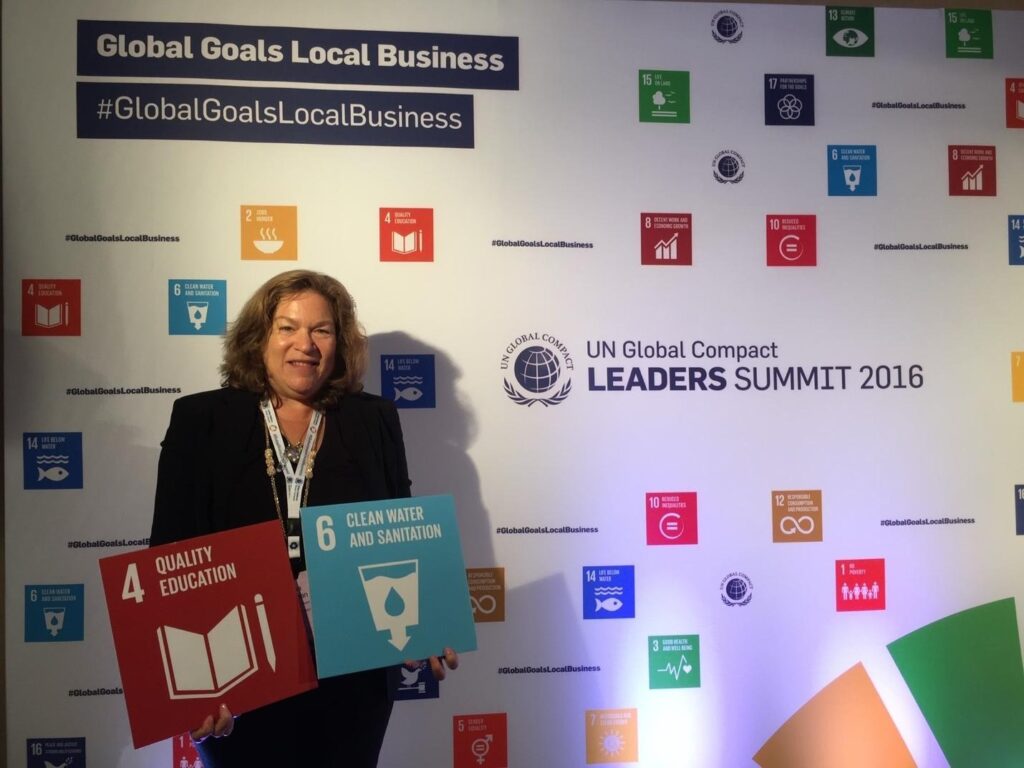
Donna Goodman Has Spent Three Decades Convincing the World That Children Are Its Most Valuable Natural Resource
Donna Goodman’s résumé reads like a map of the modern environmental movement’s institutional core: UNICEF, the United Nations Framework Convention on Climate Change, Swarovski Waterschool. Yet her actual focus has stayed remarkably consistent since she founded Earth Child Institute in 2002: children, and their standing as full participants in decisions about and stewardship of the planet that they are here to inherit.
Goodman didn’t start in policy. She built Little Scientists, a hands-on science education franchise that expanded internationally and earned her recognition as one of the top women in franchising in 1998. That entrepreneurial instinct carried into her UN work, beginning with a resource guide on water that led UNICEF to recruit her in 2003, where she developed an interactive game called Water Alert! before moving into climate change education.
“The biggest challenge over the years is in getting adults to invest in the development of children as Earth’s most valuable natural resource,” Goodman says. Her answer has been to keep building bridges between sectors that rarely speak to each other: environment, energy, education, entertainment, and international development goals.
One partnership stands out. Working alongside Nobel laureate Dr. Wangari Maathai on a tree-planting initiative, Goodman proposed pairing children in wealthy countries with peers in the developing world through small donations. Maathai pushed back: “No, Donna, I don’t want them to think that $1 will change the world. For a tree to survive, it needs to be watered and cared for over time.” The lesson reshaped how Goodman has approached her work since, favoring sustained stewardship over one-off feel-good gestures.
That philosophy shows up in her career highlights: helping secure a formal Youth and Children’s constituency to the UN Climate Change Convention in 2009, chairing the UN Committee on the Decade of Education for Sustainable Development in 2013, and receiving a Special Contribution to Green Childhood award in 2021.
Goodman’s ambitions now extend into media.Through Donna Goodman Productions which has already produced a documentary featured on Netflix. She is developing projects like ECOMASTERS: A Planet in Peril, a global, girl-led action adventure series powered by water magic, and the Mother Earth and Me podcast, aiming for reach on platforms like Netflix, Disney, and Africa’s Akili Network. Children (people between the ages of 0-18), comprise close to one-third of the global population,” she notes, arguing that funding for local actions to ensure water and food security, climate adaptation and an empowering, values based education remains dangerously mismatched to that reality. Her work is chronicled further through Earth Child Institute.
4. Dr. Karen Ferguson
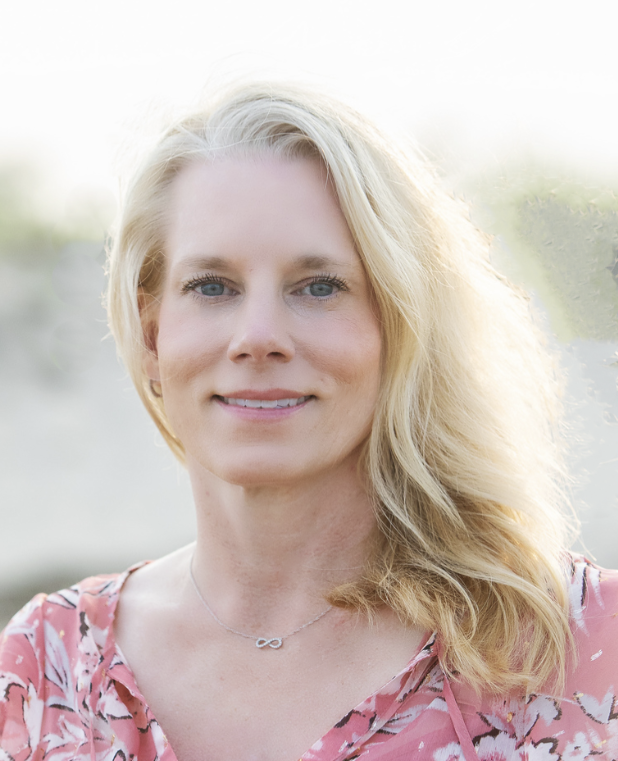
Dr. Karen Ferguson Wants to End the Luck Factor in College Credit
Dr. Karen Ferguson found her way into higher education by accident. After twelve years in the Army spent earning college credits with no real plan for them, she stumbled onto a prior learning assessment program at a base near Fort Lewis, one that evaluated her military training and experience and delivered a twelve-month path to a degree. “I can’t even tell you how I found out about it,” she says. “It was pure luck.”
That accident became a career thesis. As cofounder of Education Assessment System and Chief Transformation Officer at Education Affiliates, Ferguson has spent years trying to make sure other nontraditional students don’t have to rely on luck to get credit for what they already know.
The problem, as she describes it, is structural. Universities that claim to be military- or transfer-friendly each run prior learning assessment through different, largely manual processes that can take so long students end up retaking courses they’d already mastered. Ferguson’s company applies AI to that evaluation process, aiming to turn what used to take weeks into something closer to real time, without stripping faculty of judgment over academic policy. “We reduce the friction in this process so more students can earn credit for what they already know,” she says.
Ferguson doesn’t shy away from her outsider status. “I don’t think like the people in the ivory tower,” she says of an academic career built through leadership roles from faculty member to interim president. She describes herself as someone colleagues alternately call a change maker ora disruptor, a tension she’s made peace with. “Most people are focused on their ‘one thing’ and if I want change to happen, I need to be patient, show them the bigger picture, explain the why.”
With 43 million American adults holding some college credit but no degree, Ferguson sees prior learning assessment as more than a student convenience. It’s a lever against declining enrolment and, in her view, a moral obligation to service members whose training too often gets filed under a generic elective rather than counted toward a degree. “All students deserve meaningful and direct application of prior learning to their degree programs,” she says.
Her goal isn’t incremental improvement. “I dream of a day when all forms of higher education… provide clear, transparent, and accessible pathways to completion,” she says, a vision she continues to pursue through Education Assessment System.
5. Rock DuBois
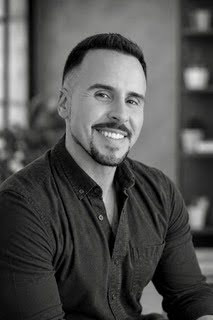
Rock DuBois Says the Problem Was Never Strategy, It Was Identity
Rock DuBois has coached senior leaders at Google, Nvidia, and Merrill Lynch, but the insight underneath his practice didn’t come from a boardroom. It came from years of late-night calls with a businessman named Rish, who ran companies across several countries and phoned DuBois daily , not just about work, but about his relationships and decisions. “Rock, I think you’d make a great life coach,” Rish told him one day. Asked why, he said DuBois “always gave him something real to think about” without judgment.
That comment became a career. Rish funded a portion of DuBois’s first bout of coaching education, and DuBois became, in his words, his own first client. Fifteen years later, he holds a PCC credential through the International Coaching Federation and has built a proprietary approach called the Identity Integration Framework, which treats professional underperformance and relational disconnection as symptoms of the same root cause. “If you’re winning at work and losing at home, it’s identity, not strategy,” he says, a line that’s become the spine of his brand.
DuBois is candid that he didn’t start out coaching from the right place. “You end up coaching from a place of needing to prove you’re good, needing the client to validate you, instead of actually serving them,” he says of his early years. The shift came only after he did his own internal excavation, work he now asks clients to undertake themselves.
The results, he says, show up in numbers most coaches don’t publish: a 33 percent reconciliation rate in couples work against an industry average of 10 to 15 percent, and a 90 percent client-reported drop in anxiety and stress.
One story sticks with him. A former client who once declined deeper work returned two years later, his marriage strained past repair, willing to pay seven times his original rate. Pressed on who he’d been while his marriage unraveled, the client finally admitted: “I was someone who couldn’t believe anyone would love me without hurting me.” The marriage didn’t survive. He did. “You can’t teach someone to become a different person,” DuBois says. “You can only confront them with who they are until they can’t pretend anymore.”
DuBois, also a published author and recording artist, is now building The Significance Collective, a community for leaders “done pretending ‘fine’ is a strategy,” alongside a forthcoming book and TED Talk. More at his website.