



A sofa is one of the most visible and frequently used pieces of furniture in a home. For Singapore homeowners, choosing between fabric and leather involves more than personal taste. Climate, lifestyle, maintenance, comfort and the quality of construction can all influence which option works best.
With modern interiors increasingly focused on comfort and functionality, understanding the differences between the two materials can help homeowners make a more considered choice.
Lifestyle Should Come First
The best sofa material depends largely on how a home is used.
Families with children may prioritise easy maintenance, while pet owners may be more concerned about hair, scratches and durability. Those who frequently entertain guests may place greater importance on comfort and appearance.
Singapore’s warm and humid climate is another consideration. Although many homes are air-conditioned, upholstery can still affect how comfortable a sofa feels during everyday use. Instead of choosing purely based on appearance, homeowners should consider what the sofa will need to withstand over the years.
Fabric Offers Comfort and Design Flexibility
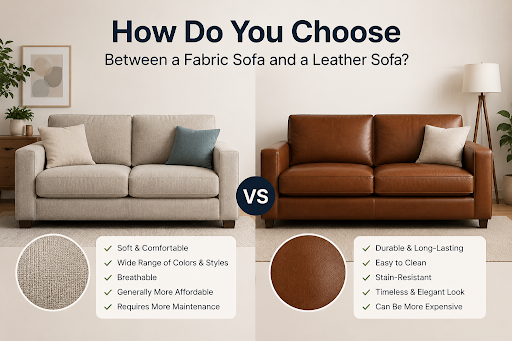
Fabric sofas remain popular because of their variety. From relaxed linen and soft chenille to luxurious velvet and practical microfiber, different fabrics can create very different moods within a living space.
They also offer extensive choices in colour, texture and pattern, making them easy to incorporate into contemporary interiors. Fabric is generally breathable and can feel soft and comfortable from the outset, which can be appealing for households where the sofa is used frequently.
However, maintenance varies depending on the fabric. Spills and stains may require more attention, particularly with delicate upholstery. Homeowners should look at factors such as stain resistance, abrasion resistance and colourfastness before making a purchase.
Leather Brings a Timeless Look
Leather offers a different combination of style and practicality. Its clean appearance works particularly well with modern, minimalist and classic interiors, while quality natural leather can develop a distinctive patina as it ages.
There are also significant differences between leather types. Full-grain and top-grain leather are generally considered premium options, while bonded and faux leather provide alternatives at different price points and with different performance characteristics.
One of leather’s practical advantages is easier surface cleaning. Many everyday spills can be wiped away, and pet hair is less likely to cling to the smooth surface. However, natural leather still requires appropriate care, and sharp objects or pet claws can leave marks.
Comfort Depends on More Than Upholstery
The fabric-versus-leather debate often centres on comfort, but upholstery is only one part of the equation.
Fabric can feel softer and warmer immediately, while leather may initially feel firmer before becoming more supple with use. In Singapore’s climate, personal preference and indoor temperature can also influence which surface feels more comfortable.
More importantly, the sofa’s internal construction plays a major role. Cushion density, seat depth, back support and suspension can determine how comfortable the sofa remains after years of use.
Quality Construction Matters
A premium upholstery material cannot compensate for poor construction. Homeowners should consider the frame, cushioning, suspension and stitching alongside the outer material.
A well-made fabric sofa can provide years of reliable use, just as a high-quality leather sofa can. A strong frame provides stability, while quality cushioning helps the sofa retain its shape and support.
For this reason, shoppers should assess the sofa as a complete piece of furniture rather than making a decision based solely on whether it is covered in fabric or leather.
Which Is Better for Singapore Homes?
There is no universal winner.
Fabric may suit homeowners looking for softness, breathability and greater freedom with colours and textures. Leather may be more suitable for those who prefer a refined appearance, easier surface cleaning and a material that develops character over time.
The right choice ultimately comes down to how the household lives.
For homeowners exploring contemporary furniture, a well-designed modern sofa can combine aesthetics with the practical requirements of everyday living. The important consideration is not simply choosing the material that looks best in a showroom, but selecting one that fits the home, lifestyle and expectations for long-term use.
In the end, the best sofa is one that remains comfortable, functional and visually relevant long after it first arrives in the living room.