



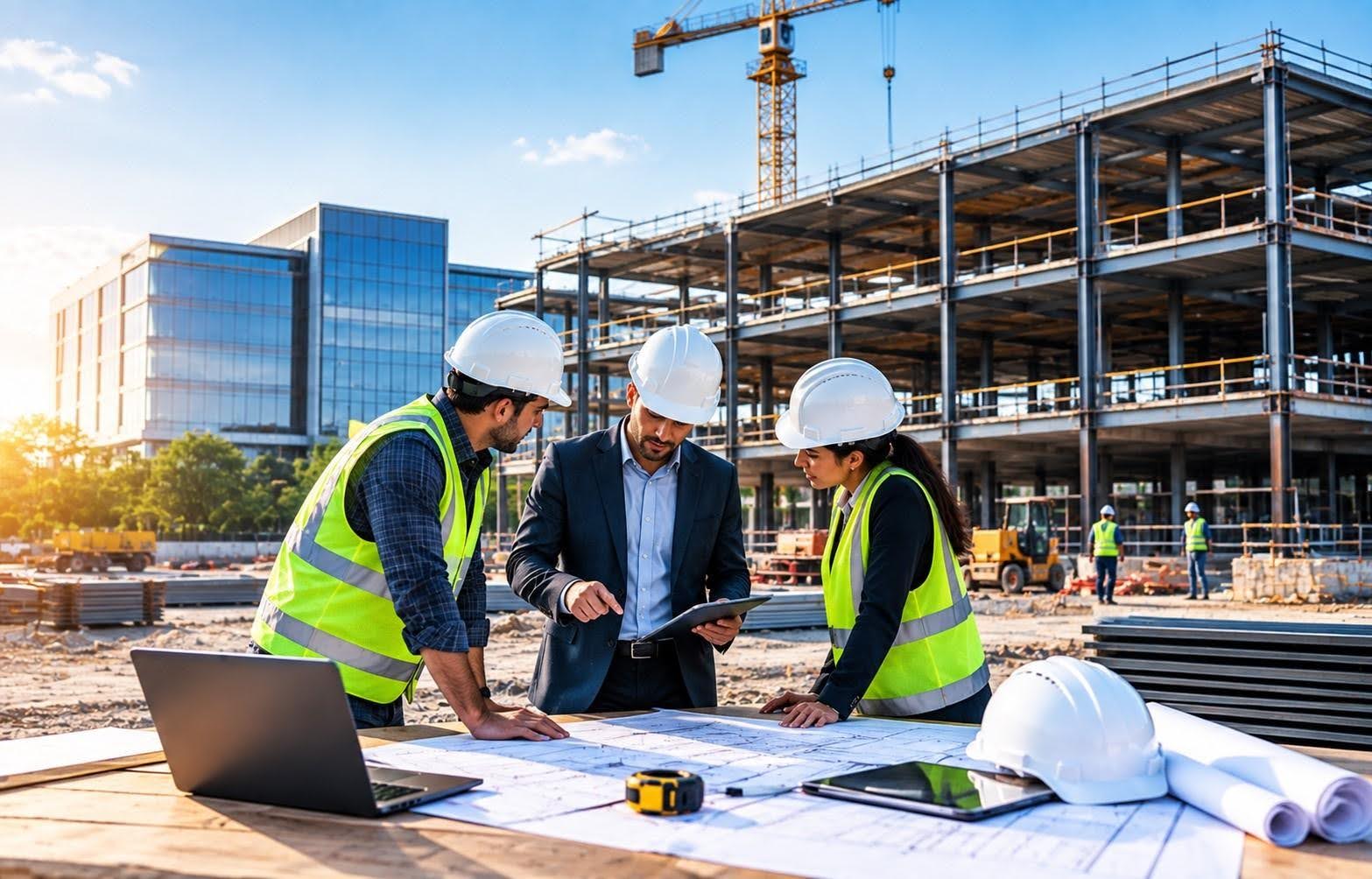
Planning commercial construction doesn’t seem overwhelming until it’s time to start. Suddenly, you need to compare bids, decode permit requirements, and assess the realistic timelines contractors quote. If you’re already facing that, this guide will help you shorten the learning curve: what commercial contractors do, how a project moves from idea to occupancy, and what separates a smooth build from a stressful one.
What Does a Commercial Contractor Do?
A general contractor is the single point of accountability across your construction project. Instead of a business or a property owner coordinating with architects, engineers, and subcontractors on their own, a commercial contractor handles them all under one contract. Your chosen general contractor manages budgeting, permitting, and quality control.
In practice, a commercial general contractor brings your idea to life from early planning through opening. They keep the subcontractors on schedule and identify problems before they become expensive.
The difference between hiring a general contractor and working with independent contractors directly is that when something goes wrong on a self-managed project, you often have no one to resolve the issue. With a general contractor, you have someone you can rely on.
How Does Commercial Construction Work Start to Finish?
Commercial construction projects usually move through the same broad sequence, whether it is a small build-out or a ground-up construction.
- Pre-construction. This is the planning stage where a reliable contractor looks over the site, reviews the design, and puts together an initial budget and schedule. This is where major cost drivers like long lead materials, difficult site conditions, and code requirements surface. Addressing them early is cheaper than catching them mid-project.
- Design and permitting. Architectural and engineering plans get finalized, and the project moves towards permitting. Each city and county will have its own building, electrical, mechanical, plumbing, and safety permits, and sometimes site reviews such as floodplain and drainage reviews.
- Construction. This is the main phase where the site work, structural work, and interior systems are focused on. The general contractor works closely with the subcontractor aligned to each phase. Construction project management here is largely about sequencing: making sure each trade has what it needs, when it needs it, without idle crews or scheduling collisions.
- Inspections and closeouts. As construction nears completion, the project goes through several permit reviews. Once everything passes, the city issues a Certificate of Occupancy, which allows the space to be used.
How Long Does Commercial Construction Take?
There is no single answer because an interior build-out inside an existing shell can take up to a couple of months, while a ground-up construction project can take over a year. The answer to ‘how long my project will take depends on the requirements of site work, the complexity of the permitting process in the specific jurisdiction, and how far the design is from being finished when construction starts. A contractor who gives you a timeline without assessing these points hasn’t researched your project carefully.
What Drives Commercial Construction Costs?
Commercial costs are never one number, but different variables affect the actual cost:
- Scope and finish level: a basic open-layout space would cost less compared with a space that includes private offices, custom millwork, or specialized equipment.
- Site conditions: difficult soil or floodplain requirements can add real cost before construction starts.
- Building use: A commercial kitchen or a cold-storage warehouse carries mechanical and code requirements that drive costs more than a standard office or retail build-out.
- Timeline pressure: Compressed schedules sometimes mean paying a premium for expedited materials or overlapping trades that would normally work in a sequence.
What’s Included in a Commercial Construction Project?
A commercial general contractor also handles:
- Subcontractor Management: Hiring, scheduling, and quality checking MEP and HVAC installations.
- Commercial Project Coordination: Keeping the owner and all the stakeholders aligned through the construction process.
- Permits and Inspections: Pulling the right permits at the right time and scheduling them so the schedule isn’t impacted.
- Budget Tracking: Keeping up with cost changes so there are no surprises at the end when the final number doesn’t match the estimate.
Furniture, technology infrastructure, and specialized equipment often sit outside the core construction contract and are worth clarifying up front to avoid confusion about what’s covered.
How to Choose a Commercial General Contractor
Keep a few questions in mind to differentiate between a contractor worth hiring or passing on:
Do they have the kind of experience your project needs?
A contractor who built dozens of offices may still be learning about their first new restaurant or a medical facility project. Those projects have code and requirements that general experience doesn’t fully prepare you for.
Is the estimate itemized?
Always ask for a breakdown, because a single number will never give you the full picture.
Do they know about the local permitting process?
A contractor who’s already worked with your city or county building department usually moves through approvals faster than one starting from scratch.
How strong is communication during the project?
Ask how often you’ll get updates, and who your main point of contact is. A vague answer will always stay vague once the construction begins.
When Should You Hire a Commercial General Contractor?
Earlier than you had expected. Hiring a general contractor during the design phase, rather than after the drawings are finalized, saves money because they can identify issues (if any), realistic cost changes, and permitting concerns before final decisions are made. Waiting until design completion often means discovering expensive problems that may be hard to change.
Final Thoughts
Planning a commercial construction project is important both for choosing the right partner and for your building itself. A general contractor who asks questions early and provides itemized estimates can help you run your project smoothly.
If you are already planning a project, Arrant Construction has hands-on experience across office, restaurant, retail, and warehouse construction.
Frequently Asked Questions
What does a commercial general contractor do?
They manage the full construction process on a project; architects, engineers, subcontractors, permitting, budget, and schedule are all involved under one contract from start to finish.
What’s the difference between a general contractor and a subcontractor?
A general contractor manages the overall project and hires subcontractors for specialized work like electrical, plumbing, or HVAC. Subcontractors report to the general contractor, not directly to the owner.
What commercial building permits are typically required?
Most projects need building, electrical, plumbing, mechanical, and fire safety permits at minimum, with additional permits depending on the site and local jurisdiction.
What questions should I ask a commercial general contractor before hiring them?
Ask about their experience with your specific project type, whether their estimate is itemized, their familiarity with local permitting, and what their communication process looks like once the project starts.