



You see the listing for a job 2,000 miles away, accept it, and immediately start doing the math. Moving trucks plus hotels plus restaurants plus airfare for the family plus pet boarding plus a rental car at the other end. Then somebody, maybe a friend, maybe an Instagram ad, maybe you at 1 AM drops the question: what if you just rented a Cruise America RV and drove the whole thing yourself?
It’s a tempting idea. One vehicle. No hotels. No restaurant tabs. The dog comes with. You sleep where you stop. Is it actually practical, though, or is it one of those plans that sounds great until you start loading boxes?
Here’s an honest, scenario-by-scenario breakdown of when a Cruise America RV is a smart cross-country moving choice and when it really isn’t.
What a Cruise America RV Actually Holds
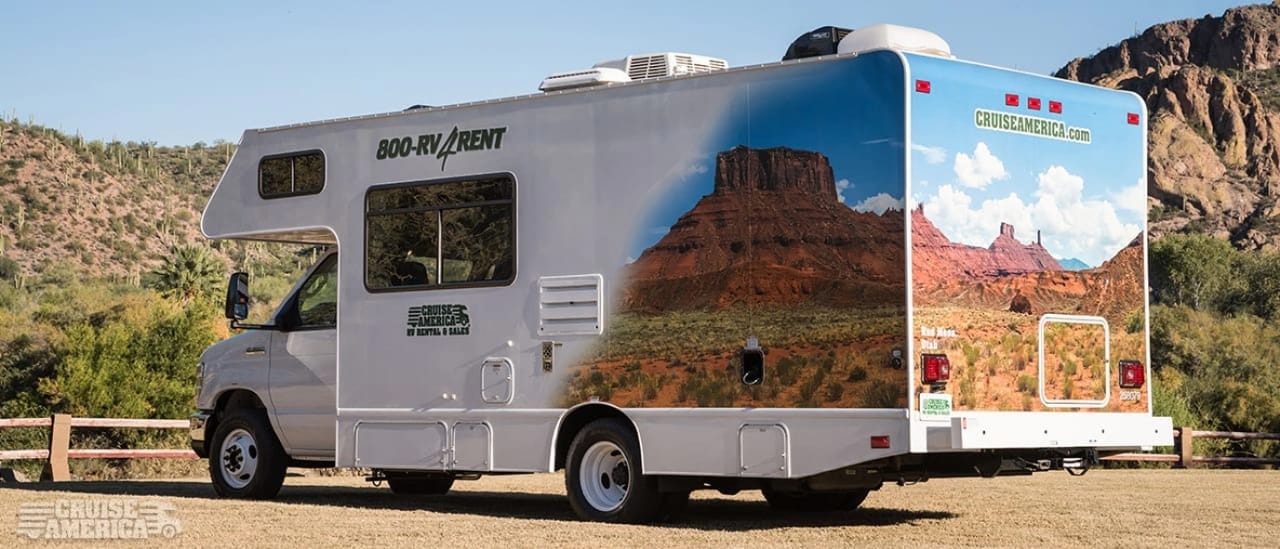
The first reality check: Cruise America rents motorhomes, not moving trucks. Their fleet is built around Class C RVs designed for travel, not relocation. You get living space, sleeping space, a kitchen, a bathroom, and some cabinet storage, not a 26-foot cargo box.
In practical terms, an RV’s cargo capacity is closer to what you’d fit in a packed SUV with a roof box than what fits in a moving truck. Think:
- Clothes and personal items
- A reasonable number of plastic bins or duffel bags
- Bedding, kitchen basics, and a few small appliances
- Pet supplies and crates
- Sports gear, instruments, a bike or two with the right rack
- Boxes of books and documents, within reason
What does not fit gracefully: a sofa, a bed frame, a dining table, a dresser, a fridge, large electronics in boxes, or the full contents of a three-bedroom house. The motorhome has weight limits too, and overloading it changes how it drives and burns fuel.
This is the central question of moving by RV: what does your “stuff” actually look like, and how much of it has to go with you?
When a Cruise America RV Move Actually Makes Sense
There’s a specific kind of cross-country move where this strategy shines. If yours looks like any of these, it’s worth pricing out:
Minimalist or starting-fresh moves. You’re moving for a new job, into furnished housing, or into a place where you’ll buy furniture on the other end. You really do only have clothes, electronics, kitchen things, and personal items.
Moves involving pets. Flying with multiple cats or a large dog is stressful, expensive, and sometimes outright prohibited by airlines. An RV lets your animals travel calmly, with their food bowls, their crate, and you within paw’s reach the entire way.
Long-distance moves with kids. Stopping at national parks and roadside diners for five days turns “the move” into “the trip our kids still talk about.” That alone justifies the RV for a lot of families.
Snowbird relocations. People who live in two places north in summer, south in winter already need to transport a seasonal wardrobe, hobby gear, and a pet. A Cruise America one-way rental fits this scenario almost perfectly.
Military, contract, and short-term work moves. When you’re moving for a one-year assignment or a temporary contract and don’t want to ship a full household, an RV handles you, your essentials, and the dog while a separate small shipment carries the rest.
You actually want to see the country. This is the underrated reason. If you’re going to spend a week driving, you might as well enjoy it. A Cruise America RV turns the move into the vacation you weren’t going to take this year.
When It Probably Isn’t the Right Call
Honest counterpoints. A Cruise America RV move is not the answer if:
- You have a full household of furniture. The RV simply isn’t designed for it.
- You’re on a tight timeline and need to be there in two days. RVs cruise around 60 to 65 mph, and long days behind the wheel are genuinely tiring.
- You’re moving on the cheapest possible budget. The combination of daily rate, per-mile fees, and fuel can add up a basic moving truck plus motel strategy that may genuinely cost less if you don’t value the experience.
- You’re not comfortable driving a large vehicle through unfamiliar terrain. The learning curve is real, even though it’s shorter than most people expect.
If any of those describe you, a traditional moving service or a cargo truck is probably the better tool.
The Cost Math: What to Price Out
Cruise America rentals typically include a daily rate, a per-mile charge, and a generator-hours fee, with one-way rentals available between many of their locations (though one-way pricing varies by route and season). For a cross-country move, the variables you’ll want quotes on are:
- Daily rate multiplied by the number of rental days
- Mileage charges for the full route
- One-way drop-off fee, if applicable
- Estimated fuel Cruise America RVs average roughly 8 to 10 mpg, so calculate your route distance and multiply
- Campground costs (full-hookup sites typically run $40 to $80 per night)
- Optional prep kits (linens, kitchen) if you’re not bringing your own
Then compare that against the realistic alternative for your situation: moving truck rental plus fuel plus four to six nights of hotels plus restaurant meals plus pet boarding or pet-friendly hotel surcharges plus flights for any family members.
For minimalist moves with pets, the RV often wins. For full-household moves, the moving truck still does. The honest answer is to do the math for your specific move and to get a real one-way quote from Cruise America before deciding. Worth noting for cross-country movers reading this right now: Cruise America’s current Free Unlimited Miles offer (code FRDU, valid through August 15) takes the single largest variable off this entire list which makes the long-haul move math meaningfully friendlier than it would be otherwise.
The Hybrid Approach (This Is What Most People Actually Do)
Here’s the strategy that works best for most cross-country movers considering a Cruise America RV: split the move into two streams.
Stream one: the RV. You, your family, your pets, your personal items, your essentials. The things you want close to you. The things that would be a nightmare to ship.
Stream two: the household. Furniture, appliances, big boxes. This goes via a portable shipping container (the kind you load yourself and have delivered), a freight shipping service, or a small moving truck driven by a friend or hired driver.
The container or truck arrives at your new place within a few days of you. Meanwhile, you’ve spent the week driving cross-country in comfort, sleeping in real beds, and arriving rested rather than wrecked. That combination RV for the people, container for the furniture is genuinely practical and often costs about the same as the equivalent “fly plus truck plus hotels” approach, with significantly less stress.
Practical Tips If You Decide to Move by RV
A few things worth knowing if you commit:
- Plan your route in advance. Book campgrounds for at least the first and last nights so you’re not searching at 9 PM in an unfamiliar state. Apps like Campendium, The Dyrt, and Cruise America’s own resources help map RV-friendly stops.
- Pack the RV like you pack a boat. Soft-sided bags fit better than hard suitcases. Use cabinet space, under-dinette storage, and the rear exterior compartment efficiently.
- Secure everything before you drive. Loose items in motion mean noise, breakage, and projectiles. Bins with lids are your friend.
- Build in buffer days. Things go wrong. Weather happens. A 5-day plan with 6 days of rental gives you breathing room you’ll be glad to have.
- Drive 6 to 8 hours a day, not 12. Long days in an RV are exhausting, and you’ll want time to actually enjoy your stops.
- Pick pickup and drop-off locations strategically. Cruise America has locations in major cities across the country; choosing the right pair shortens your one-way fee and your driving days.
- Read the rental agreement on mileage and generator use. These are the costs that surprise people, and understanding them upfront helps you budget accurately.
So – Is It Practical?
For the right move, absolutely. A Cruise America RV is a practical, surprisingly comfortable way to relocate cross-country if you’re moving with pets, kids, or just yourself; if your possessions fit alongside you or can be shipped separately; and if you’re willing to trade pure speed for a better journey.
For a full-household move with a tight deadline and a tight budget, it’s not the most efficient choice; a traditional moving truck still wins that comparison.
But for the growing number of people relocating for remote work, moving into furnished or temporary housing, traveling with animals that don’t fly well, or simply unwilling to spend a cross-country flight missing everything in between, a Cruise America RV turns “the worst part of moving” into the part you’ll actually remember.
That’s the real question to ask yourself: is this a move you want to get through, or a move you want to experience? Your answer points to the right vehicle and for a surprising number of people, that vehicle has a kitchen, a bed, and a Cruise America logo on the side.