

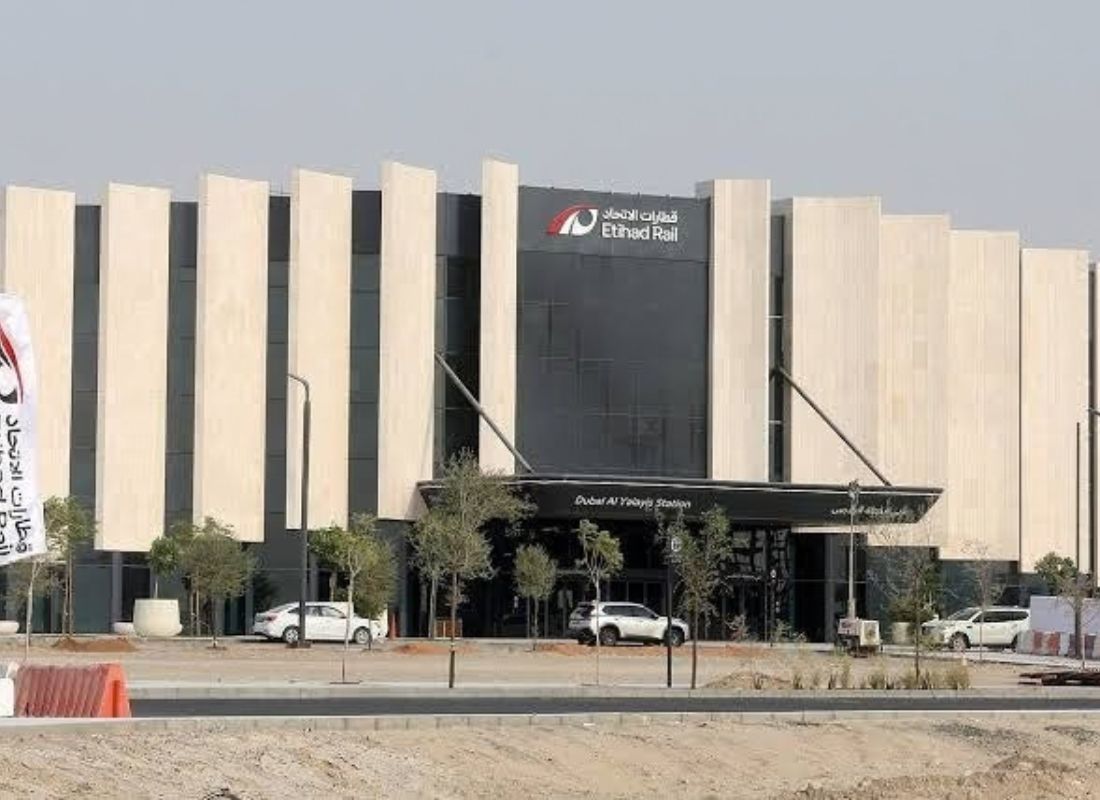
Dubai’s rail network is set for a major expansion, with four stations linked to Etihad Rail projects planned across the emirate. Two will form part of the UAE’s national passenger rail network, while another two will serve the separate high-speed line planned between Dubai and Abu Dhabi. The first, Dubai Al Yalayis Station, is scheduled to open on September 30, 2026.
Where: Dubai | When: Al Yalayis opens September 30, 2026 | Location: Dubai, UAE
Where will Dubai’s four Etihad Rail stations be?
©Photo edited by Canva.com
The four planned Dubai locations are Al Yalayis, Meydan, Al Maktoum International Airport and Al Jaddaf. However, they will not all operate as part of exactly the same service. Al Yalayis and the planned Meydan connection belong to the national passenger rail network, while Al Maktoum International Airport and Al Jaddaf are planned stops on Etihad Rail’s separate high-speed link between Dubai and Abu Dhabi.
Where: Al Yalayis, Meydan, Al Maktoum International Airport and Al Jaddaf | Location: Dubai, UAE
Dubai Al Yalayis Station opens on September 30
Dubai’s first national passenger rail station is almost ready to welcome travellers. Dubai Al Yalayis Station is located in Me’aisem First, next to Jumeirah Golf Estates and opposite Jumeirah Golf Estates Metro Station. Etihad Rail has officially confirmed that the Dubai station will open alongside the wider passenger network launch on September 30.
The station will also connect directly with the existing Dubai Metro Red Line through an elevated pedestrian walkway, making it easier for passengers to move between the national railway and Dubai’s local transport system. The journey from Al Yalayis to Abu Dhabi’s Mohamed bin Zayed City station is expected to take around 57 minutes.
Where: Dubai Al Yalayis Station | When: Opens September 30, 2026 | Location: Me’aisem First, near Jumeirah Golf Estates, Dubai
The 2032 Dubai rail plan shows a second connection at Meydan
Meydan is set to become another important interchange in Dubai’s future railway network. Dubai’s approved Gold Line will connect with Etihad Rail at both Meydan and Jumeirah Golf Estates, according to the Government of Dubai Media Office. The 42-kilometre Gold Line will have 18 stations and is scheduled to open on September 9, 2032.
This means the future Meydan connection could bring national rail access much closer to central areas of Dubai while linking into the city’s expanding Metro network. A separate opening date for the Etihad Rail facility at Meydan has not yet been announced, so it would be premature to give one.
Where: Meydan | When: Etihad Rail station opening date not yet announced | Location: Meydan, Dubai
Al Maktoum Airport and Al Jaddaf will serve the high-speed line
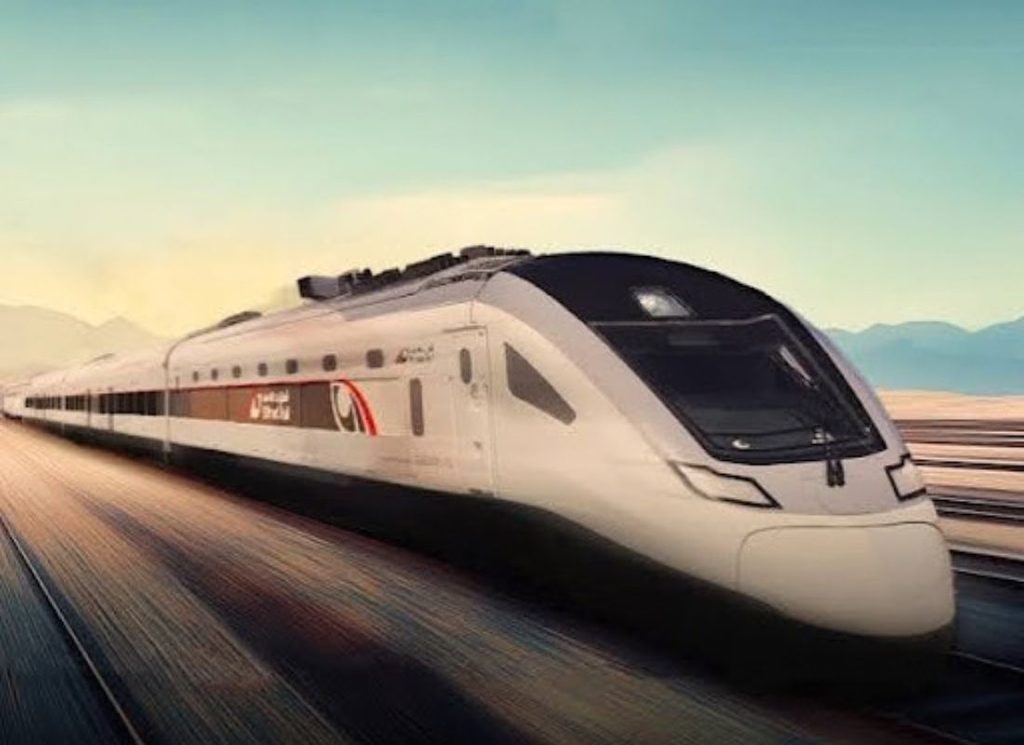
©Photo edited by Canva.com
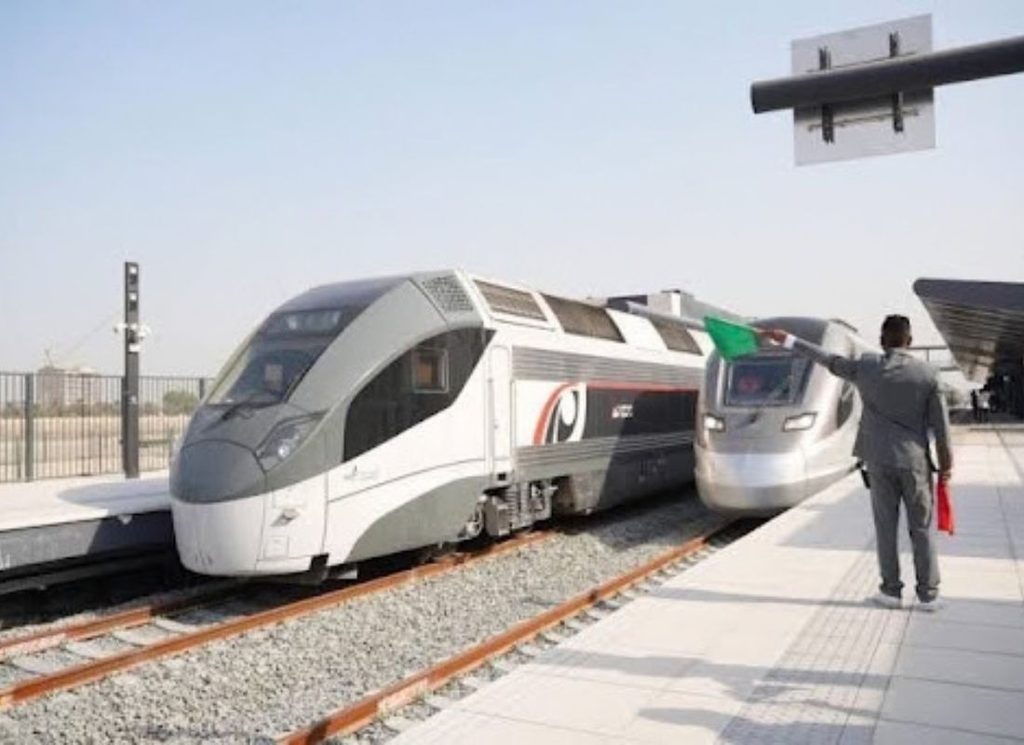
The other two Dubai stations will form part of a separate fully electrified high-speed railway connecting Dubai and Abu Dhabi. The Dubai stops announced for this project are Al Maktoum International Airport and Al Jaddaf.
Etihad Rail says the high-speed service is designed to cut the journey between the two emirates to approximately 30 minutes, with trains capable of operating at speeds of up to 350 km/h. The project is distinct from the conventional national passenger service launching in September 2026.
Where: Al Maktoum International Airport and Al Jaddaf | When: Opening dates not yet announced | Location: Dubai, UAE
How Etihad Rail will connect with Dubai Metro
The bigger story is not simply the arrival of new railway stations, but how they will connect with Dubai’s wider public transport network. Al Yalayis already links with the Red Line at Jumeirah Golf Estates, while the future Gold Line will connect with Etihad Rail at both Jumeirah Golf Estates and Meydan.
Dubai’s 2032 rail expansion is designed around stronger interchange between Metro lines, Etihad Rail and other transport projects. Once the planned connections are completed, passengers should have more options for moving between neighbourhoods in Dubai and destinations across the UAE without relying entirely on road travel.