



Let’s say you find a video on a social platform and want to see who the real owner of that clip is. Doing this manually can take time because it often requires extracting screenshots from multiple video frames and reverse-searching them individually.
But to automate this task, online reverse video search tools stepped in to make the video finding process simple and fast.
This complete guide explains different methods you can use to find the original source of any viral video online.
Let’s dive into this.
Why Finding the Original Video Source Matters
Finding the source of a video is not only useful for creators but also important for researchers, journalists, marketers, and everyday social media users. Here’s why:
- Identify Fake News: You watch the news on social media, and think maybe it’s a fake. To verify if that news is real or fake, the reverse video search process can help you with that. This way, you can save yourself from being misled by people online.
- Inspect Deepfakes: Deepfake and manipulated videos are increasingly common online, making source verification more important. If you receive a video that you don’t want to trust, you can check it through a reverse video search tool and verify it.
- Protect Your Videos from Misuse: Your personal videos are important, and if you think someone is using them without your permission, you can take immediate action against them. Upload the video to the reverse video finder, and it will track where your content is being uploaded.
- Verify Information Sources: The reverse video search technique can also help you discover the real creator of the clip.
3 Ways to Find the Original Source of a Video
Method 1: Reverse Video Search
One of the easiest and most reliable approaches to finding the original source of a video is by using an online reverse video search tool. It can instantly analyze the video and extract key frames from it. Then, the tool will match them with the indexed data and find any exact results.
A perfect example is Revideo.io, which offers free reverse video search with no limitations. You can upload even large video files, and it will find the exact and similar matches in seconds.
Here’s how you can use Revideo:
- Upload the video from your device storage or enter its URL.
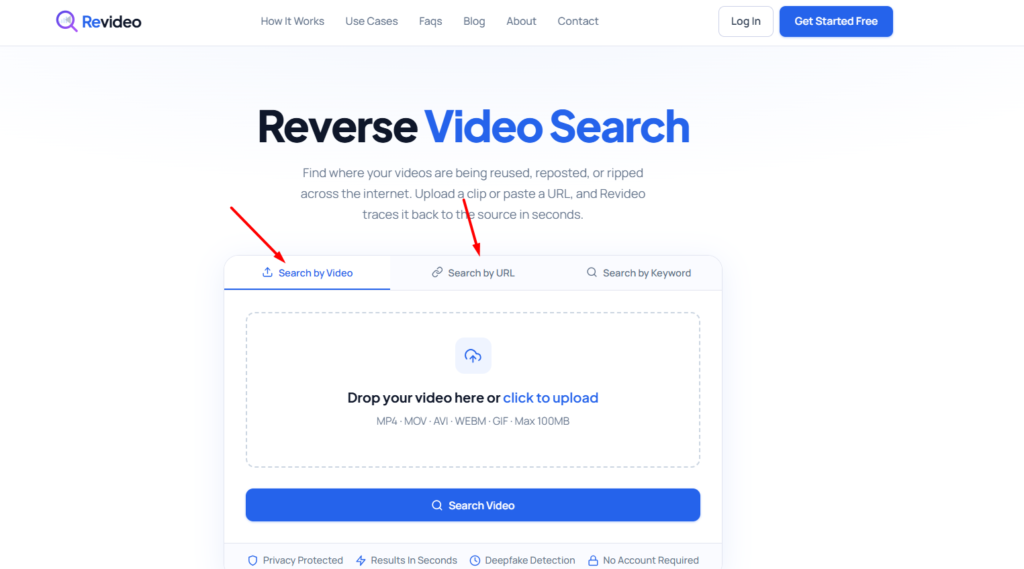
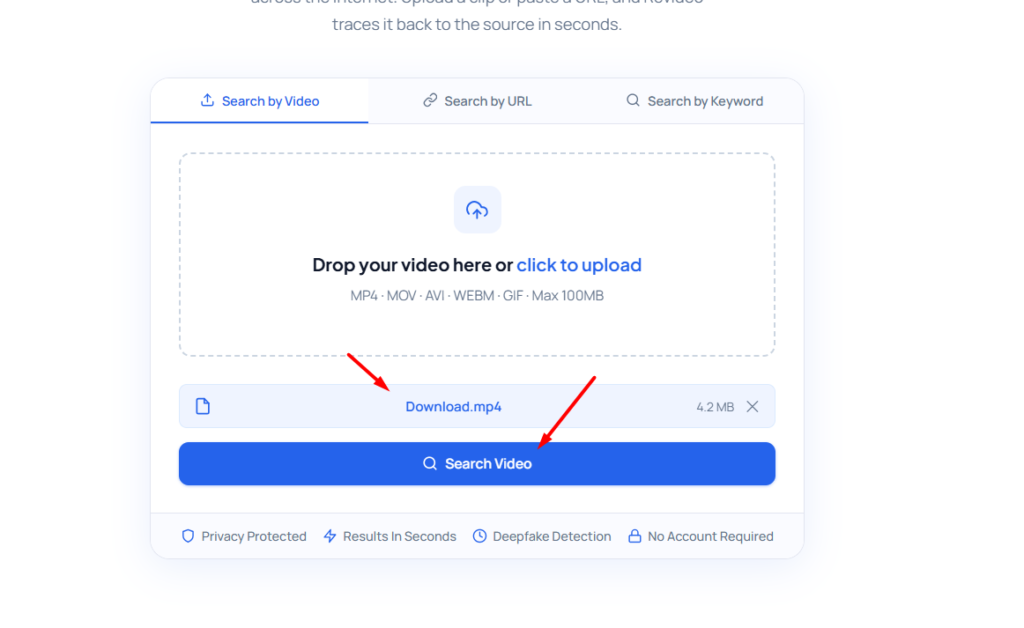
- Once uploaded, click the “Search Video” button.
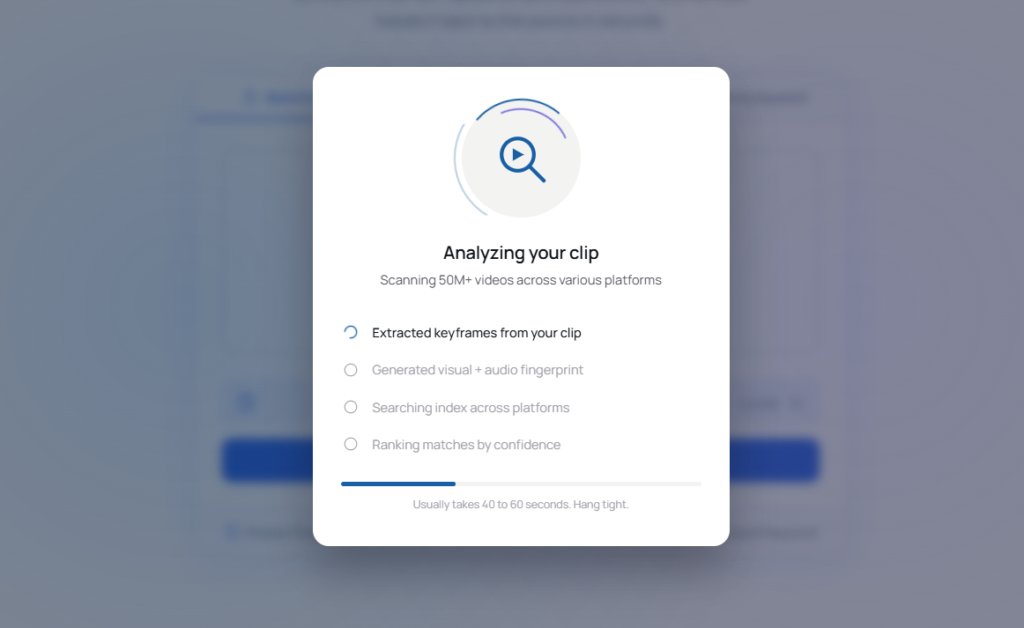
- Revideo will initiate the process and check across multiple platforms and search engines for any similar results.
- Once finished, the tool will provide you with the results along with their source link that you can visit and verify by yourself.
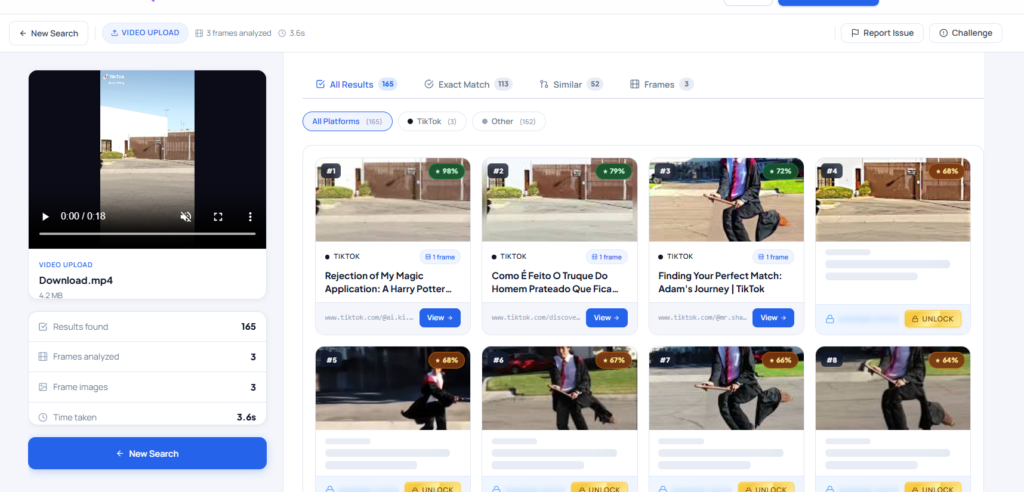
This is how you can use Revideo to find the original source of the video in seconds.
Method 2: Extract Key Frames and Do Reverse Image Search
Basically, this method is also used in online reverse video search tools, but they can do the process much faster than a human could. In this process, you can extract key frames from the video and perform a reverse image search to find similar matches.
You need to take screenshots of almost every second of the video so that an online reverse image search can find you accurate results.
Here’s how you can do that:
- Play the video and start taking screenshots on your mobile or desktop.
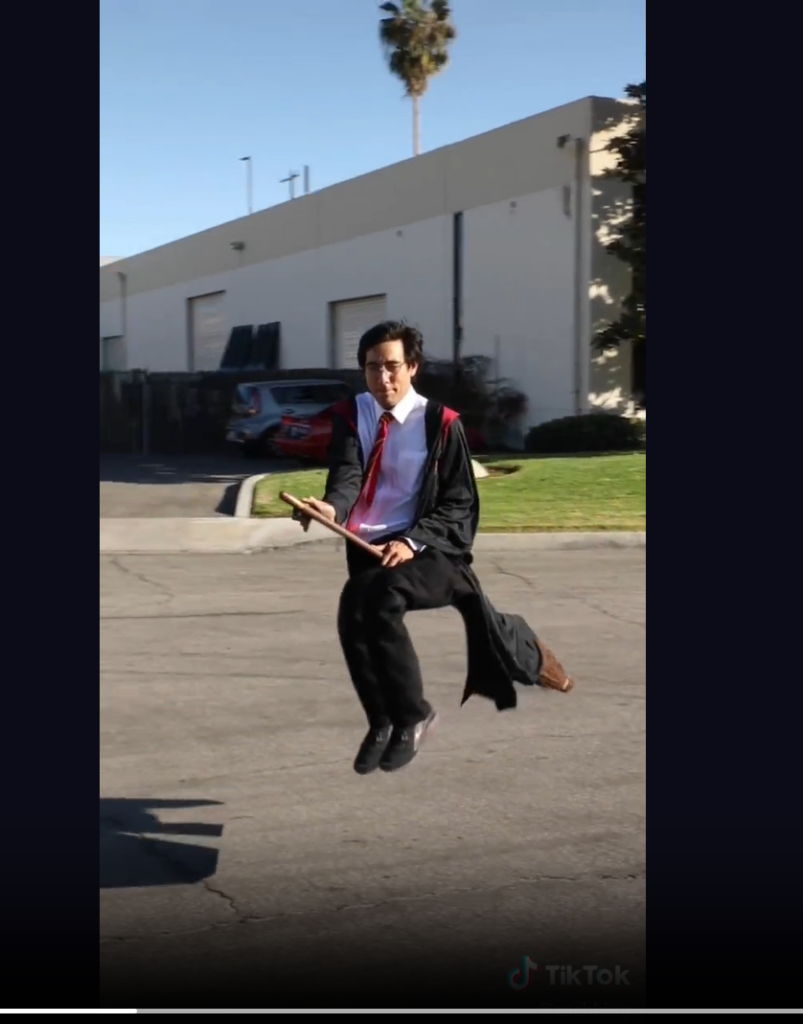
- Now, open a reverse image search tool and upload these screenshots to it, one by one.
- The tool will check the database and see if there are any similar visual images available. If there are, it will show you the results along with their source link.
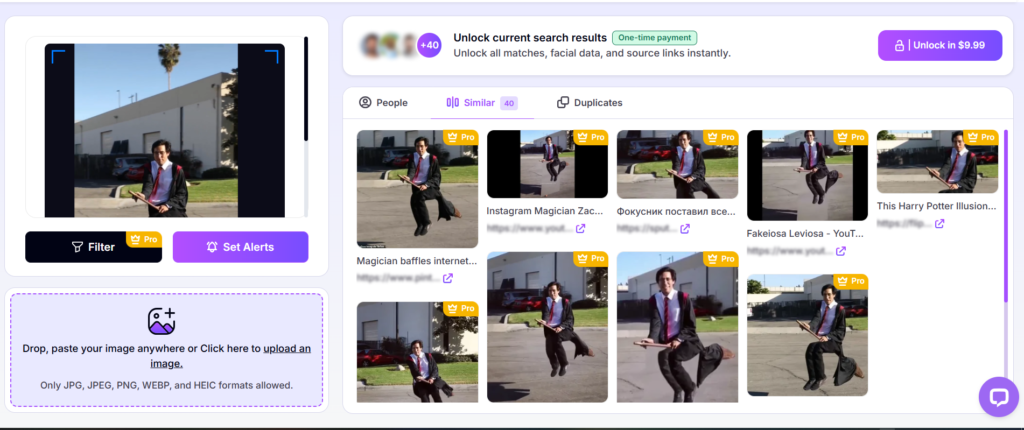
This is how you can perform this manually, but remember, it can take quite some time to get the results.
Method 3: Check Metadata (When Available)
There is hidden data in your video, known as metadata, that contains the name of the owner, the date when the video was created or first published, the device, and the location it was uploaded from.
This kind of information remains hidden on various social platforms like TikTok, Instagram, Facebook, Reddit, and X once the video is uploaded.
Here’s how you can check metadata manually:
- Download the video directly from social media or use a third-party downloader.
- If you are on your desktop, play the video in VLC Media Player.
- Navigate to “Media Information” or “Properties.”
- There, you will see details like file creation date, device name, author, or editing software.
With that metadata, you can easily find the original source of the video without needing to do it manually.
Common Problems When Finding Video Sources
Here are some common problems that can make the reverse video search process difficult.
- Reuploaded Content with Edits:
Avoid checking videos that are edited or recorded with another device. This can alter video frames and resolution, causing reverse video search tools to not find any similar results.
- Cropped Videos:
Avoid uploading cropped clips because trimming out parts of the original frame can remove important visual details. This makes it harder for reverse video search tools to detect matching or similar results accurately.
- Low-Quality Clips:
If videos are of low quality or distorted, finding exact or similar matches can be complicated for an online reverse video finder. Ensure you only upload high-quality clips to discover reposts.
- TikTok Repost Chains:
You can check TikTok reposted videos, but it won’t benefit you. Because TikTok also lets you see who reposted your video in the app without the need for a third-party resource.
Things That You Must Remember for Accurate Video Results
Here are some practical tips that you can implement to get accurate results in your manual or automatic approach.
- Always upload the highest-quality version of the video available.
- Avoid using screen-recorded clips because they alter the original frames.
- Take multiple screenshots from different parts of the video for manual searches.
- Try searching both horizontal and cropped versions if possible.
- Wait some time if the video is newly uploaded because indexing can take days.
FAQ
Can Google reverse search videos?
Google does not directly reverse-search videos, but you can upload screenshots from video frames to Google Images or Lens.
Why can’t I find the source of a video?
The clip may be newly uploaded, edited, mirrored, cropped, or removed from public indexing.
How do I find where a viral video originally came from?
You can use reverse video search, extract screenshots for reverse image search, inspect metadata, and compare upload timestamps.
What is the easiest way to find the original source of a video?
The easiest method is to use a reverse video search tool like Revideo because it automatically extracts key frames and checks for matching content across indexed sources.
Final Thoughts
Let’s conclude this article.
In summary, finding the original source of a video online is now much easier than before. You can do it by extracting frames and verifying the metadata, or you can do it all automatically using reverse video search tools such as Revideo. These techniques let you recognize fake news, discover reposted content, identify the owner, and secure your work from misuse. Just make sure the video you upload is clear, uncropped and not overly edited to be more accurate.