



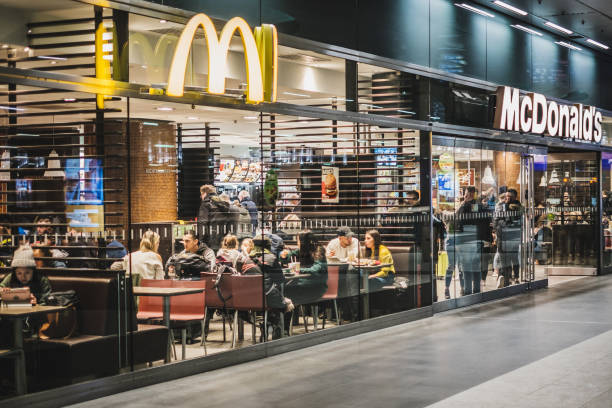
McDonald’s remains the leading fast food chain in the world because it has mastered a simple business promise: quick food, familiar taste, easy access, and predictable value. The company does not need to win every food trend or impress every critic. It wins because it understands how people actually eat when they are busy, traveling, working, shopping, or feeding children on a budget.
McDonald’s has also stayed strong because it is not only a restaurant chain. It is a global franchise system, a real estate operation, a supply chain network, a marketing machine, and a technology-driven customer platform. Each part supports the other. A customer may see only a burger, fries, a drive-thru lane, or a mobile app deal. Behind that simple order sits one of the most organized food businesses ever built.
The company’s growth is not accidental. McDonald’s keeps expanding because it combines consistency with local adaptation. It keeps its famous core products, but it changes menus by country. It sells affordable meals, but it also pushes coffee, chicken, breakfast, desserts, and digital loyalty offers. It faces criticism about health, wages, food quality, and the environment, but millions of customers still choose it because it solves everyday food problems faster than most competitors.
McDonald’s stays number one because it does not try to be everything. It focuses on being easy, familiar, and available almost everywhere.
Familiarity Is One of McDonald’s Strongest Products
McDonald’s sells food, but it also sells certainty. A customer walking into a McDonald’s in Chicago, London, Tokyo, Dubai, or Prague already knows the basic experience. The menu may change by country, but the core idea stays the same. The customer expects fast service, familiar packaging, fries, burgers, chicken, soft drinks, and a simple ordering process.
Familiarity matters because food choices often involve risk. A traveler may not know the local restaurants near a train station. A parent may not want to gamble on a meal their child refuses to eat. A worker with a short lunch break may not have time to search for something new. McDonald’s removes that risk. The customer knows what the food will roughly taste like, how much it will cost, and how long the visit will take.
The golden arches also carry emotional weight. Many adults first visited McDonald’s as children. Happy Meals, playgrounds, birthday parties, toys, and fries created memories that lasted longer than the meals themselves. That childhood connection helps the brand stay relevant across generations. Parents who ate McDonald’s when they were young often take their children there, even if they also criticize fast food in daily life.
McDonald’s also benefits from visual simplicity. Its logo is easy to recognize from a highway, mall corridor, airport terminal, or city street. The brand does not require explanation. In a crowded food market, that recognition creates a major advantage. A small local restaurant may serve better food, but it usually cannot match McDonald’s instant visibility.
The company protects its familiarity by keeping key products on the menu for decades. The Big Mac, fries, McNuggets, McFlurry, Egg McMuffin, and Happy Meal are not just items. They are anchors. Customers return because these products create a stable base. New menu items may come and go, but the classic products keep the brand from feeling unfamiliar.
McDonald’s also understands that global consistency cannot mean total uniformity. The company adjusts menus to local taste, religion, culture, and regulation. India has the McAloo Tikki and many chicken or vegetarian options because beef is culturally sensitive for many customers. Japan has offered teriyaki burgers and seasonal items that match local food habits. Middle Eastern markets have offered products such as McArabia. These examples show how McDonald’s stays global without ignoring local expectations.
This balance is difficult to copy. If a brand changes too much by country, it loses its identity. If it refuses to change, it feels foreign or insensitive. McDonald’s has spent decades learning how to adjust the edges while protecting the center. That is one reason it can operate across so many markets without becoming a different company in each one.
Familiarity also helps McDonald’s during uncertainty. When prices rise, travel becomes stressful, or families cut spending, people often return to brands they know. McDonald’s may not be the most exciting choice, but it is a safe choice. In fast food, safety often wins.
Convenience Still Beats Almost Everything Else
McDonald’s understands that most fast food customers are not searching for the best meal of their lives. They want food that is quick, easy, and affordable enough for the situation. That is why convenience remains one of the company’s strongest advantages.
The company places restaurants where demand already exists. McDonald’s locations appear near highways, schools, business districts, airports, train stations, shopping centers, residential areas, and tourist zones. This location strategy creates constant traffic. Customers do not always plan to eat McDonald’s. They often choose it because it is nearby when hunger and time pressure meet.
The drive-thru is one of McDonald’s most important growth tools. For many customers, especially in the United States, the drive-thru turns McDonald’s into a food utility. People can order without parking, leaving the car, managing children inside a restaurant, or losing time. That matters during work breaks, school pickups, road trips, and late-night stops.
Speed also depends on the process. McDonald’s kitchens are designed around repetition. Staff members follow defined steps. Equipment, packaging, holding times, and menu boards support high-volume ordering. This system does not make the food handmade or personal, but it allows restaurants to serve large numbers of customers quickly.
Convenience now extends beyond the restaurant. Mobile apps, delivery platforms, digital coupons, kiosks, and loyalty programs make McDonald’s easier to use. A customer can order before arriving, collect points, repeat a previous order, or get a discount without speaking to a cashier. These tools reduce friction. They also give McDonald’s more control over how often customers return.
Self-service kiosks change the ordering experience inside restaurants. Customers can browse at their own pace, customize items, and see promotions on the screen. Kiosks also increase order accuracy because customers choose items directly. They can also increase average order size, since the screen can suggest add-ons, desserts, larger meals, or special deals.
Delivery has added another layer of convenience. McDonald’s no longer depends only on customers entering a restaurant or driving through. Delivery apps bring the brand into homes, offices, hotels, and dorm rooms. This matters because modern customers expect food to come to them. McDonald’s was not created as a delivery-first company, but its scale makes delivery possible in many markets.
Price also supports convenience. A restaurant can be nearby and fast, but if it feels too expensive, customers may hesitate. McDonald’s has had to manage criticism about rising prices, especially in the United States, but value remains central to its business. Meal deals, app offers, bundles, and lower-priced items help bring back customers who feel squeezed by inflation.
Families are especially sensitive to price. Feeding two adults and several children at a sit-down restaurant can become expensive quickly. McDonald’s gives families a simpler option. Children know the food. Parents can order quickly. The final bill is usually easier to predict.
Convenience also helps McDonald’s compete with higher-quality chains. A fast-casual restaurant may offer fresher ingredients or better flavor, but it may have fewer locations, slower service, higher prices, or less drive-thru access. McDonald’s does not need to beat every competitor on taste. It needs to beat them with ease. In many situations, it does.
The Franchise Model Makes Growth Faster
McDonald’s is powerful because its business model allows it to grow through local operators while keeping global control. Most McDonald’s restaurants are franchised, which means independent owners run the restaurants under the McDonald’s system. This model gives the company scale without requiring corporate teams to operate every location directly.
Franchising works well in fast food because local ownership matters. A franchisee understands local hiring conditions, customer habits, real estate issues, and daily operations better than a distant corporate office. At the same time, the franchisee benefits from the McDonald’s brand, menu, training systems, supply chain, and advertising power.
This structure spreads risk. McDonald’s can expand into many markets while franchisees invest capital in restaurants. The company earns revenue through rent, royalties, and fees, while franchisees handle much of the restaurant-level operation. This creates a strong financial engine when restaurants perform well.
The franchise model also gives McDonald’s a large network of motivated operators. A good franchisee wants the restaurant to succeed because their own money is involved. That ownership mindset can improve local execution. Corporate employees may manage a store professionally, but franchisees often bring long-term commitment to their locations.
McDonald’s also has a major real estate advantage. The company has long used real estate as part of its business strength. In many cases, McDonald’s controls the land or building and leases it to franchisees. This gives the company influence over locations and creates a steady income stream beyond food sales.
Real estate helps explain why McDonald’s is more durable than many restaurant brands. A normal restaurant chain depends heavily on restaurant margins. McDonald’s benefits from brand strength, franchise fees, and property-linked income. This does not remove business risk, but it gives the company more stability than a chain that simply owns and operates all locations.
Supply chain control is another major advantage. McDonald’s needs huge volumes of beef, chicken, potatoes, buns, cheese, packaging, sauces, coffee, and equipment. It cannot rely on random purchasing. The company builds supplier relationships, quality standards, logistics systems, and food safety rules that support global operations.
This supply chain gives McDonald’s bargaining power. Buying at large scale can reduce costs and create more predictable supply. It also allows the company to keep products more consistent across locations. Customers may complain that the food feels standardized, but standardization is part of the promise. The fries should taste familiar. The bun should look familiar. The sauce should not change dramatically from one visit to the next.
Training and operating systems complete the model. McDonald’s has built procedures for cooking, cleaning, customer service, food safety, layout, equipment use, and management. These procedures allow new restaurants to open with a tested playbook. A new food brand may have a good concept, but scaling that concept across thousands of stores is much harder.
McDonald’s growth comes from this machine-like structure. The public sees the menu. Investors and operators see the system. That system is the real reason the brand can grow for decades while many trendy restaurant concepts rise and fall.
The Menu Changes Without Losing Its Core
McDonald’s stays relevant because it updates the menu without abandoning the products that made it famous. This balance matters. A fast food brand that never changes can look outdated. A brand that changes too much can confuse loyal customers.
The core menu gives McDonald’s stability. Fries, burgers, McNuggets, soft drinks, breakfast sandwiches, and Happy Meals keep customers connected to the brand. These items are easy to understand and easy to order. They also work across many customer groups, including children, teenagers, commuters, workers, and travelers.
The company uses new products to create interest. Limited-time offers give customers a reason to return. Seasonal desserts, special sauces, celebrity meals, chicken sandwiches, wraps, and local items create short-term attention. These products do not need to become permanent to succeed. Sometimes their job is simply to bring customers back for another visit.
Chicken has become especially important. Many customers see chicken as lighter, more familiar, or more acceptable than beef. Chicken nuggets, chicken sandwiches, wraps, and regional chicken items help McDonald’s serve customers who do not want a burger. This gives the company more reach without changing its identity.
Breakfast also helped McDonald’s expand beyond lunch and dinner. The Egg McMuffin and other breakfast items turned the chain into a morning stop for commuters and families. Coffee strengthened that habit. A customer who visits for coffee in the morning may return later for lunch or use the app for a deal.
Coffee is not a small detail. McDonald’s competes with coffee shops by offering lower prices, drive-thru access, breakfast bundles, and familiar drinks. It may not replace specialty coffee for every customer, but it captures people who want convenience more than a café experience.
Desserts and snacks also support growth. McFlurries, pies, cones, cookies, and seasonal sweets allow customers to buy something small without committing to a full meal. These items help McDonald’s attract afternoon traffic, families, and younger customers.
The company also responds to health trends, but it does so carefully. McDonald’s has offered salads, fruit, grilled items, smaller portions, and nutrition information in many markets. Some of these products succeed, while others disappear. The lesson is clear: customers often say they want healthier fast food, but they do not always buy it often enough to keep it on the menu.
This does not mean health does not matter. It means McDonald’s must balance public pressure with real purchasing behavior. A salad may improve brand perception, but fries and burgers still drive traffic. The company cannot become a health-food chain without losing its main customer base.
Menu testing protects McDonald’s from major mistakes. The company can test a product in one city, region, or country before expanding it. If the item fails, the company can remove it. If it works, McDonald’s can scale it quickly. Smaller chains may not have enough locations, data, or supply chain power to test and expand at the same speed.
The menu also affects restaurant operations. Every new item adds complexity. Too many products slow kitchens, confuse staff, increase waste, and hurt service times. McDonald’s must keep the menu interesting without making restaurants harder to run. That discipline is one reason the company avoids chasing every trend.
Marketing Keeps McDonald’s in Daily Culture
McDonald’s has stayed number one because it knows how to stay visible. Its marketing reaches children, parents, teenagers, office workers, sports fans, gamers, collectors, and value-seeking customers. The company does not depend on one audience.
The brand’s marketing starts with memory. Happy Meals created one of the strongest family marketing tools in restaurant history. Toys, boxes, characters, and children’s meals turned McDonald’s into more than a place to eat. For children, it became an event. For parents, it became an easy reward, quick meal, or travel stop.
Nostalgia still works because many adults connect McDonald’s with childhood. The company can bring back old characters, packaging styles, sauces, and products to trigger memory. Nostalgia is powerful when it feels simple and familiar. McDonald’s uses it often, but it also avoids becoming trapped in the past.
Celebrity meals and collaborations help the brand reach younger customers. These campaigns turn standard menu items into cultural moments. The food may not be new, but the story around it is new. A celebrity meal gives customers a reason to post, share, try, and discuss the brand.
Limited-edition packaging and collectibles add another layer. Cups, toys, sauces, and branded items create urgency. Customers who might not normally visit may come in because the item is available only for a short time. This strategy turns ordinary fast food into a small event.
Sports partnerships also fit the brand. Fast food and sports viewing often overlap, especially for families and groups. McDonald’s can connect with fans through sponsorships, athlete partnerships, local teams, and major events. These campaigns keep the brand present in entertainment spaces where people already gather.
Digital marketing gives McDonald’s more precision. The company can promote app deals, location-specific offers, loyalty rewards, and menu launches through phones instead of relying only on television or billboards. This helps McDonald’s talk to customers when they are close to making a food decision.
The brand’s slogans and visual assets also matter. McDonald’s keeps its message simple. It uses short phrases, bright colors, recognizable packaging, and consistent product photography. The marketing rarely needs deep explanation. It is designed for quick recognition.
McDonald’s also benefits from unpaid attention. People talk about its prices, sauces, fries, celebrity meals, menu changes, and mistakes. Even criticism can keep the brand visible. When a company is part of daily culture, people discuss it even when they are not praising it.
The strongest part of McDonald’s marketing is that it matches the product. The company does not try to sound like a fine-dining restaurant. It sells ease, familiarity, value, and small pleasures. The marketing works because it reflects what customers already believe McDonald’s is.
Technology Turns Customers Into Repeat Users
McDonald’s growth now depends heavily on digital ordering and loyalty. The company still serves walk-in and drive-thru customers, but the app has changed the relationship. A customer who uses the McDonald’s app is no longer only a random visitor. That customer becomes part of a data system.
The loyalty program gives customers a reason to return. Points, rewards, app-only deals, and personalized offers create habits. A customer may choose McDonald’s because they have points to use or because the app shows a discount at the right time. Small rewards can influence frequent, low-cost purchases.
Digital sales also give McDonald’s better information. The company can see what customers order, when they order, which offers work, and how behavior changes by location. This data helps shape promotions, pricing, menu decisions, and operations.
Personalized offers are especially important. A customer who often buys coffee may receive a breakfast deal. A family may see a bundle. A late-night customer may receive a snack offer. These offers are more targeted than old mass advertising. They also make customers feel that checking the app is worth the effort.
Kiosks support the same strategy inside restaurants. Digital screens can promote higher-margin items, new products, and meal upgrades. They also reduce pressure at the front counter during busy periods. Some customers prefer speaking to a person, but many accept kiosks because they give more control over the order.
Digital menu boards help restaurants adjust quickly. A printed menu is fixed until replaced. A digital menu can change by time of day, product availability, promotion, or local strategy. Breakfast items can shift to lunch items. A limited-time offer can appear instantly. A restaurant can highlight value meals during price-sensitive periods.
Technology also supports kitchen operations. Better ordering systems help restaurants prepare food more accurately and manage volume. Drive-thru technology can improve lane speed. Forecasting tools can help managers plan staffing and inventory. These details are less visible to customers, but they affect service.
Delivery technology creates both opportunity and pressure. Delivery increases reach, but it also adds costs, packaging needs, timing issues, and quality challenges. Fries do not always travel well. Drinks can spill. Food can arrive cooler than expected. McDonald’s must design packaging and operations around these realities.
Restaurant design has also changed with technology. Modern McDonald’s locations often include pickup shelves, delivery driver areas, kiosks, digital boards, and fewer traditional front-counter features. Even choices such as lighting, traffic flow, seating zones, and restaurant furniture must support faster ordering, shorter visits, and mobile pickup behavior.
Technology does not replace the original McDonald’s model. It strengthens it. The company’s old promise was quick, familiar food in convenient places. The new promise adds digital access, app rewards, delivery, and personalized value. That combination helps McDonald’s stay relevant as customer habits change.
Criticism Has Not Stopped the Brand
McDonald’s faces serious criticism. People question the nutritional quality of its food, the amount of processing, the calorie content, the use of packaging, labor conditions, franchise disputes, pricing, and environmental impact. These concerns are real, and they affect how many people talk about the brand.
Health criticism is the most common. McDonald’s sells many products high in calories, sodium, fat, and added sugar. A regular diet built around fast food can contribute to poor nutrition. The company provides nutrition information and has tested healthier items, but its main sales still come from classic fast food.
Labor criticism also follows the brand. McDonald’s restaurants depend on large numbers of hourly workers. Wages, scheduling, working conditions, and union debates have made the company a frequent target. Because McDonald’s is so visible, it often becomes a symbol for broader problems in low-wage service work.
Environmental criticism focuses on packaging, beef production, emissions, waste, and sourcing. A company of McDonald’s size has a large footprint. Even small changes can matter at scale, but large systems are difficult to change quickly. Customers, governments, and advocacy groups continue to pressure the company to improve.
Food quality criticism also affects perception. Some customers see McDonald’s as processed, industrial, or less authentic than local restaurants. That perception can push certain customers toward fast-casual chains, independent restaurants, or home cooking.
Yet McDonald’s keeps winning because criticism does not always control behavior. Many customers know fast food is not the healthiest option and still buy it. They may choose it during travel, stress, time pressure, budget limits, or family routines. Food decisions are practical, emotional, and situational. They are not always based on ideals.
The gap between opinion and behavior is important. A customer may say they want healthier food but order fries. A parent may prefer fresh meals but stop at McDonald’s after a long day. A worker may dislike rising prices but still choose a familiar meal near the office. McDonald’s benefits from these real-life compromises.
The company also responds enough to reduce some criticism without changing its identity completely. It adjusts packaging, adds nutrition information, tests menu changes, promotes sourcing goals, and offers value deals. These actions may not satisfy critics, but they help protect the brand from looking frozen in time.
Competitors can beat McDonald’s in specific areas. A burger chain may offer better beef. A chicken chain may have stronger chicken sandwiches. A coffee shop may serve better espresso. A fast-casual brand may use fresher ingredients. A local restaurant may offer better flavor. McDonald’s does not need to win every category. It wins the total equation of speed, price, access, familiarity, and scale.
That total equation is hard to defeat. A competitor may open a better restaurant, but opening thousands of better restaurants across countries is much harder. A small brand can be loved deeply by a narrow audience. McDonald’s is used regularly by a massive audience. That difference explains why it remains number one.
Why McDonald’s Is Still Growing
McDonald’s continues to grow because its model fits modern life. People are busy. Families are cost-conscious. Workers have short breaks. Travelers need predictable food. Young customers expect apps, delivery, and rewards. McDonald’s serves all of these needs with a system built for speed and scale.
The company also grows because it keeps learning from its own size. Every order, promotion, product test, app interaction, and store design change gives McDonald’s more information. A smaller competitor may guess what customers want. McDonald’s can test it across markets and measure the result.
International growth gives the brand more room. In some markets, McDonald’s is already mature. In others, it still has space to expand restaurants, delivery, loyalty programs, and localized menus. The brand can grow by opening new locations, increasing digital sales, improving existing restaurants, and raising visit frequency.
Value will remain central to that growth. Customers may accept higher prices at premium restaurants, but fast food must defend its value image. McDonald’s knows this. Meal deals, bundles, app offers, and loyalty rewards help the company speak to customers who feel pressure from rent, groceries, fuel, and family expenses.
Menu discipline will also matter. McDonald’s must keep enough variety to stay interesting without slowing operations. Chicken, coffee, breakfast, snacks, and local items will likely remain important growth areas. The company will continue to test new products, but its classics will stay at the center.
Technology will become more important, not less. The app, kiosks, digital menus, loyalty rewards, delivery systems, and customer data will shape future growth. McDonald’s is no longer only competing for the best street corner. It is also competing for space on the customer’s phone.
The main reason McDonald’s remains number one is not mystery. It built a system around common human behavior. People return to what they know. They choose what is close. They notice the price. They like rewards. They want food quickly. They want children to eat without argument. They want a familiar stop during a long trip.
McDonald’s continues to grow because it understands those moments better than almost anyone else in fast food. It is not the best restaurant in the world. It is the easiest food choice in the world, and that is often more powerful.