


Developed in Dallas by JD Miller since 2001, Reflectionism builds oil paint up to two inches off the canvas, and argues that a painting can only be understood in person.
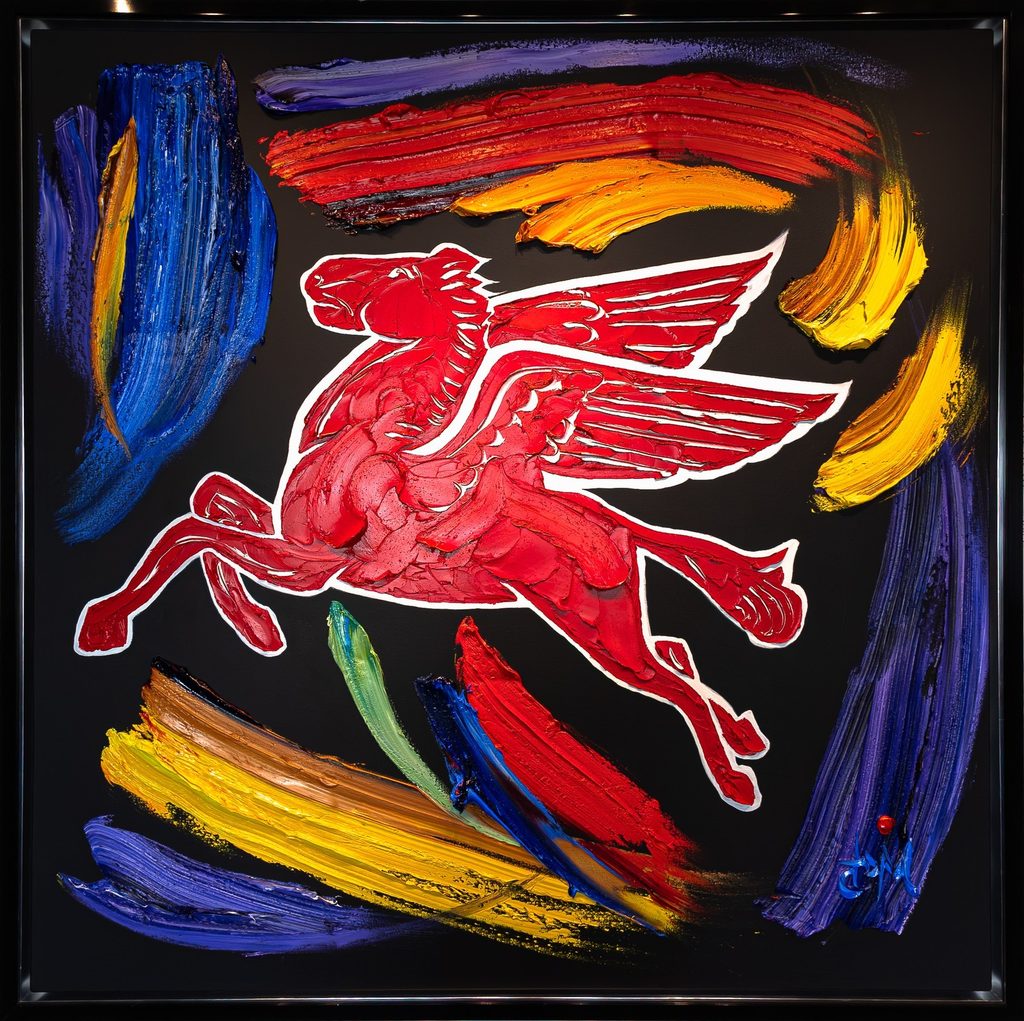
Most people now meet art as a picture on a phone. Reflectionism, an American art movement developed in Dallas by the artist JD Miller since 2001 and formally named in 2026, is built on the opposite idea. Its paintings are sculpted from oil paint that stands up to two inches off the canvas, and the artists who make them argue that a photograph cannot show you what the work actually is.
Here is how Reflectionism works, what its founding idea means, who makes it, and why its artists insist it has to be seen in person.
What is Reflectionism?
Reflectionism is a contemporary movement that turns classical oil painting into a three-dimensional object. A Reflectionist work is not brushed onto a flat surface. It is built, layer by layer, with palette knives, until the paint has depth, ridges and peaks of its own.
The result sits somewhere between painting and sculpture. It hangs on a wall like a painting, but it behaves like an object in a room. Light catches it differently from every angle, so the work changes as you walk past it and as the daylight shifts.
The movement has nine founding artists, led by Miller, who trained the other eight in the method. They share no single subject or palette. What unites them is a common technique and a stated philosophy, which is the traditional test of whether a group of artists amounts to a movement.
How a Reflectionist painting is made
The process starts where most oil paintings stop. Instead of thinning paint and laying it down in coats, the artist loads a palette knife with thick oil and presses it onto the canvas, then builds on top of it. Each stroke adds height as well as color.
Pass by pass, the surface rises one to two inches from the canvas. Every mark stays visible in the finished work: the pressure of the knife, the angle it was pulled at, the place where the artist stopped and started again. Nothing is poured, printed or cast. The painting is the physical record of a person’s hand moving across it.
Miller, who has painted for more than three decades, describes his aim bluntly. “I am not interested in making work that is comfortable,” he has said. “I am interested in making work that is true.”
The Reflectionist Principle, explained
At the center of the movement sits an idea called the Reflectionist Principle. In Miller’s words, “Reflectionism is about what we put into the world and how it is reflected back to us.”
It is easy to mistake that for a spiritual slogan. The movement is careful to frame it as something more concrete: a claim about material. The condition an artist is in while working is physically preserved in the work. Hesitation shows. Confidence shows. The speed, weight and direction of every knife stroke are held in the structure of the paint for as long as the painting exists.
That is why Reflectionist artists work with deliberate, constructive intention. They are not asking the viewer to believe anything about fate or the universe. They are pointing out that a handmade surface keeps a record of how it was made, and choosing to make that record a good one. Miller compresses it into three words that serve as the movement’s motto: “Art is energy.”
It is also what separates a movement from a technique. “A technique can be copied. A style can be imitated. A philosophy must be understood,” Miller has said.
Why it has to be seen in person
This is the part of Reflectionism most people find hardest to believe until they test it. A camera turns a three-dimensional surface into a flat image. The shadows that give the paint its depth are fixed in one position, and the way the work shifts as you move disappears entirely.
The movement states it plainly: a photograph of a Reflectionist painting is not the painting. An image can tell you the colors and the composition. It cannot tell you what the work does in a room, which is the reason it was made. That is why the artists care less about how a work photographs than about how it behaves at six feet, at three feet and from the side.
Where Reflectionism came from
The movement traces its roots to a single evening in 1998. Miller had spent six months attending weekly lectures by the Dallas colorist Liz Richardson before she agreed to give him a private lesson. Over four hours, she painted a golden aspen landscape in front of him and talked through every decision. That same night, Miller went home and painted his own canvas, Costa Rica Red Roof.
Richardson taught him the Golden Mean, color relationships, geometric perspective and compositional structure. On that classical foundation, Miller began pushing oil paint into more and more dimensional territory, until the surface itself became sculptural. In 2001, in Dallas, that practice began to take shape as Reflectionism.
For its first two decades, the movement had essentially one practitioner. It became a shared framework as Miller trained other painters in the method, and in 2026 it was formally named.
Who are the Reflectionist artists?
The nine founding artists of Reflectionism are JD Miller, Philip Romano, Lea Fisher, Carrie Cameron, Tanner Lawley, Sue Yu Petty, Renea Menzies, Kelly Steller Hrad and Sharon Virts.
Their subjects vary from artist to artist. The common thread is the method and the principle behind it. Each artist builds paint by hand into a dimensional surface, and each works with the same stated intention.
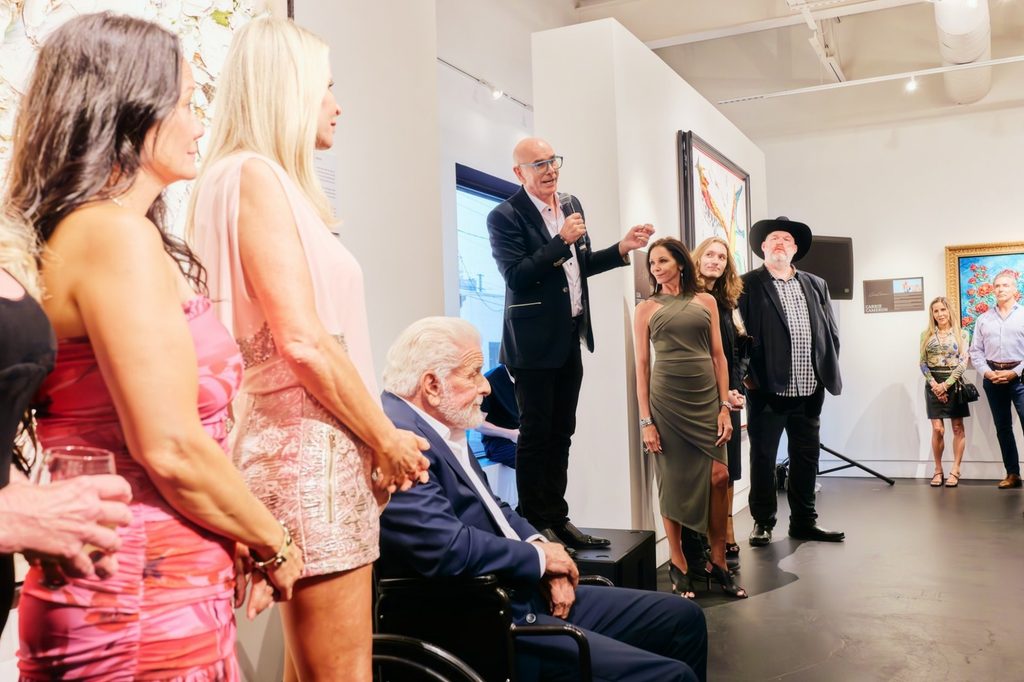
The nine were shown together for the first time at the Inaugural Reflectionist Exhibition, which opened on September 12, 2026, at Samuel Lynne Galleries in Dallas, with a run through October 10.
Why a movement like this is appearing now
Reflectionism arrives at a moment when images have never been cheaper. Software can generate a convincing picture of a painting in seconds. Most art is discovered, judged and even bought through a screen. A great deal of celebrated contemporary work is fabricated by studio teams rather than the named artist.
The movement answers each of those conditions directly. The work is a physical object. It is made by the artist whose name is on it. And it cannot be fully understood anywhere except in the room with it.
Reflectionism does not claim that images are worthless. Its argument is narrower and harder to dismiss: an image of a painting is an advertisement for the painting, and the painting is the work.
Who Reflectionism speaks to
The movement has a clear appeal for three kinds of people.
The first is anyone who has only experienced art through a screen and suspects they are missing something. Reflectionism makes that gap obvious within seconds.
The second is the viewer who is skeptical of contemporary art because it can look effortless. A Reflectionist surface shows its labor openly. Every ridge is a decision someone made by hand.
The third is the collector interested in seeing a movement at its beginning, while its founder is still working and the first generation of its artists is still building the body of work that will define it.
How to look at a Reflectionist painting
The movement’s central claim takes about ten seconds to test. Stand directly in front of a Reflectionist painting and look at it as you would any other. Then take two steps to the left and look again. Then two steps to the right.
The shadows move. Peaks that caught the light go dark, and valleys that were hidden come forward. Colors that looked settled start to shift. That change is the work doing what it was built to do, and it is the one thing no photograph can show you.
Where to see Reflectionism
Samuel Lynne Galleries, at 1105 Dragon Street in the Dallas Design District, is the movement’s home gallery and hosted its inaugural exhibition. Reflectionist work is on view there.
For anyone curious about a movement that asks you to put the phone down, the instruction is simple. Go and stand in front of one.
Reflectionism at a glance
- What it is: A contemporary art movement that transforms classical oil painting into three-dimensional work
- Founder: JD Miller, American artist
- Began: Developed in Dallas, Texas, from 2001; formally named in 2026
- Technique: Oil paint built with palette knives to stand one to two inches off the canvas
- Founding artists: Nine, including Miller
- Core idea: The Reflectionist Principle, that the state in which a work is made is preserved in the work itself
- Motto: “Art is energy”
- Home gallery: Samuel Lynne Galleries, 1105 Dragon Street, Dallas