



As the market expands, the biggest question is no longer which glasses are the most powerful — but which ones actually fit the way you live and work.

AI smart glasses had their breakout moment in 2025.Meta, RayNeo, Rokid, Xiaomi, Huawei, and a growing list of manufacturers all doubled down on the category, pushing global shipments to roughly 8.5 million units, a dramatic increase over the previous year.
The momentum has only accelerated in 2026. In the first four months alone, worldwide shipments approached 3 million units, while new internet companies, smartphone makers, and AR startups continued to enter the market. According to industry estimates, the number of brands grew from just over 40 in 2025 to more than 70 by April 2026—an increase of over 80%. During the same period, the number of available products expanded from around 70 to more than 160.
AI smart glasses have quickly become one of the fastest-moving categories in consumer technology.
We’ve seen this story before.
More than a decade ago, smartwatches went through a similar cycle. Between 2014 and 2016, major players including Apple, Samsung, and Huawei entered the market, fueling rapid growth and fierce competition.
Yet the features that eventually defined smartwatches—health tracking, fitness ecosystems, and mature software—didn’t appear overnight. They evolved over years.
Today’s AI glasses are following much the same trajectory.
The technology is improving rapidly. Prices are becoming more accessible. AI capabilities continue to expand. But the category itself is still searching for its defining identity. Every new product seems to promise something different. Some prioritize photography and video capture. Others project navigation, live captions, or AI responses directly into your field of view. Some are designed around meeting transcription, while others attempt to combine every possible feature into a single device.
Over the past several months, I tested more than a dozen AI glasses across three very different situations: business meetings, international travel, and everyday life, I came to a simple realization: the average buyer doesn’t need to understand large language models, waveguide optics, or multimodal AI before choosing a product.They only need to answer one question:
What do I actually want these glasses to do for me every day?
That answer matters far more than any specification sheet. It determines whether a pair of AI glasses becomes something you wear every morning—or something that quietly disappears into a drawer after the excitement wears off.
That’s why I think comparing products by brand, specifications, or price only tells part of the story. A better way to understand today’s market is to look at the problem each product is trying to solve.
Each category represents a different vision of what role AI could play in our daily lives.Look beyond the technical specifications, and today’s AI glasses can be better understood through three different user needs.
1.AI That Sees the World for You
Using onboard cameras, these glasses can recognize objects, interpret your surroundings, capture first-person photos and videos, and understand the world in front of you. They’re designed for travel, photography, visual search, and content creation.
2.AI That Brings Information Into Your View
Equipped with HUD or AR displays, these products place navigation, live captions, teleprompter text, translations, and AI responses directly in your field of vision, reducing the need to constantly check your phone.
3.AI That Remembers and Organizes Your Work
Instead of cameras or displays, this category focuses on productivity. Meeting transcription, real-time translation, scheduling, note-taking, and voice-first AI assistants make these glasses particularly well suited to professional environments and all-day wear.
The rest of this guide explores each of these three approaches, highlights some of the most compelling products available today, and explains who they’re actually designed for.
Category 1: AI That Sees the World for You
If smartphones turned cameras into an everyday essential, this category aims to make the camera your second pair of eyes.
Every product in this group includes a built-in camera, allowing AI to understand not only what you say, but also what you see. It can identify objects, translate restaurant menus, read street signs, answer questions about your surroundings, and capture first-person photos and videos—all through a pair of glasses.
For travelers, creators, and anyone who enjoys documenting everyday life, this is currently the most exciting category in the AI glasses market. It brings AI out of the chat window and into the real world.
That capability, however, comes with an unavoidable compromise.
Cameras remain one of the defining features of today’s AI glasses, and they also introduce a different set of considerations. When cameras enter conference rooms, offices, hospitals, classrooms, or other sensitive environments, users naturally need to think more carefully about where and how these devices are used.
This doesn’t make Camera AI less valuable—it simply means this category is designed for people who want AI to see and understand the world around them.
Ray-Ban Meta (Starting at $379)
Still the Benchmark for Camera AI
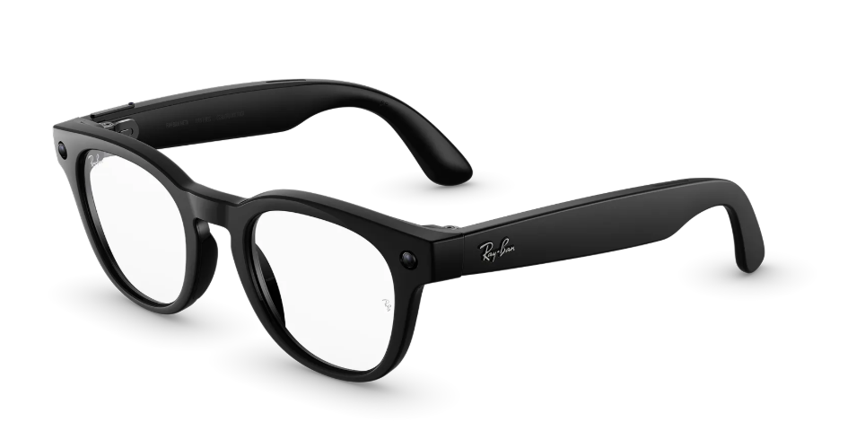
If I could recommend only one camera-equipped AI glasses product today, Ray-Ban Meta would remain the obvious choice.
Its greatest strength isn’t any individual specification. It’s the overall experience. Photography, video recording, visual AI, voice interaction, and Meta AI work together with a level of polish that few competitors have matched. Just as importantly, it still looks and feels remarkably close to an ordinary pair of Ray-Ban sunglasses.
More than any other product in this category, Ray-Ban Meta has demonstrated what Camera AI can look like when the hardware, software, and industrial design all mature together. It remains the product every new competitor is measured against.
Oakley Meta (Starting at $399)
Built for Motion
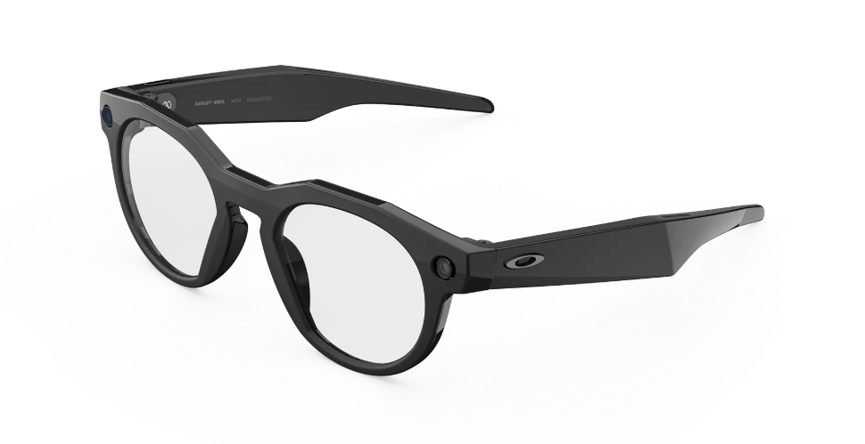
Oakley Meta takes the same AI foundation and adapts it for people who spend more time outdoors than behind a desk.
Its sport-oriented frame is better suited to cycling, running, hiking, skiing, and other outdoor activities where first-person video naturally becomes part of the experience. Rather than trying to replace Ray-Ban Meta, Oakley extends the concept into an entirely different lifestyle.
For athletes and outdoor enthusiasts, it’s arguably the more compelling option.
Rokid AI Glasses (Starting at $299)
Where Camera AI Meets AR
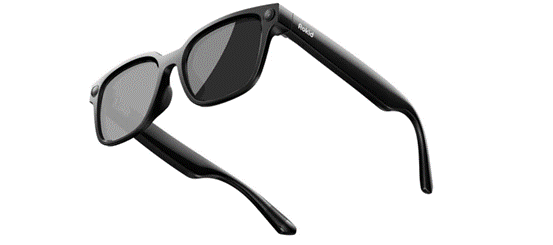
Rather than following Meta’s formula, Rokid is pursuing a more ambitious vision.
Alongside its built-in camera, the glasses incorporate a lightweight HUD capable of displaying translations, navigation, and AI responses directly within your field of view. In many ways, Rokid represents one of the earliest attempts to merge visual AI and wearable displays into a single product.
The experience isn’t as refined as dedicated Camera AI devices or specialized AR glasses, but that’s precisely what makes it interesting. It offers a glimpse of where the industry may eventually head—a future where AI can both understand the world around you and present useful information without requiring you to reach for your phone.
For early adopters eager to experience the next stage of AI glasses, Rokid remains one of the most intriguing products available.Travelers, content creators, and anyone who frequently interacts with unfamiliar environments are likely to get the most value from Camera AI.
It is worth noting that as AI glasses continue to evolve, the boundaries between categories are becoming increasingly blurred. Some products are already combining cameras, AI perception, and display capabilities. But ultimately, a product is defined not by how many features it offers, but by the problem it is designed to solve.
That brings us to the second category: AI glasses that aim to move information beyond the smartphone screen and directly into your field of view.
Category 2: AI That Brings Information Into Your View
What defines this category is the addition of HUD or AR display systems that project digital information directly into your field of view. Rather than requiring you to constantly check a phone, these products aim to deliver information more naturally, appearing when and where you need it.
Today, this approach is developing along two distinct paths. One focuses on lightweight HUD experiences, bringing navigation, live captions, translations, teleprompter text, and AI responses into everyday situations. The other explores more immersive AR workspaces, turning glasses into a portable virtual display that can replace—or expand—the screen real estate of a laptop. For software developers, designers, and financial professionals, this could mean carrying a multi-monitor setup wherever they go.
This category introduces a more direct way of accessing information and represents a new exploration of human-computer interaction. At the same time, creating a truly capable HUD or AR experience requires significantly more advanced technology. These products demand more sophisticated optical systems, greater processing power, and larger battery capacity. As a result, current products in this category often require more trade-offs between price, weight, battery life, and wearing comfort.
The differences between manufacturers are also more noticeable. Display quality, brightness, field of view, comfort, software ecosystems, and app support all play an important role in the overall experience. For users who wear prescription lenses, customized optics, lens replacement, and long-term maintenance can further affect the total cost of ownership.
That is why choosing AR glasses today is not simply about selecting a technology. It is about understanding whether this new way of accessing information fits your lifestyle and workflow. For some users, having information directly in their field of view could fundamentally change the way they work and interact with the digital world.
The following products represent some of the most interesting directions within this evolving category.
Broadly speaking, today’s display-equipped smart glasses fall into two camps. Some prioritize discreet HUD experiences that integrate naturally into everyday life. Others aim to deliver expansive virtual displays for productivity and entertainment.
Even Realities G2 (Starting at $599)
The Best Everyday HUD Experience
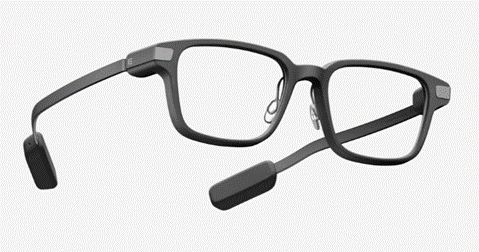
Even Realities has deliberately avoided chasing the most spectacular AR effects.
Instead, the G2 focuses on making digital information feel natural. Navigation, live captions, translation, teleprompter support, and AI notifications appear only when needed, minimizing visual distraction while keeping essential information within view.
That restraint is exactly what makes it one of the most polished HUD products currently available. Rather than reminding you that you’re wearing smart glasses, the G2 gradually fades into the background—something that’s surprisingly difficult to achieve.
For anyone curious about HUD glasses but unwilling to sacrifice everyday comfort, it’s one of the strongest products on the market today.
Halliday Glasses (Starting at $289)
Making Smart Glasses Feel Like Ordinary Glasses
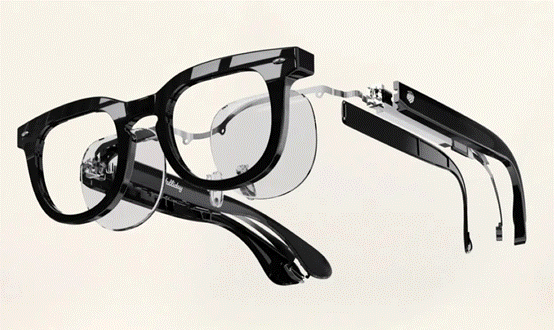
Halliday shares a similar philosophy but pushes even further toward simplicity.
Instead of emphasizing futuristic visuals, it concentrates on comfort, discretion, and all-day wearability. The display remains intentionally subtle, allowing the glasses to blend naturally into daily life instead of demanding your attention.
That design philosophy makes Halliday particularly appealing for users who care less about showcasing cutting-edge technology and more about finding something they can comfortably wear from morning until night.
Sometimes, the most successful technology is the technology you barely notice.
XREAL One Pro (Starting at $649)
The Best Portable Display for Serious Work
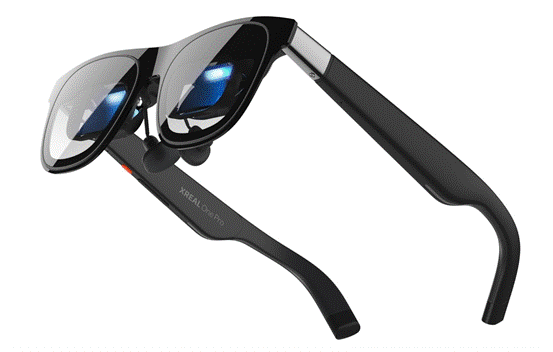
Not everyone needs navigation floating in front of their eyes.
Some people simply want a much larger screen.
That’s exactly where the XREAL One Pro excels.
Connected to a laptop, tablet, or smartphone, it creates a virtual display that feels dramatically larger than a conventional notebook screen, making programming, design work, financial analysis, spreadsheets, video editing, and multitasking significantly more comfortable while traveling.
Unlike lightweight HUD glasses, XREAL isn’t trying to replace your smartphone.
It’s trying to replace the external monitor you couldn’t fit into your backpack.
For professionals who spend their lives working on the road, that can make all the difference.
Viture Beast (Starting at $549)
A Well-Balanced Mix of Productivity and Entertainment
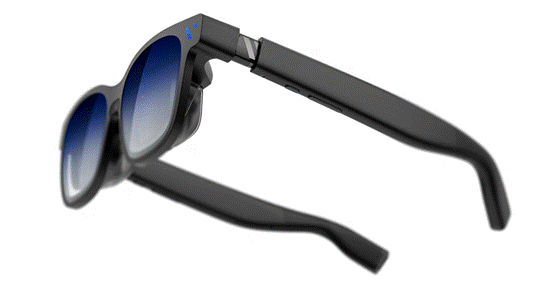
Viture has chosen a broader approach.
Its products are equally comfortable serving as portable entertainment systems for movies and gaming or as large virtual displays for work. That balance makes them especially attractive to people who don’t want separate devices for productivity and leisure.
While dedicated work-focused users may still prefer XREAL, Viture offers one of the most versatile experiences currently available in the AR display market.
Like every category discussed in this guide, display-equipped AI glasses involve compromise.They introduce an entirely new way of interacting with digital information, but they also demand more sophisticated hardware, higher prices, and software ecosystems that are still maturing. For most consumers, this probably isn’t the safest place to begin their AI glasses journey.
It may, however, offer the clearest preview of where personal computing is headed next.
If the first two categories better match our imagination of what AI glasses might become in the future, the third category may receive less attention. But for some users, the priority is not visual experiences, but an AI assistant that can naturally fit into their daily lives and workflows, helping them work more efficiently. That is the direction this category is exploring.
Category 3: AI That Remembers and Organizes Your Work
They typically skip cameras and display systems, focusing instead on voice interaction, meeting transcription, real-time translation, scheduling, and AI assistance. Rather than helping you see more or putting more information in front of your eyes, they focus on reducing the information burden of everyday work.
They feel more like an always-available work partner. They can automatically record meetings and generate summaries, translate conversations with overseas clients in real time, help you recall discussions from hours earlier, and surface important information without requiring you to open your phone or laptop. Their goal isn’t to capture your life—it’s to help you stay focused on the work in front of you.
For professionals whose work revolves around meetings, travel, client communication, and managing large amounts of information, this category offers a different approach to organizing and accessing knowledge.
By removing the camera, these products also reduce some of the limitations that come with everyday wear. In offices, hospitals, factories, client sites, and other environments where camera-equipped devices may be restricted or discouraged, they are often easier to use and accept.
But this design also comes with trade-offs. Without a camera, they cannot understand the world around you in the same way Camera AI products can. Without a display system, they cannot place navigation, captions, or other visual information directly in your field of view. In addition, voice-based interaction can be affected by background noise, conversation settings, and individual usage habits.
Before choosing this category, the more important question is: In your daily work, would an AI assistant that helps you capture, organize, and retrieve information actually fit your needs?If the answer is yes, this category may be worth exploring further.
Dymesty Cook Edge (Starting at $269)
Designed for Professionals, Not Demonstrations
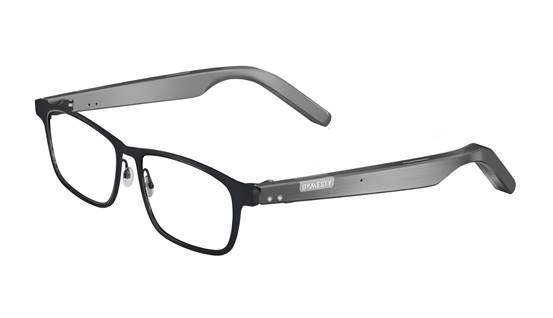
Among today’s productivity-focused AI glasses, Dymesty Cook Edge has one of the clearest product philosophies.
From day one, it was designed for business professionals who are looking for practical ways to integrate AI into their work—not to impress them with futuristic features. The goal is straightforward: create a pair of smart glasses that fit naturally into professional environments, remain comfortable enough for all-day wear, and feel as natural to wear each morning as a traditional pair of premium eyewear.
The company’s approach is different from many AI glasses makers: instead of maximizing visible features, it focuses on workflow improvements that matter during meetings, travel, and daily communication.
That philosophy is reflected in nearly every design decision.Instead of adding cameras or display systems, Dymesty prioritizes features that working professionals actually use: meeting transcription, AI-generated summaries, real-time translation, and a voice-first AI assistant. The frame is made from titanium, offering a lighter weight and a more premium feel than conventional materials while reflecting the higher manufacturing standards typically associated with luxury eyewear.
Some AI glasses are designed to create an immediate sense of novelty. Dymesty takes a different approach, focusing on becoming part of a user’s daily workflow.
Solos AirGo 3 (Starting at $299)
The Most Flexible Productivity Platform
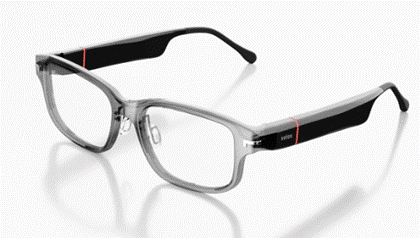
Solos has been exploring productivity-focused smart glasses longer than most of its competitors, and that experience shows in the AirGo 3.
Rather than building its ecosystem around a single AI model, Solos embraces flexibility.Users can work with different AI services and adapt the glasses to their existing workflows, rather than relying on a single AI platform.
That openness makes AirGo 3 particularly appealing for professionals who already rely on tools such as ChatGPT, Claude, or Gemini throughout the workday. As new AI models continue to emerge, the platform is well positioned to evolve alongside them.
Where Dymesty feels like a dedicated AI assistant, Solos feels like an open AI workspace—one that adapts to the tools you already use rather than asking you to change the way you work.
Lawaken AI Chat City (Starting at around $199)
A Practical Starting Point for Exploring AI Glasses
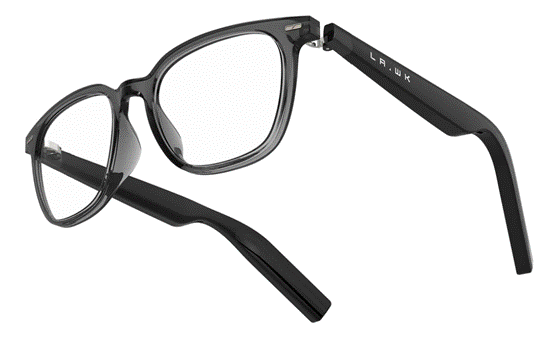
Not everyone needs to spend several hundred dollars on their first pair of AI glasses.
Lawaken AI Chat City represents a more affordable entry point into the category while still covering the fundamentals. Voice interaction, AI assistance, and real-time translation are all included, giving users a way to experience the core capabilities of productivity-focused AI glasses.
Its materials, industrial design, and software refinement don’t quite match the market leaders, but that’s not really the point.
Do AI glasses actually fit into your daily routine? For users who are still exploring whether they will regularly wear AI glasses, Lawaken AI Chat City can provide a lower-cost way to experience the category before making a larger investment.
This category offers a more natural way to manage information within everyday workflows. For lawyers, physicians, consultants, professors, sales professionals, executives, entrepreneurs, and other professionals who regularly handle large amounts of information, these products may provide particular value. Their advantage is not a single impressive feature, but the accumulation of small improvements across daily tasks—fewer missed details, greater efficiency, and easier access to the information users need.
This approach also comes with its own set of trade-offs. By giving up the visual understanding capabilities that come with cameras, these products gain lighter designs, longer battery life, and a form factor that is better suited for all-day wear.
Today’s AI glasses are still in the process of defining what they will ultimately become.
Some companies believe cameras will become AI’s eyes. Others see HUDs as the next computing interface. Still others are betting that the products with the greatest long-term potential will be the ones that quietly improve how we work and manage information.
Perhaps, a few years from now, these three approaches will converge into a single product. Or perhaps one will emerge as the dominant direction while the others evolve into niche categories. At this stage, no one really knows.
What seems increasingly clear, however, is that the future of AI glasses won’t be decided by the company that adds the most features. It will be shaped by the companies that better understand how people want AI to fit into their everyday lives.
What we do know is that, for today’s buyers, choosing the right product philosophy matters far more than comparing AI models, specifications, or feature lists.
The real question isn’t: Which AI glasses are the most powerful?
It’s: Which type of AI glasses best fits the way you live and work?
Because in the end, the success of a pair of AI glasses won’t be determined by how many features it offers on launch day. It will be determined by something much simpler:
One or two years from now, is it still the pair you reach for every morning?