



In formal business meetings, translation is not just about understanding another language. It is about making the meeting work.
A sales call needs trust. A product demo needs clarity. An investor meeting needs confidence. A negotiation needs precision. In these situations, translation quality directly affects whether people understand the message, trust the speaker, and make decisions efficiently.
For years, companies had two imperfect options: human interpretation or machine translation.
Human interpreters are good at capturing nuance, tone, and intent. But they can also add delay, increase cost, and struggle with company-specific terms if they are not fully prepared.
Machine translation is fast and scalable. But in business meetings, it often feels too generic. It may miss professional vocabulary, flatten the speaker’s tone, or deliver speech in a robotic voice that feels disconnected from the person speaking.
The result is a trade-off: human translation feels more natural but slower; machine translation is faster but often less expressive.
That trade-off is starting to disappear.
Real-time AI voice translation, combined with voice cloning and keyword context, is creating a better standard for multilingual business meetings. It brings together the speed of machines and the expressiveness of human communication.
Business Meetings Need Accuracy and Efficiency
In casual conversations, a rough translation may be enough. Business meetings are different.
A mistranslated product name can confuse a customer. A delayed response can weaken a sales conversation. A flat machine voice can make a confident pitch sound less persuasive. A missing tone can make feedback sound colder than intended.
For professionals who often join cross-language meetings, the real question is not simply:
“Can this tool translate?”
The better question is:
“Can this translation help the meeting move forward accurately and efficiently?”
That requires three things:
- Accurate terminology, especially for product names, technical terms, customer names, and industry vocabulary
- Low latency, so the conversation keeps its natural rhythm
- Natural voice delivery, so the speaker’s tone, confidence, and presence are not lost
This is why real-time AI voice translation is becoming more useful for formal business meetings.
Why Human Interpretation Alone Is Not Always Enough
Human interpreters still matter, especially in highly sensitive or complex situations. They can understand context, adapt expressions, and communicate nuance.
But for everyday business meetings, interpretation can create friction.
There is often a delay between the original speech and the translated message. This changes the pace of discussion. People respond later, interrupt less naturally, and sometimes lose momentum.
Interpreters may also need strong preparation to handle product terms, internal project names, technical acronyms, or industry-specific language. Without enough background, even a skilled interpreter can mistranslate key terms.
Most importantly, the speaker’s message is still delivered through another person. The meaning may be correct, but the speaker’s own voice, tone, and presence are partly filtered.
For meetings where confidence, trust, and speed matter, these limitations can affect outcomes.
Why Machine Translation Alone Falls Short
Machine translation solves part of the problem. It is fast, available, and scalable.
But traditional machine translation often struggles with business communication because it lacks enough context and presence.
It may translate general language well but miss company-specific vocabulary. It may provide subtitles but force participants to read instead of listen. It may generate voice output, but the voice often sounds generic or robotic.
In formal meetings, that matters.
A founder’s pitch, a sales explanation, a manager’s feedback, or a customer success conversation all depend on more than the literal meaning of words. Tone, urgency, confidence, and empathy shape how the message is received.
If the translated voice feels detached from the speaker, the meeting becomes understandable but less effective.
A Better Model: AI Translation With Human-Like Communication
The next stage of meeting translation is not simply “machine replaces human.” It is machine efficiency combined with more human-like communication.
Real-time AI voice translation can listen, translate, and speak with much lower delay than traditional interpretation workflows. Voice cloning can make the translated speech sound closer to the original speaker, helping preserve tone and presence. Keyword and context support can improve accuracy for professional terms.
Together, these capabilities address the two biggest concerns business users have:
- Will important terms be translated correctly?
- Will the speaker’s meaning and tone be preserved?
This is the real value of combining AI translation, voice cloning, and meeting context. It improves both accuracy and efficiency.
For example:
- In a sales call, low-latency translation helps the conversation stay responsive.
- In a product demo, keyword context helps product and feature names stay accurate.
- In an investor meeting, voice cloning helps the founder’s confidence carry across languages.
- In a support escalation, natural voice translation helps preserve reassurance and empathy.
- In a cross-border team meeting, subtitles and summaries help everyone stay aligned.
The goal is not just to translate faster. The goal is to make multilingual meetings more effective.
How Transync AI Supports This Workflow
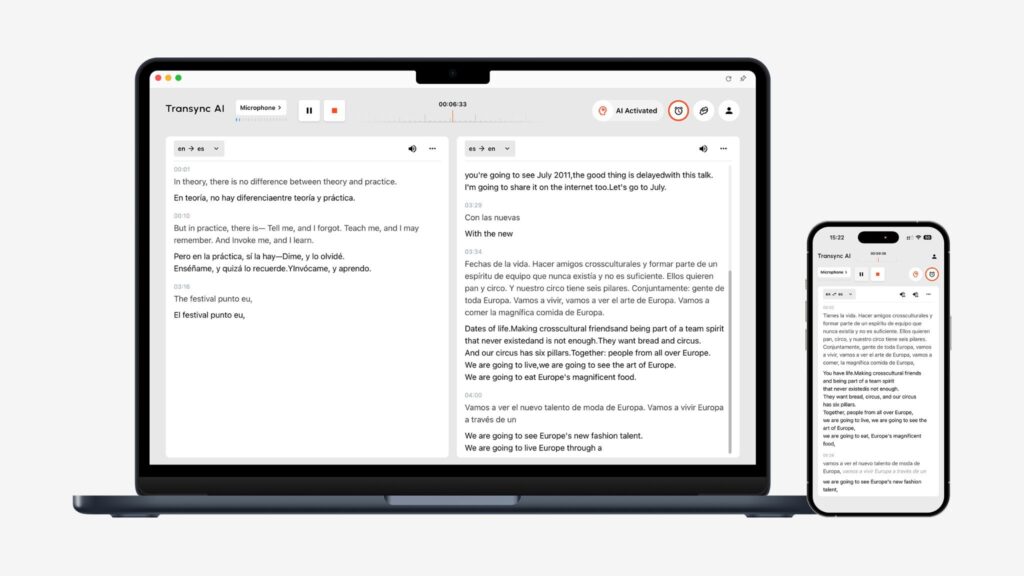
Transync AI is built for formal multilingual meetings where accuracy, speed, and communication quality all matter.
The New Era of Multilingual Meetings: Real-Time Translation in Your Own Voice
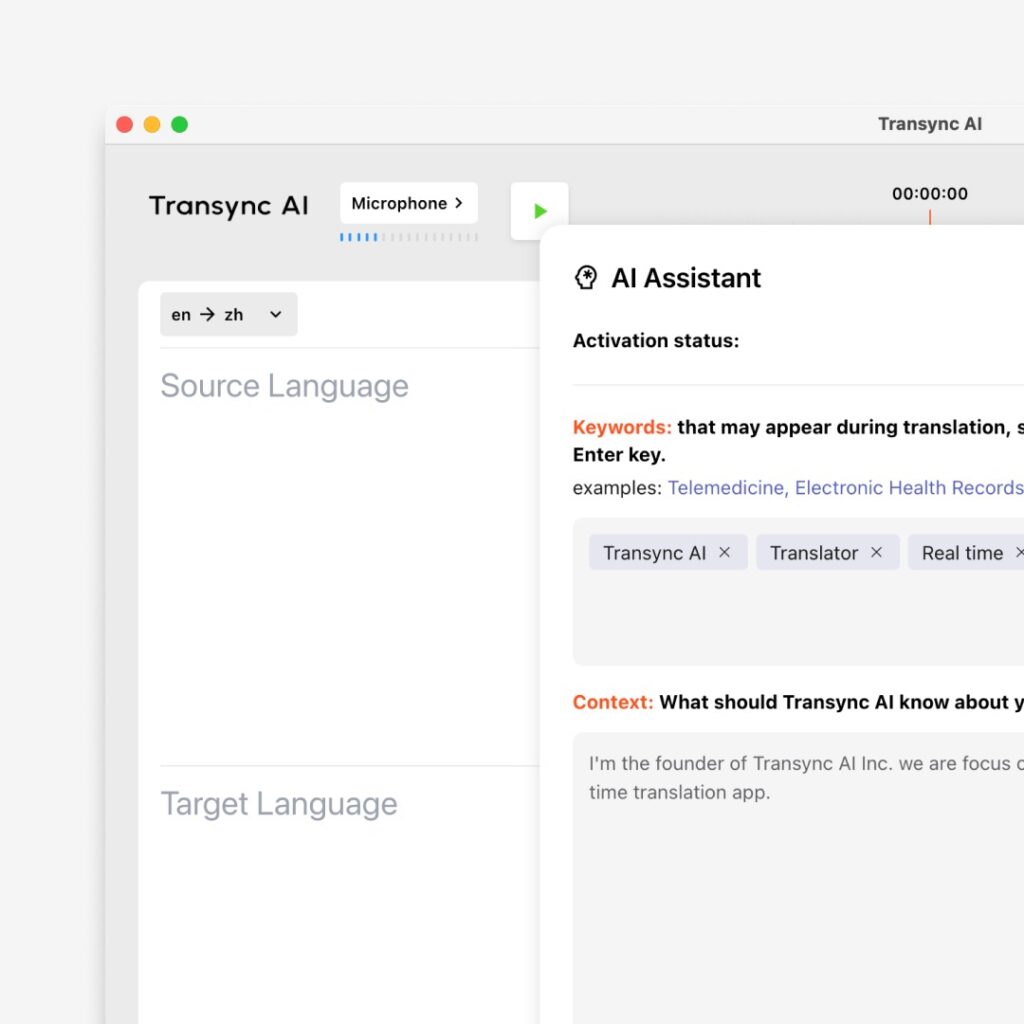
It supports real-time translation for online meetings, helping participants follow and respond during live conversations. With keyword and context support, users can add important terms before or during a meeting so the translation better matches the business topic.
The New Era of Multilingual Meetings: Real-Time Translation in Your Own Voice
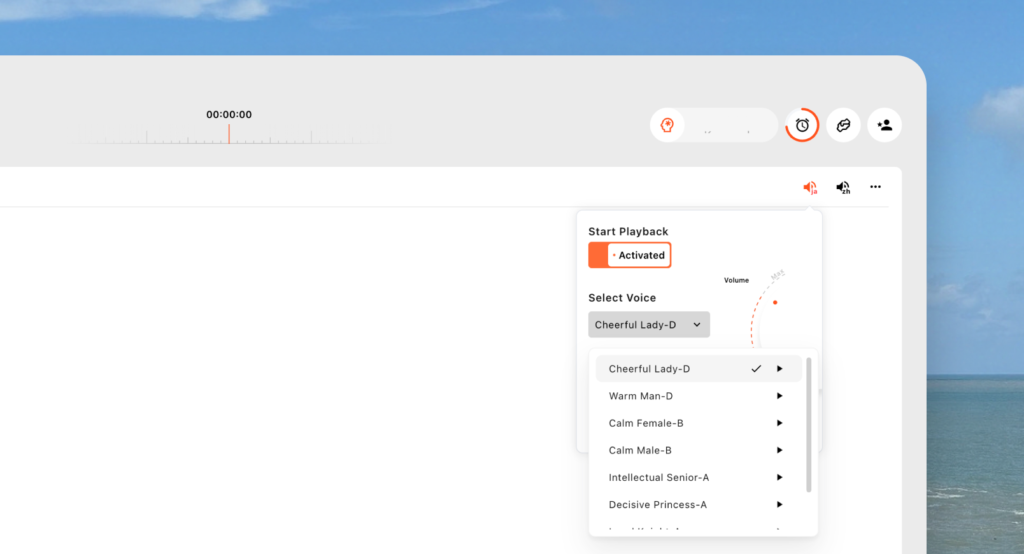
Transync AI also supports natural voice translation and voice cloning, allowing translated speech to be delivered in a voice that sounds like the speaker. This helps preserve tone, confidence, and presence across languages.
The New Era of Multilingual Meetings: Real-Time Translation in Your Own Voice
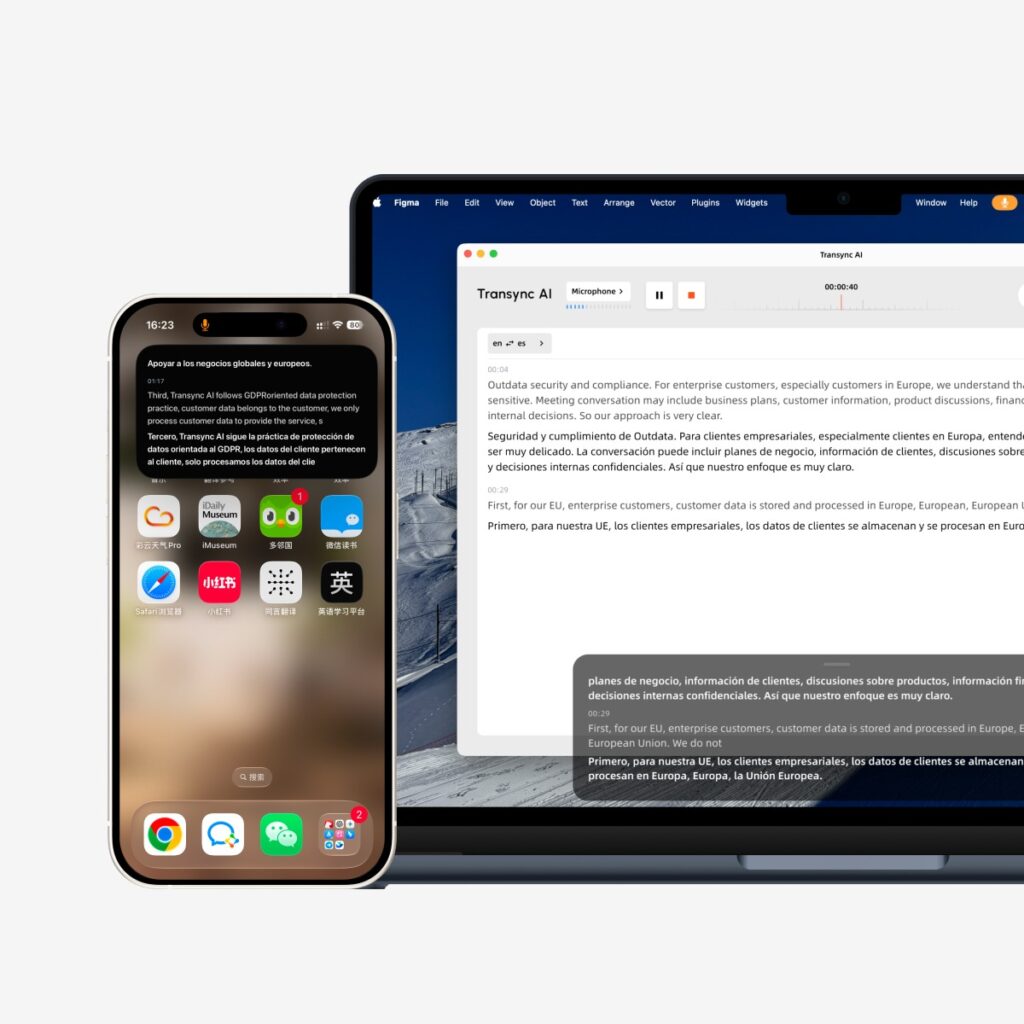
For visual support, floating bilingual subtitles can stay visible during presentations, product demos, or multitasking. After the meeting, AI-generated summaries help capture key decisions and follow-up items.
The New Era of Multilingual Meetings: Real-Time Translation in Your Own Voice
In this workflow, translation becomes more than a language tool. It becomes a way to improve meeting accuracy and efficiency.
Final Thought
For formal business meetings, the future of translation is not choosing between human interpreters and machine translation.
Human interpretation offers nuance but can be slow and costly. Machine translation offers speed but can lose context and tone.
Real-time AI voice translation is beginning to combine the strengths of both: the speed and scalability of machines, with a more natural, human-like speaking experience.
With voice cloning and keyword context, multilingual meetings can become more accurate, more efficient, and more persuasive.
The key takeaway is simple:
**The best translation for business meetings is not just the one that converts words. It is the one that helps the meeting succeed.