



Innovation in 2026 is no longer defined by a single sector. It is defined by overlap or where artificial intelligence meets healthcare, where academia meets commercialization, and where execution matters more than theory. The founders shaping this moment are not building in isolation, but across systems.
This year’s list of five entrepreneurs reflects that shift. Each one operates in a different domain, but all share a common pattern: they are building infrastructure, not just companies.
1. Eleonora Berylo — Turning GTM Strategy Into a Revenue Operating System

Eleonora Berylo represents a category of operators increasingly central to modern SaaS growth: the GTM systems builder.
As Founder of ELAR Group and an executive across partnerships and growth roles, she focuses on a consistent problem across the B2B SaaS ecosystem which is strong products that fail to convert into scalable revenue because positioning, partnerships, and monetization are fragmented rather than integrated.
Her work centres on U.S. market entry strategy, strategic partnerships, marketplace-led growth, AI-enabled automation, and product-led monetization systems. Rather than treating these as separate disciplines, she connects them into a single commercial framework designed to move companies from early traction to repeatable revenue.
Her background spans ecosystem development roles in mobile growth and SaaS expansion, including leadership within partner-driven commercialization environments such as cloud marketplace distribution and co-sell motions.
What distinguishes her positioning is less about marketing language and more about structure: ELAR Group is built as a GTM infrastructure layer for companies scaling into the U.S. market, particularly B2B SaaS, AI-native software products, and consumer-first platforms.
2. David Z. Jacome — Bridging Physics, Accounting, and Applied AI in Business Education

David working with students at SUNY Brockport.
At a cross between academia and enterprise AI sits David Z. Jacome, Lecturer in Accounting and Accounting Area Coordinator at SUNY Brockport and Founder of AI Solutions.
His career spans an unusual combination: physics research, accounting education, enterprise systems, and AI-driven business transformation. That combination now defines his central thesis which is that AI literacy and data fluency are becoming baseline competencies across business disciplines, particularly accounting, finance, and analytics.
Through AI Solutions, he works with organizations on enterprise AI strategy, data analytics transformation, and applied AI integration in operational environments. His academic work complements this by focusing on how accounting and business education must evolve in response to generative AI and automation.
Unlike many consultants who specialize narrowly in AI tooling, his positioning is explicitly cross-disciplinary: physics-trained systems thinking applied to financial, educational, and enterprise decision-making.
His broader academic and professional footprint includes roles across multiple institutions in the Northeast and involvement in curriculum design, AI integration in higher education, and applied analytics education.
Supporting his applied work is his institutional presence at SUNY Brockport, where he contributes to AI-focused academic initiatives and accounting education modernization efforts:
SUNY Brockport Faculty Profile
And his applied consulting work is anchored through AI Enterprise Solutions:
AI Enterprise Solutions
3. Christopher Grant — The Magician Rebuilding Healthcare Innovation From First Principles
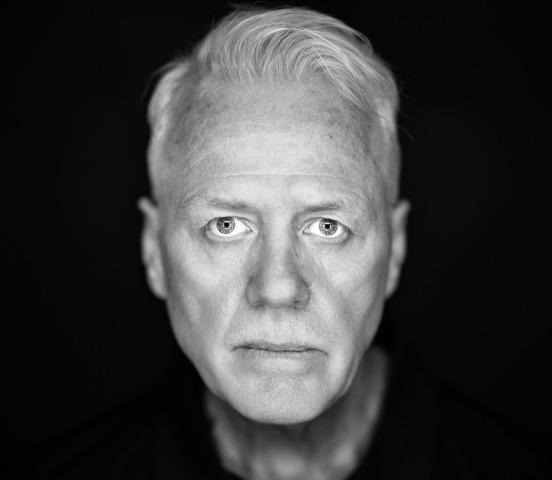
Few founders on this list have a framework as distinctive as Christopher Grant, Chief Commercial Officer of EyeCheq.
Grant’s career spans theater production, professional magic, and healthcare commercialization. That unusual path is not a narrative detour, but central to his operating philosophy.
At the core of his work is what he calls “effect-first thinking,” a framework influenced by stagecraft and magic: define the outcome first, then design the system that produces it.
At EyeCheq, that philosophy is applied to point-of-care diabetic retinal screening technology designed to identify sight-threatening conditions in asymptomatic patients before irreversible damage occurs.
Reported operational performance includes high detection rates at initial screening, near self-service workflow completion, and scalable imaging quality suitable for broad deployment.
But Grant’s influence extends beyond technology. His keynote framework, “The Architecture of a Miracle,” argues that industries fail not from lack of innovation, but from reversed sequencing—choosing methods before defining outcomes.
His prior work in performance and audience psychology informs how he approaches healthcare delivery as a system of human experience rather than process alone.
EyeCheq reflects that philosophy in practice.
Grant is also the founder behind creative and strategic ventures including:
His work continues to explore the intersection of storytelling, perception design, and healthcare transformation—positioning him uniquely between entertainment logic and clinical innovation systems.
Official site:
EyeCheq
4. Sandra Gottschalk-Reed — AI-Powered Market Access for Medical Innovation
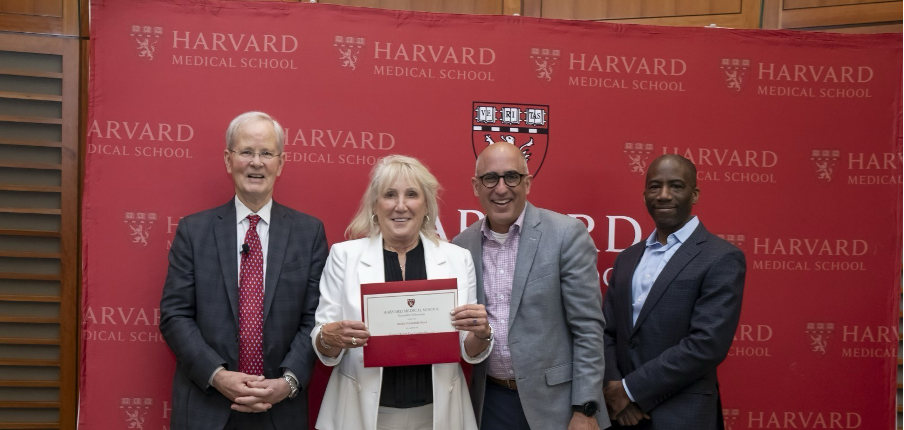
Sandra Gottschalk-Reed has spent more than three decades in healthcare commercialization, focusing on one of the industry’s most persistent bottlenecks: reimbursement and market access.
Her career spans roles in reimbursement strategy, payer relations, and government affairs, with experience supporting the commercialization of more than 150 medical technologies.
Through Healthcare Strategies LLC, she has advised medical device and life sciences companies on coding, coverage, reimbursement strategy, and economic value positioning, areas that often determine whether innovations reach patients at scale.
Her current venture, Medilumina, represents an evolution of that expertise into an AI-enabled commercialization intelligence platform. The goal is to modernize how life sciences companies approach reimbursement analytics, payer intelligence, and go-to-market planning.
Rather than replacing human expertise, her approach combines AI-driven systems with decades of institutional knowledge in healthcare adoption pathways.
Healthcare Strategies LLC:
Healthcare Strategies LLC
Medilumina:
Medilumina
5. Rene Zamora — Fractional Sales Leadership Before “Fractional” Became a Movement

Rene Zamora was practicing fractional sales leadership long before anyone had a name for it. At the time, there was no movement, no buzzword, and certainly no flood of companies offering “fractional executives.” There were simply small business owners trying to grow sales teams without the budget, structure, or need for a full-time sales executive. Rene understood that world because he had lived it himself.
As Founder and President of Sales Manager Now, Rene built one of the early structured models for ongoing fractional sales management, not from theory, but from years spent inside real sales environments where leadership gaps quietly limited growth.
His career started the hard way: face-to-face selling. From door-to-door sales and food service environments with ARAMARK to office systems and wireless telecom, Rene spent the years between 1979 and 1994 learning how people buy, how salespeople struggle, and how managers can either elevate or exhaust a team. Those experiences shaped the practical leadership philosophy he still teaches today. Not polished corporate theory, but management built around real people trying to hit goals, survive pressure, and grow a business.
In the mid-1990s, he moved into sales management just as the wireless telecom industry entered a season of aggressive consolidation. Between 1994 and 2001, Rene led teams through multiple mergers and acquisitions that changed entire regional markets. He experienced firsthand what instability feels like inside a sales organization, shifting expectations, changing leadership, uncertainty, and the pressure to continue producing through disruption.
After eventually being displaced during a final acquisition cycle, Rene made a pivot that would shape the next chapter of his career. He entered consulting and spent several years helping organizations through coaching, facilitation, leadership development, and business planning work. The results were often positive, but something continued to bother him.
Training alone was not enough.
Companies would improve skills during workshops or coaching sessions, but many still lacked the day-to-day leadership necessary to create consistency, accountability, and long-term performance. The problem was rarely information. The problem was the absence of steady leadership embedded inside the sales team.
That realization became the foundation for Sales Manager Now.
Rather than offering short-term consulting projects or motivational sales training, Rene built a firm designed to provide ongoing leadership for small and mid-sized businesses that already had salespeople but needed experienced management support. The model was simple in concept but difficult to execute well: provide seasoned sales managers who could lead, coach, organize, and stabilize teams on a fractional basis over the long term.
Today, Sales Manager Now operates with a team of experienced sales managers serving clients across multiple industries. The company focuses less on “quick fixes” and more on helping owners build healthier sales cultures, stronger accountability, and leadership consistency that can sustain growth over time.
Rene is also the author of Part-Time Sales Management for Small Business Sales Teams, a book built around the same philosophy that shaped the company: sales leadership cannot be treated like an occasional event. Teams perform best when leadership is consistent, practical, and present enough to influence behavior over time.
For many business owners, that approach has become the bridge between having salespeople and truly having a managed sales team.
LinkedIn:https://www.linkedin.com/in/renez/
The Pattern Behind the List
While each of these five entrepreneurs operates in a different industry, the underlying pattern is consistent.
They are not building isolated products. They are building systems:
- GTM systems for scaling revenue
- AI systems for decision intelligence
- Clinical systems for earlier diagnosis
- Commercialization systems for medical innovation
- Documentation systems for healthcare transparency
Each is responding to a different bottleneck in a larger structural shift: the move from manual, fragmented processes to AI-augmented operating environments.
The entrepreneurs shaping 2026 are not defined by disruption for its own sake. They are defined by reconstruction or rebuilding the commercial, clinical, and educational systems that determine how innovation actually reaches people.
Whether in SaaS, healthcare, academia, or enterprise infrastructure, the question is no longer who has the best idea. It is who can turn that idea into a system that works at scale.