



The founders and executives on this list didn’t follow a single conventional script. One left the military, ran billion-dollar restaurant operations, and is now betting his next chapter on technology that makes cadavers behave like living humans. Another built a 33-year career at IBM that reshaped computing as we know it, and distilled that experience into a book about the one trait he credits most. A third has turned three stalled companies into acquisition targets by doing something most revenue leaders won’t: diagnosing before adding. A fourth spent 25 years quietly building one of California’s most beloved breweries in a harbor town, then opened a second location to prove it wasn’t luck. And a fifth built an integrated advisory ecosystem that refuses to let strategy and execution live in separate rooms. What these five share isn’t an industry. It’s a way of thinking that refuses to accept the problem as given.
1. David L. Thomas II
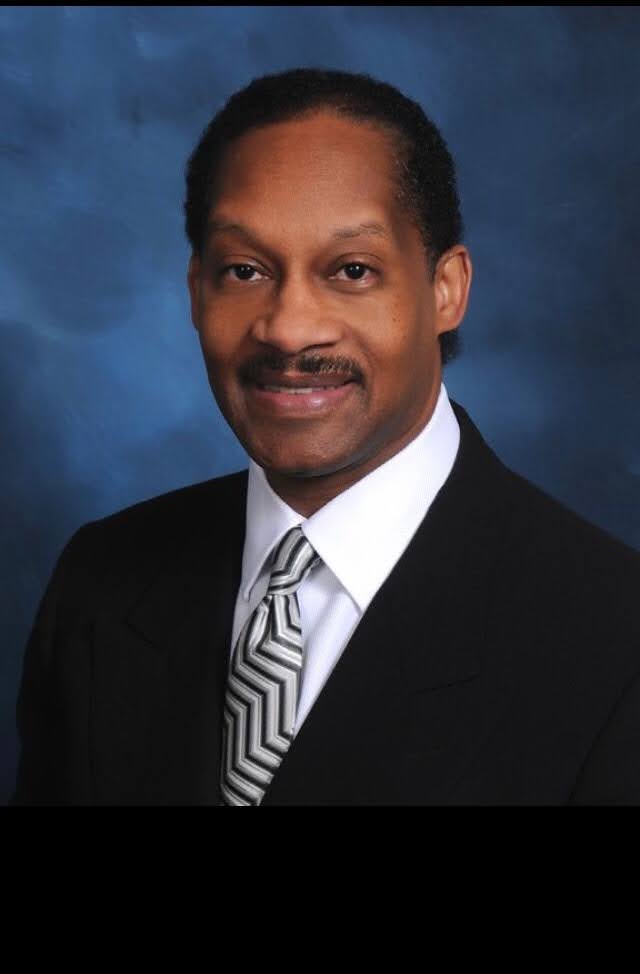
From West Point to the Operating Table: David L. Thomas II Is Bringing the Cadaver Into the 21st Century
David L. Thomas II has spent his entire career doing one thing exceptionally well: taking underperforming operations and turning them into the best in the room. What’s different now is the room itself.
Thomas graduated from West Point and was named Distinguished Graduate of his branch specialty at the Air Defense SHORAD School at Fort Bliss. At his first duty assignment, he was rated the most outstanding lieutenant in his battalion. He commanded a unit at Fort Meade and led it to the top rating in the battalion. The pattern of arriving somewhere, assessing what was broken, and fixing it stuck with him through every role that followed.
After the military, Thomas joined Leo Burnett in Chicago, working on accounts including RCA, M&M Mars, Kraft, and United Airlines, each delivering measurable category growth. He then moved into operations at McDonald’s Corporation, where he became a top 1% leader and recipient of the President’s Award. As Director of Operations for the Houston Region, he moved the team from the bottom to the top three in the US in two years. As President of Puerto Rico, he turned that market around. He then became Chief Operations Officer at Boston Market and helped manage a complete brand turnaround before the business was sold at a premium just before the 2008 recession.
His next pivot was into healthcare. As COO and then Co-CEO of LCA Vision, Thomas led another turnaround, earned a master’s degree in business leadership, and was inducted into the Sigma Epsilon Rho Honor Society with a 4.0 GPA. He returned to McDonald’s and led the Dallas team to 24 consecutive months as best in the country across all 22 US regions on McKinsey’s Big 6 Metrics, a record that has never been matched. After a reorganization, he led over 1,700 locations doing more than $5 billion in annual sales.
That record of service has never been limited to the boardroom. Over four years, Thomas facilitated $3.5 million in in-kind gifts to the Wounded Warriors Project, and he served as a Founding Member of the Advisory Board established to create the Buffalo Soldier Monument at West Point, a tribute to the legacy of the Black soldiers who served in the US Army following the Civil War. Both commitments reflect the same orientation that has defined his professional life: showing up for institutions and people that matter, and doing the work that others leave undone.
Now he is leading a startup built around technology that allows human cadavers to behave like living patients. Using circulated expired blood, a mechanical pump, and a contrast agent called BriteVu that maps blood vessels through CT scans, the platform creates a realistic, low-toxicity environment for anatomical and surgical training without putting live patients at risk. The goal is to accelerate how quickly medical practitioners develop skills and to change a field where training methods have not fundamentally evolved in generations. “This is by far the biggest and most difficult challenge I’ve ever had,” Thomas says. “It’s very hard to change long-held views on how medical training is executed.” To follow his journey and learn more, connect with David L. Thomas II on LinkedIn.
2. Rodney Adkins
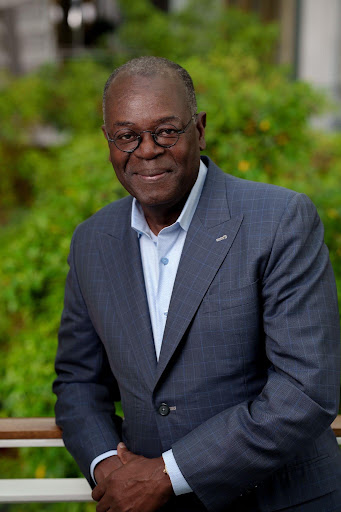
The Curiosity Advantage: How Rod Adkins Turned a 33-Year Career at IBM Into a Leadership Framework for Everyone Else
Rodney “Rod” Adkins spent 33 years at IBM. In that time he helped advance the personal computer industry, led the POWER business to market leadership in the UNIX market, and pioneered what became IBM’s Internet of Things portfolio. By the time he left as Senior Vice President in 2014, he had built one of the most substantive track records in corporate technology history.
Adkins is currently Chairman of Avnet, one of the world’s largest distributors of electronic components and technology solutions, a position he has held since 2018. He is also a Partner at 3RAM Group LLC, focused on capital investments, business consulting, and property management. He serves on the boards of United Parcel Service, WW Grainger, and Avnet, and is a trustee of Georgia Tech and Rollins College and a member of the Executive Leadership Council.
The recognition has followed a career built on genuine technical contribution. Adkins was inducted into the National Academy of Engineering in 2005, one of the highest honors in the engineering profession. He has since been inducted into the Miami Jackson High School Hall of Fame, the Miami Dade County Public Schools Alumni Hall of Fame, and the Georgia Tech Engineering Hall of Fame. The Wall Street Journal named him among the top 100 most influential and effective corporate directors in 2025. He holds honorary doctoral degrees from Georgia Tech, the University of Maryland Baltimore County, and Rollins College.
But the project Adkins is most focused on right now is a book. Curiosity Redefines the Limits is a leadership work built around a single argument: that curiosity is not a personality trait or a soft skill but a competitive advantage. He calls it the Curiosity Advantage, framing it as the habit of constantly exploring new ideas, adapting to unknown situations, and productively challenging the status quo. The book draws on his own defining moments and operating principles to show how that posture, consistently applied, shapes better outcomes in the workplace and the boardroom.
For someone who helped build some of the most influential technology platforms of the past four decades, the decision to write a leadership book rather than a technology book says something clear about where Adkins thinks the real leverage is. It is not the tools. It is the mindset of the person using them. Readers can pick up a copy of Curiosity Redefines the Limits on Amazon.
3. Remy Piazza
When Revenue Stalls, the Answer Isn’t More Pipeline. Remy Piazza Has Proven It Three Times.
Remy Piazza doesn’t take turnaround engagements because he enjoys the chaos. He takes them because he is genuinely good at something most revenue leaders aren’t: distinguishing between a sales effort problem and a broken go-to-market architecture. Those are not the same thing, and most companies treat them as if they are.
Piazza is a Chief Revenue Officer and GTM architect with more than 20 years building and transforming go-to-market organizations in SaaS and technology. His track record runs through three proof points, each one cleaner than the last.
At CareerBuilder Canada, he launched the business from zero against a well-funded, entrenched competitor and built it to $10 million in revenue within three years, establishing it as the country’s second-largest career resource for employers and job seekers. At Cosaic, he found a company stuck between $5 and $6 million for over a year, diagnosed the real issue as one team selling two products at completely different stages of product-market fit, made the uncomfortable call to split the go-to-market in two, and drove 30% revenue growth, the first $1 million quarter in company history, and ultimately a sale to S&P Global. At EPAY, he built a partnership program from scratch, landing Paychex, Oracle, NetSuite, IBM, and Microsoft, grew revenue from $1 million to $20 million over five years with the partnership motion generating 34% of total company revenue in its first year, and led to the company’s acquisition.
The philosophy underneath all three is consistent: subtract before you add. One proven motion before scaling. ICP clarity before anything else. “When growth stalls, the answer is almost never to try harder,” Piazza says. “It’s diagnose deeper.”
Today he runs a fractional CRO practice, giving founders and CEOs access to operator-level GTM diagnosis without waiting to hire a full-time executive. He has built and led revenue organizations ranging from 2 to 135 people across direct enterprise sales, partnership and channel, and new-market entry. The fractional model exists specifically for companies at inflection points, where the diagnosis and the rebuild need to happen before the company has time to run a full executive search. Founders and CEOs looking to unblock growth can connect with Remy Piazza on LinkedIn.
4. Lenny Mendonca
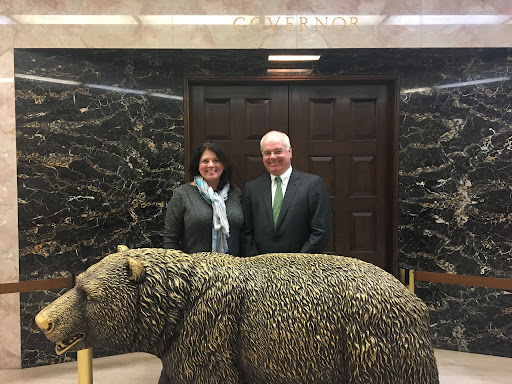
Twenty-Five Years in the Harbor: How Lenny Mendonca Built Half Moon Bay Brewing Company Into a California Institution
Lenny Mendonca spent decades inside the world’s biggest boardrooms as a partner at McKinsey & Company, advising corporations and governments on globalization, economic development, and public policy reform. He chaired the McKinsey Global Institute, helped launch what became California Forward, and was honored with the David Packard Award, Silicon Valley’s highest civic recognition, for three decades of bringing public and private stakeholders together to solve entrenched problems. He also served as Governor Gavin Newsom’s Chief Economic and Business Advisor and Chair of the High-Speed Rail Authority.
But it’s a side project from 2000 that has become one of his most enduring business legacies. That year, Mendonca and his wife Christine, along with local friends, acquired a shuttered restaurant at Pillar Point Harbor, built a brewery and reopened it as the Half Moon Bay Brewing Company. Twenty-five years later, it’s the oldest operating brewery in Half Moon Bay and a genuine community institution, home to the Brews & Views forum Mendonca created to bring policy discussions to the public over a pint, and a recipient of the National Restaurant Association’s Award for Outstanding Commitment to Community. As Chair and co-founder, Mendonca has watched the company grow from a single harborside restaurant into a brand with a second location on Half Moon Bay’s Main Street.
Mendonca has always described the company’s civic mindedness as inseparable from its identity: when you’re one of a small coastal town’s top employers, he says, you carry a responsibility to be a giver, not just a taker.
Still Rooted on the Coast
That ethos has carried the Half Moon Bay Brewing Company through wildfires, road closures, and a pandemic, and now into its next chapter with a downtown expansion that keeps its founder’s original instinct intact: your community is your home, build it and they will come if you treat it as if were your family.
5. Krishna Mohan
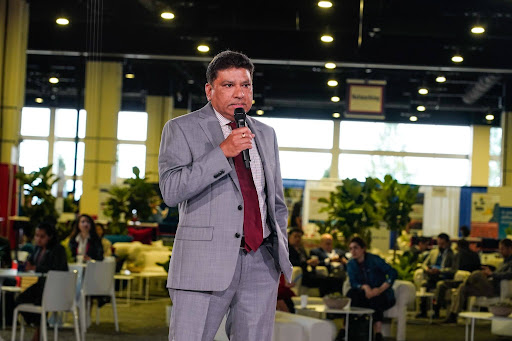
Why Krishna Mohan Built an Ecosystem Instead of a Consulting Firm
Krishna Mohan has spent enough time watching smart businesses fail to know that expertise alone doesn’t prevent it. What tends to go wrong, in his observation, isn’t a shortage of qualified advisors. It’s that those advisors operate in isolation, and no one connects strategy to execution, the capital plan to the technology, or the growth ambition to the operational reality underneath it.
That gap is what Mohan built Genius Visionary to close.
Mohan is the President and CEO of Genius Visionary Inc., an integrated business ecosystem that brings together strategy, mergers and acquisitions, capital planning, taxation, artificial intelligence, cybersecurity, and international expansion under one coordinated framework. The core idea behind what he calls the Genius Frameworks is straightforward: businesses create the most value when these functions are aligned rather than siloed. Most advisory firms pick one area and go deep. Genius Visionary is built on the premise that depth without integration leaves money and opportunity on the table.
One specific application of that philosophy is Genius Launch Pad, an initiative designed to help international companies enter and establish themselves in the United States market. In a landscape where foreign companies frequently underestimate the regulatory, cultural, and operational complexity of US market entry, Genius Launch Pad provides a structured pathway supported by the full range of Genius Visionary’s advisory capabilities.
Mohan’s recognitions include the Albert Nelson Marquis Lifetime Achievement Award, the Distinguished Worldwide Humanitarian Award, induction into Marquis Who’s Who as a Top Professional of the Year, and the Global Visionary Award from Vision World Academy. He has also been listed among the Top 100 Tech Innovators and Influencers.
Looking ahead, his vision is for Genius Visionary to become one of the most trusted integrated business ecosystems globally, expanding in artificial intelligence, executive education, strategic advisory and a growing portfolio of proprietary business playbooks, AI-powered tools, and resources, while Genius Launch Pad grows into a leading resource for international companies pursuing US expansion. “Businesses create greater value when strategy and execution are aligned,” he says. “Everything we do at Genius Visionary is built around making that alignment real.” Entrepreneurs and executives looking to learn more can explore the full Genius Visionary ecosystem on the official Genius Visionary website.