


Walk through any memorial park built after 1960 and the pattern is unmistakable. Continuous lawn. No vertical interruptions. The graves are marked — every one of them — but the markers sit flush with the turf, visible only when you stand over them. This is not an accident of taste. It is the result of a deliberate, century-long shift in how American cemeteries are designed, maintained, and priced, and it explains why the flat marker has become the most commonly purchased memorial format in the country.
Families researching flat headstones for graves typically arrive at the category for one of two reasons. Either the cemetery section requires the format — increasingly common in newer memorial parks across California, Florida, Texas, and the Midwest — or the family prefers the quieter visual register of a ground-level stone. Both paths lead to the same set of practical questions, and the answers matter more than most buyers realize when they start.
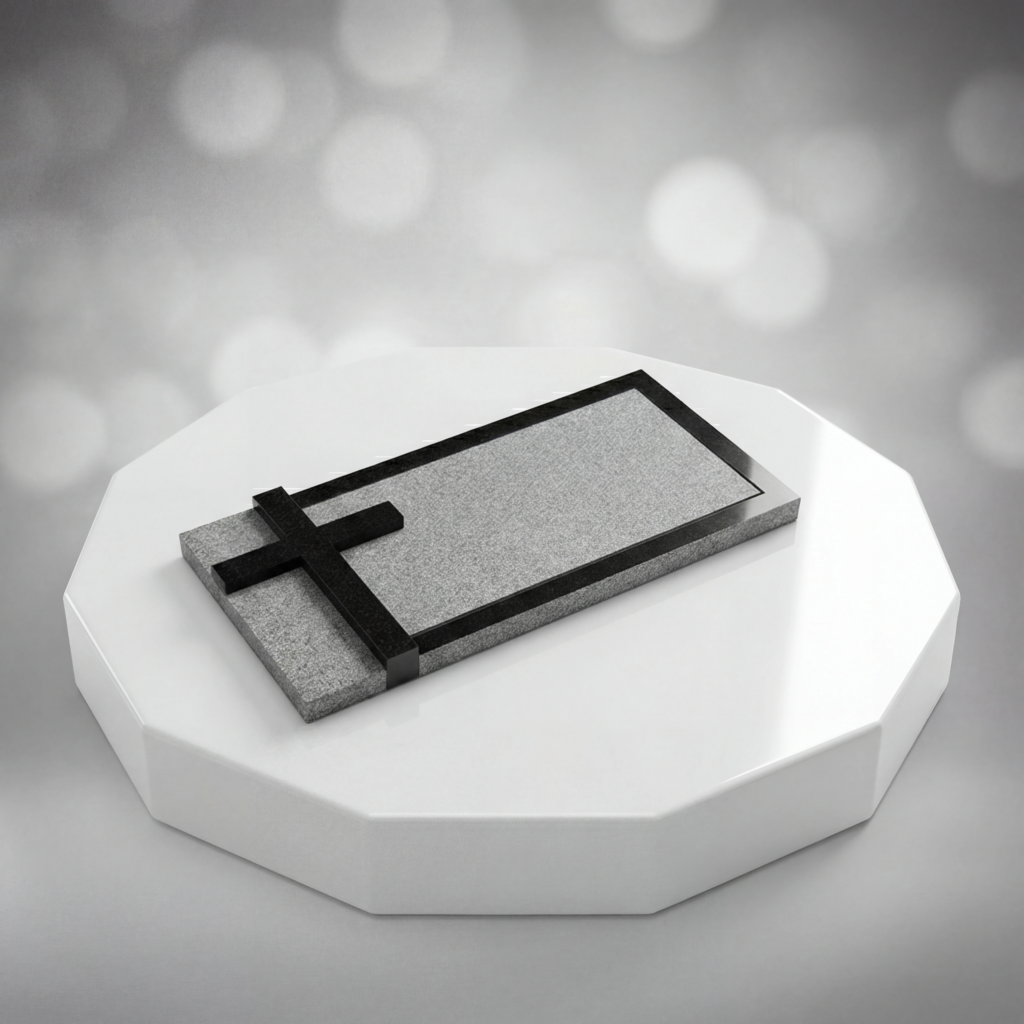
The first question is dimensional. Flat markers are regulated by cemetery section, not by general convention. A standard single marker runs from 24×12 inches up to 28×16, at 3 to 4 inches of thickness, but the specific section may cap the maximum size, require a minimum thickness, or mandate a particular setback from adjacent graves. Ordering before confirming these parameters is the most common expensive mistake in this category. Reputable producers contact the cemetery directly before production begins — a step that should be included in the base price, not treated as the family’s responsibility.
The second question is material, and this is where the price comparisons most families make fall apart. Two flat markers can look identical in a product photograph and perform completely differently over twenty years outdoors. High-density granite — Indian Black, Shanxi Black, Balmoral Red from Finland, Blue Pearl from Norway — resists moisture absorption, holds engraving edges through freeze-thaw cycles, and maintains its polish without resealing. Lower-density stone absorbs water, expands and contracts with temperature, and loses letter definition at a microscopic level that becomes visible within a decade. The density specification of the stone being quoted is worth asking about explicitly. Producers who source directly from verified quarries and run density checks at quality inspection can answer the question precisely. Resellers often cannot.
The engraving question follows from the material one. Sandblasted engraving — abrasive media driven through a precision stencil — cuts a deep channel into the stone that reads with high contrast and holds for generations. Laser etching works at the surface for fine detail: portrait work, botanical illustration, photographic reproduction. Most quality flat markers combine both techniques, sandblasting for the text and laser for imagery. A marker quoted at a suspiciously low price often uses shallow single-technique engraving that compromises long-term legibility.
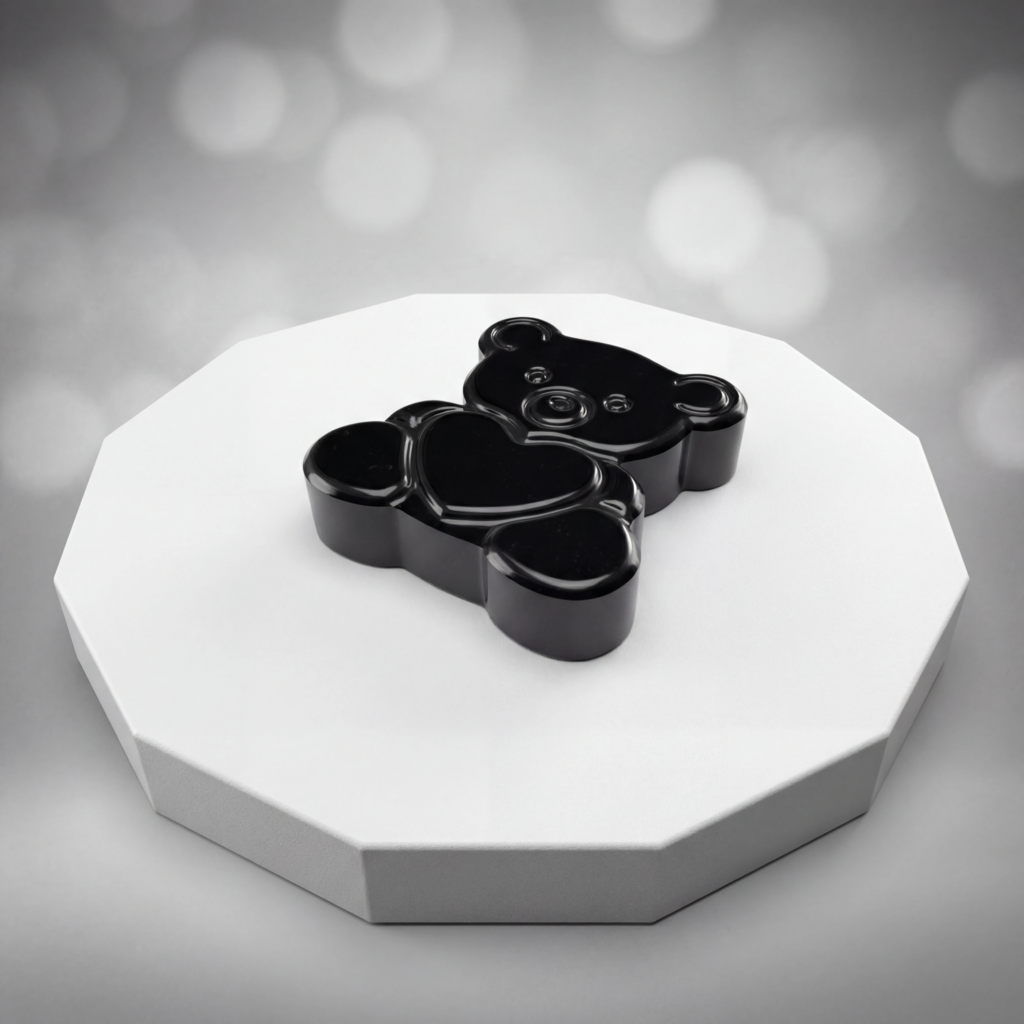
Design range within the flat format is wider than the category’s reputation suggests. Heart-shaped flat markers, diamond cuts, octagonal forms, and full-surface landscape etchings are all achievable in exterior-grade granite. Companion flat markers for two people — either a single wide stone with two inscription panels or two matched individual pieces — serve side-by-side plots. Ceramic photo medallions, embedded into the polished surface, add a color photograph that holds its image for decades. None of this requires moving up to an upright monument.
Pricing transparency separates the producers worth working with from the rest. A complete flat granite marker — stone, all inscriptions, design proof, nationwide delivery, and cemetery coordination — starts at $1,600 from direct manufacturers. Quotes that come in dramatically below that number usually exclude one or more of those components, and the total lands higher once delivery, foundation, and installation are added separately. The meaningful comparison is always total landed cost, never the first number shown.
The design verification step has changed substantially in recent years. The 3D design preview — a full render of the finished marker on the actual selected granite surface, not a text layout floating on a white background — is now available from manufacturers who have invested in the technology. The AR extension places the configured stone at actual scale in a real environment through a phone camera. For a format that sits at ground level and is read from standing height at an angle, seeing the actual proportions before production eliminates the most common source of post-installation disappointment: text that reads smaller at the grave than it did on the screen.
Foundation work is the unglamorous variable that determines whether a flat marker stays level for fifty years or starts listing within five. The concrete base must be sized to the marker, poured to the depth the cemetery specifies, and cured properly before the stone is set. Families in Oklahoma, Pennsylvania, Ohio, and other freeze-thaw states have particular reason to care about this: ground movement through winter cycles is exactly what a properly prepared foundation resists and an improvised one does not. Producers who handle installation through certified teams — rather than delivering a stone to the cemetery gate — carry this responsibility themselves.
Financing has become standard across the category. In-house 0% plans running to 12 months without background credit checks, Klarna extending to 24 months, and pre-need installment programs to 36 months are available from established producers. Veterans typically receive 30% off with full payment; police officers and first responders, 25%. For families managing memorial costs during an already difficult financial period, these terms change what is affordable without changing what is possible.
The flat marker’s dominance in modern American cemetery design reflects a practical consensus: the format is maintainable, affordable, widely permitted, and — when produced in quality granite with precise engraving — genuinely dignified. The lawn cemetery’s original argument from the 19th century still holds. The landscape continues. The grave is present without insisting. The name remains readable for a century.
For families in California, Texas, Oklahoma, Florida, North Carolina, Illinois, New Jersey, Washington, and across the country, H Stones produces flat markers in over 40 granite types with direct quarry sourcing, six-stage quality inspection, full 3D and AR design preview, and complete cemetery coordination on every order. The full catalog with transparent pricing is at hstones.com.