


Food in Dubai is more than something to eat between sightseeing stops. It is part of family routines, workdays, social gatherings, hospitality, and evening leisure. Dubai food culture combines traditional Emirati cuisine with Indian, Pakistani, Lebanese, Iranian, Filipino, Asian, and Western influences. For visitors, this means everyday meals can range from simple local dishes and karak tea to healthy lunches, street food, and international restaurants. This guide explains what people eat in Dubai, how eating habits change through the day, where local traditions fit in, and how tourists can eat well without overspending.
Understanding Dubai’s Food Culture and Daily Eating Habits
Dubai has a multicultural population, and that diversity is visible in everyday food. A typical neighborhood can have an Emirati restaurant beside a South Asian cafeteria, Lebanese grill, Japanese restaurant, bakery, or modern café. As a result, eating in Dubai does not follow one fixed pattern. Residents often move between cuisines according to convenience, budget, work schedules, family preferences, and occasion.
Traditional Emirati food remains an important part of the local identity. Dishes such as machboos, harees, and thareed reflect Gulf ingredients and cooking traditions. At the same time, Dubai’s modern lifestyle has made quick meals, restaurants, cafés, takeaway, and delivery part of daily routines.
For visitors, the best way to understand Dubai cuisine is to look beyond famous dishes. Explore ordinary mornings, working days, family evenings, and social occasions.
Areas with long-established communities can be particularly useful for this. For example, the Deira food scene offers a window into Dubai’s multicultural and affordable side.
What Do People Eat in Dubai on a Typical Day?
Breakfast in Dubai
Breakfast in Dubai varies widely. Some people prefer a simple meal at home with bread, eggs, cheese, yogurt, fruit, or dates. Others stop at a café or cafeteria for a quick breakfast before work. Visitors will also find Arabic breakfast dishes alongside Indian and South Asian options.
A traditional style of breakfast may include Arabic bread, labneh, eggs, olives, cheese, and fresh vegetables. Cafés may offer pastries, sandwiches, oats, smoothies, and other familiar choices. Karak tea is another popular part of casual morning or midday routines.
Lunch in Dubai
Lunch is often shaped by work and location. Office workers may choose a cafeteria meal, packed lunch, restaurant dish, or food delivery. Rice with meat or chicken, grilled foods, shawarma, curries, salads, and sandwiches are common choices across Dubai’s diverse food scene.
Tourists can use lunch as an opportunity to try local or regional food without committing to a formal dinner. A modest neighborhood restaurant can provide a more everyday experience than a high-end venue.
Dinner in Dubai
Dinner often has a stronger social and family role. Depending on the household, it may be home-cooked food, a shared restaurant meal, takeaway, or delivery. Rice dishes, grilled meats, seafood, curries, mezze, and Arabic breads are widely available.
Dinner is also a good time to explore Dubai’s restaurant culture. Choose a traditional meal, shared dishes, or a venue that fits your evening plans.
Snacks, desserts, and late-night food
Eating does not always stop after dinner. Cafés, bakeries, dessert shops, and casual restaurants support a lively evening food culture. Dates, pastries, luqaimat, sandwiches, shawarma, and karak can all appear as snacks. Late-night dining is especially convenient for travelers returning from attractions or residents finishing a busy day.
Traditional Emirati Food in Everyday Life
Machboos, harees, and thareed
Traditional food in Dubai is closely connected to Emirati heritage and Gulf hospitality. Machboos is a seasoned rice dish commonly prepared with meat, chicken, or fish. Its combination of rice, spices, and protein makes it a useful introduction to regional cooking.
Harees has a softer texture and is made primarily with wheat and meat. It is associated with traditional gatherings and is especially familiar during Ramadan and other occasions. Thareed combines bread with a rich stew and reflects the importance of filling, shared meals in Gulf cuisine.
These dishes should not be treated only as tourist attractions. Their significance comes from their connection to family meals, hospitality, celebrations, and cultural traditions.
Luqaimat, dates, and Arabic coffee
Luqaimat are small sweet dumplings that are commonly served with syrup or date-based toppings. They are popular as a dessert or special treat. Dates have a broader place in Emirati hospitality and everyday snacking. They are often served with traditional Arabic coffee when welcoming guests.
When and how traditional foods are enjoyed
Traditional Emirati dishes may be more visible at family gatherings, cultural events, heritage venues, Ramadan meals, and restaurants specializing in local cuisine. Travelers interested in authentic food should look for places that explain the dishes and their cultural context rather than simply choosing the most photographed meal.
Historic areas can complement this experience. A visit to Bur Dubai can combine older Dubai surroundings with opportunities to explore regional food.
How International Cuisines Shape Food in Dubai
Indian and South Asian food
Indian and South Asian cuisines are deeply established in Dubai’s everyday dining environment. Visitors can find biryani, curries, grilled meats, breads, lentils, parathas, and vegetarian dishes at many price levels. Pakistani food adds dishes such as kebabs, karahi, and naan to the mix.
These foods show why Dubai cuisine cannot be understood through Emirati dishes alone.
Lebanese and Middle Eastern food
Lebanese and other Middle Eastern cuisines are equally visible. Mezze, hummus, grilled meats, falafel, shawarma, salads, and flatbreads are common choices. These dishes often work well for sharing, which makes them suitable for groups.
Asian and Western cuisines
Dubai also offers Japanese, Chinese, Thai, Korean, Filipino, Italian, American, and other international cuisines. This range means visitors can stay with familiar foods or use the trip to explore something new. The diversity is one of the defining features of modern Dubai dining culture.
Eating at Home, at Work, and on the Go
Home-cooked meals and family dining
Home cooking remains important even in a city known for restaurants. Families may prepare rice dishes, stews, grilled foods, soups, breads, salads, and traditional recipes at home. Family meals can be more relaxed than restaurant dining and often involve sharing several dishes.
Workplace lunches and busy schedules
Work can strongly influence daily food habits. People with limited lunch breaks may prefer quick cafeterias, prepared meals, sandwiches, or delivery. Those with more time may meet colleagues at restaurants. Location also matters because Dubai’s large business districts place many food options within easy reach.
Quick meals, snacks, and casual eating
A busy day may include several small food stops rather than three formal meals. A person might have breakfast at home, coffee during the morning, lunch at work, karak in the afternoon, and dinner after commuting. This flexible pattern is useful for tourists too because sightseeing rarely follows a perfect meal schedule.
Restaurants, Takeaway, and Food Delivery in Daily Dubai Life
The role of restaurants in Dubai’s dining culture
Restaurants are part of everyday life rather than reserved only for special occasions. Options range from inexpensive cafeterias and neighborhood restaurants to hotel dining rooms and fine dining venues. Tourists can therefore adjust eating in Dubai to match their itinerary and budget.
A visitor around attractions may choose convenience nearby. Someone exploring older districts may prefer a casual restaurant. If your plans center on major landmarks, a Downtown Dubai visit can easily be paired with a meal.
When people choose takeaway and delivery
Takeaway works well for people who want restaurant food without sitting down for a full meal. Delivery adds another layer of convenience, especially for residents, office workers, and families. Tourists staying in apartments or hotels with suitable facilities may also use delivery when they want a quieter meal.
How convenience influences everyday food choices
Convenience does not always mean fast food. People can order salads, grilled dishes, rice meals, soups, sandwiches, and other balanced options. The practical choice depends on price, time, location, dietary needs, and personal preference.
Coffee, Karak, Dates, and Dubai’s Snack Culture
Arabic coffee and dates
Arabic coffee and dates are closely linked with hospitality. They may be offered when guests arrive, during social visits, or at cultural experiences. For travelers, accepting these simple foods can be an easy way to participate in local traditions.
Karak tea and café culture
Karak tea has become a familiar part of casual food culture in Dubai. Strong tea with milk and spices is often enjoyed as an inexpensive drink or short break. Cafés also provide spaces for conversations, work, meetings, and relaxation.
Popular snacks and street food
Street and casual food make eating in Dubai flexible. Shawarma, grilled snacks, bakery items, sandwiches, and sweets can work as quick meals or between-meal treats. Travelers can try these options when they want to eat like a resident rather than plan every meal around a formal restaurant.
How Food Brings People Together in Dubai
Family meals and social gatherings
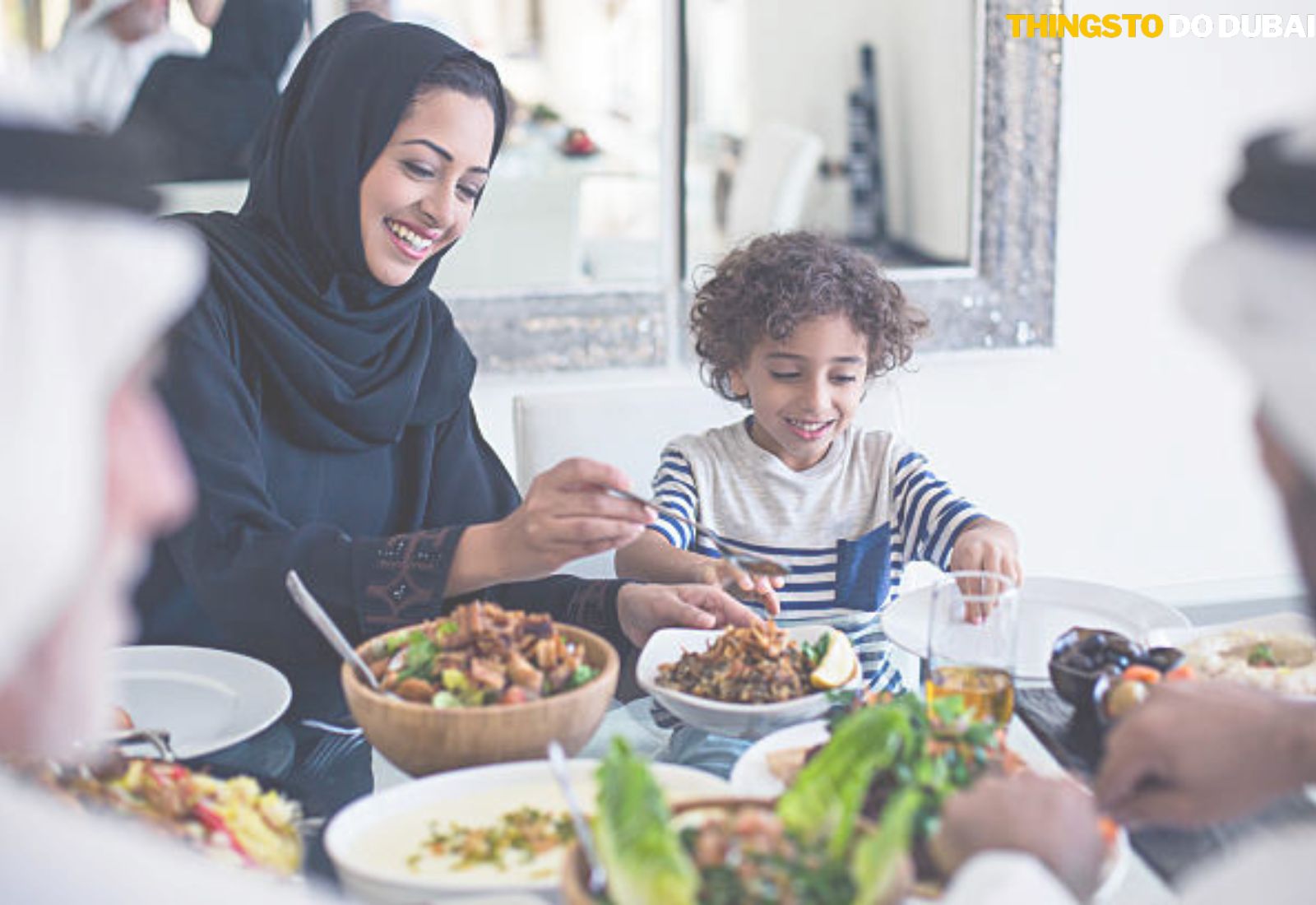
Food plays an important role in family life and social occasions. Shared dishes encourage people to eat together rather than ordering completely separate meals. Large meals can mark celebrations, weekends, visits, and religious occasions.
Sharing food and hospitality
Hospitality is an important part of Emirati and wider Arab culture. Offering coffee, dates, sweets, or a meal can be a way of welcoming guests. Visitors may notice this especially in traditional settings and during cultural experiences.
Dining with friends and business connections
Restaurants and cafés also support friendships and professional relationships. A meal can become a meeting place after work, during a shopping trip, or after sightseeing. This social dimension helps explain why cafés and restaurants are such visible parts of daily life.
Healthy Food in Dubai: Balancing Nutrition and Convenience
Is it easy to eat healthy in Dubai?
Yes. Healthy food in Dubai is widely available, although visitors still need to make deliberate choices. The city offers salads, grilled proteins, fresh fruit, vegetable dishes, whole grains, soups, and lighter international cuisines alongside rich desserts and fast food.
Healthy breakfast, lunch, and dinner choices
A balanced breakfast could include eggs, yogurt, fruit, oats, or a vegetable-based meal. For lunch, choose grilled chicken or fish with vegetables and rice, a salad with protein, or a lighter Middle Eastern meal. Dinner can follow the same basic approach.
Making healthier choices when eating out
Look at preparation methods rather than relying only on labels such as healthy. Grilled, baked, steamed, and roasted foods can be practical choices. Ask for sauces or dressings separately when possible, add vegetables, and choose water or unsweetened drinks if that suits your diet.
Portion size also matters. Dubai has many indulgent foods, and visitors do not need to avoid them completely. Sharing desserts or ordering smaller portions can make it easier to enjoy local specialties while keeping meals balanced.
Eating Well in Dubai on Different Budgets
Affordable everyday food
Affordable food in Dubai can be found in cafeterias, neighborhood restaurants, bakeries, food courts, and casual eateries. Rice meals, curries, shawarma, sandwiches, and bakery foods can provide filling options without the cost of fine dining.
Mid-range dining and casual restaurants
Mid-range restaurants offer more variety and comfortable settings without requiring a special occasion. These are useful for travelers who want to try different cuisines while maintaining reasonable control over spending.
Fine dining and special occasions
Fine dining is a major part of Dubai’s international reputation, but it represents only one layer of the city’s food culture. Visitors should balance expensive meals with casual local experiences. If you are also planning low-cost sightseeing, combining affordable meals with budget activities can help keep the overall trip manageable.
What Tourists Should Know About Eating in Dubai
How to choose what to eat in Dubai
Start with your schedule. Choose a convenient breakfast near your accommodation, use lunch to explore local cuisine, and reserve dinner for an experience that fits your evening plans. If you want to understand local food, include at least one traditional Emirati meal.
Trying local food while maintaining familiar eating habits
You do not need to change your entire diet during a holiday. Try local dishes in manageable portions and keep familiar foods available when needed. Dubai’s international dining scene makes this easy for most travelers.
Practical tips for navigating meals, portions, and dining times
Keep water with you, especially when spending time outdoors. Eat according to your activity level and avoid leaving long gaps between meals on busy sightseeing days. If you are visiting during Ramadan, remember that daytime eating and drinking in public follows local customs and rules. Evening meals can become an important part of the experience during this period.
A Realistic Day of Eating in Dubai
A practical day might begin with eggs, bread, fruit, or yogurt followed by coffee. During sightseeing, a visitor could stop for karak and a light snack. Lunch might be a rice and grilled meat dish, shawarma, salad, or a South Asian meal. After more exploring, coffee and dates or a small dessert can provide a break. Dinner could be a shared Middle Eastern meal with grilled food, mezze, and Arabic bread. If the evening continues, a late café stop or small snack is possible. The key is flexibility: everyday meals in Dubai can change according to location, schedule, budget, and appetite.
Frequently Asked Questions About Food in Dubai
What do people eat in Dubai?
People eat a wide range of Emirati, Middle Eastern, South Asian, Asian, and Western foods. Rice dishes, grilled meats, breads, curries, salads, sandwiches, and seafood are common.
What do locals eat for breakfast in Dubai?
Breakfast varies, but common choices include eggs, bread, cheese, labneh, dates, fruit, pastries, and other Arabic or international breakfast foods.
What do people eat for lunch and dinner in Dubai?
Lunch is often practical and work-focused, while dinner may be more social. Popular choices include rice dishes, curries, grilled meats, shawarma, mezze, seafood, and salads.
What food is Dubai famous for?
Dubai is famous for its diverse food scene, while traditional Emirati foods such as machboos, harees, thareed, and luqaimat offer a taste of local heritage.
What are the most popular foods in Dubai?
Shawarma, biryani, grilled meats, rice dishes, hummus, falafel, seafood, karak, dates, and luqaimat are among the foods visitors commonly encounter.
Is healthy food easy to find in Dubai?
Yes. Healthy food options include salads, grilled proteins, vegetables, fruit, soups, and lighter meals across many cuisines. Portion and preparation choices still matter.
What traditional Emirati foods should tourists try?
Start with machboos, harees, thareed, and luqaimat. Dates with Arabic coffee are also a simple way to experience traditional hospitality.
Conclusion
Food fits into nearly every part of daily life in Dubai. It supports family meals, work routines, social gatherings, hospitality, convenience, and leisure. The city combines Emirati traditions with an unusually broad international food scene, giving travelers plenty of ways to eat according to their taste, schedule, and budget. To experience Dubai fully, look beyond famous restaurants and explore ordinary meals, local snacks, traditional dishes, cafés, and shared dining. That approach reveals the everyday food culture that makes eating in Dubai so varied.