


Visiting Dubai does not mean you need to rent a car. The city has a well-connected public transportation system that includes the Dubai Metro, buses, tram, taxis, and marine transport. For first-time visitors, the main challenge is knowing which option to use, how to pay, and how much each journey costs. This guide explains how to use public transport in Dubai as a visitor, including Nol cards, fares, zones, airport transfers, popular tourist areas and practical tips for making your journeys easier.
Dubai Public Transport at a Glance
How Dubai’s Public Transportation System Works
Dubai public transport is operated mainly by the Roads and Transport Authority (RTA). The system is designed so visitors can combine different modes during the same trip. Metro stations, buses and trams cover different parts of the city while taxis provide door-to-door travel.
Dubai is divided into seven public transport zones. Your fare depends on the number of zones you travel through. Transfers between Metro and bus can also be combined into one journey when the transfer rules are followed. RTA states that transfers between different modes must generally be made within 30 minutes, and a journey can include up to three transfers within the applicable journey time.
Main Public Transport Options for Visitors
The Dubai Metro is usually the most useful option for tourists because it connects the airport with major areas including Downtown Dubai and continues towards Dubai Marina. Buses fill gaps between Metro stations and local destinations. The Dubai Tram is particularly useful around Dubai Marina and JBR.
Taxis are better when you have luggage, children or a destination far from a station. Marine transport such as ferries, water buses and water taxis can be useful for waterfront journeys and sightseeing.
Is Public Transport in Dubai Good for Tourists?
Yes. Public transport in Dubai is clean, organized and relatively easy to understand once you know how the payment system works. For many sightseeing days, Metro and bus services can also be considerably cheaper than taking taxis between every attraction.
How to Pay for Public Transport in Dubai: Nol Card Guide
What Is a Nol Card?
A Nol card is Dubai’s electronic transport card. It allows visitors to pay for journeys on the Metro, buses, tram and several marine transport services with a single card. It can also be used for some other RTA services.
For most visitors, the simplest choice is a regular Silver Nol card. A Silver card currently costs AED 25 including AED 19 stored value. A Gold card costs the same but allows access to Gold Class cabins on the Metro and tram at a higher fare.
Which Nol Card Is Best for Tourists?
A Silver Nol card is normally the most practical option for tourists who want to use public transport regularly. A Red Ticket can be useful for visitors making only a small number of journeys. RTA lists the Red Ticket as a disposable paper ticket with a basic price of AED 2 before journey fares are applied.
You do not normally need a personalized Blue Nol card for a standard holiday. Those cards are designed for special categories and additional benefits.
Where to Buy and Recharge a Nol Card
You can buy Nol cards from Metro ticket offices, ticket vending machines, RTA customer service centres and authorized sales agents. Cards can be topped up when the balance becomes low.
Before starting a journey, check that your card has enough balance. RTA advises that a minimum balance of AED 7.50 is required when checking in.
How to Use a Nol Card on Metro, Bus, Tram, and Marine Transport
Tap your Nol card on the reader when entering the Metro or boarding applicable transport. At the end of a Metro journey, tap again when leaving the station. The system calculates the applicable fare according to the journey.
If you change from Metro to bus, follow the transfer rules so the connected journeys can be treated as one trip where eligible.
Nol Card Rules Visitors Should Know
Keep your card separate from other contactless cards when tapping to prevent accidental payment with the wrong card. Do not share a personal Nol card with another traveler. Children under five can use Dubai Metro, tram, and bus services free of charge according to RTA guidance.
Dubai Public Transport Fares, Prices, and Zones
How Dubai Public Transport Zones Work
Dubai’s public transport zones determine how much you pay. The current standard Nol fare is AED 3 for travel within one zone, AED 5 across two adjacent zones, and AED 7.50 when traveling through more than two zones with a Silver Nol card. Gold Class fares are double these standard fares.
This zone system applies across connected RTA transport services. Your final fare is based on the zones covered rather than simply the number of vehicles used.
Dubai Metro Ticket and Fare
There is no single flat Dubai Metro ticket price for every journey. The fare depends on the zones crossed. A Silver Nol journey costs AED 3 within one zone, AED 5 across two adjacent zones, and AED 7.50 across more than two zones.
Dubai Bus Fare and Prices
Dubai bus fares use the same zone-based system. A short journey within one zone costs AED 3 with a Silver Nol card, while longer journeys can cost AED 5 or AED 7.50 depending on the zones crossed.
Dubai Tram and Transfer Fares
The tram also works with the Nol system. Because Metro, tram and bus services can connect, visitors should tap correctly at the beginning and end of their journey and follow transfer rules.
How Much Does Public Transport Cost in Dubai?
For a typical visitor, transport costs depend heavily on where the hotel is located and how many attractions are visited each day. Short journeys can cost only a few dirhams while longer cross-city trips cost more. RTA also offers travel pass products for eligible Nol cards.
How to Save Money on Transport
Use Metro and buses for longer sightseeing days instead of taking a taxi between every attraction. Choose accommodation near a Metro station when possible. Group nearby attractions together so you do not repeatedly cross the city.
Dubai Metro: The Best Way to Get Around Dubai
Dubai Metro Red and Green Lines
The Dubai Metro is the backbone of public transport for many visitors. The Red Line serves important tourist and commercial areas while the Green Line is particularly useful for historic Dubai and areas around Deira and Bur Dubai.
For a first-time visitor, learning the Metro network is often the easiest way to understand how to get around Dubai without a car.
How to Use the Dubai Metro as a Tourist
Start by checking your destination and identifying the nearest station. Enter the station using your Nol card, follow signs for the correct line and direction, and change trains when required.
Dubai Metro stations have clear signs and route information. However, remember that reaching a station does not always mean you have reached the attraction itself. Some destinations require additional walking, a bus, tram or taxi.
Dubai Metro Stations Near Major Tourist Areas
The Metro is particularly useful for Downtown Dubai, Dubai Mall, Burj Khalifa, Deira, Bur Dubai and Dubai Marina. Your exact station will depend on the attraction and entrance you want to use.
For visitors planning a sightseeing day around the city center, a guide to Downtown Dubai can help you decide which attractions to combine after arriving by Metro.
Dubai Metro Operating Hours
Metro hours can vary during public holidays and special periods, so check RTA information before a late journey. Recent RTA schedules show regular patterns around early morning starts and services continuing until midnight or later depending on the day. Holiday schedules can differ.
Do not rely on an old timetable copied from a travel blog. Check the current RTA schedule before planning an early airport transfer or late-night journey.
Metro Transfers and Connections
The Metro connects with buses and the tram, allowing visitors to complete journeys that are not directly served by rail. If you leave the Metro and transfer to a bus, make sure you meet the applicable transfer time requirements. RTA currently allows transfers between modes within 30 minutes under its integrated fare rules.
Dubai Metro Tips for First-Time Visitors
Avoid carrying more luggage than necessary during busy periods. Allow extra time for walking inside large stations and between stations and attractions. Check the direction of the train before boarding and follow signs carefully when changing lines.
Dubai Bus: When and How to Use It
How Dubai Buses Work
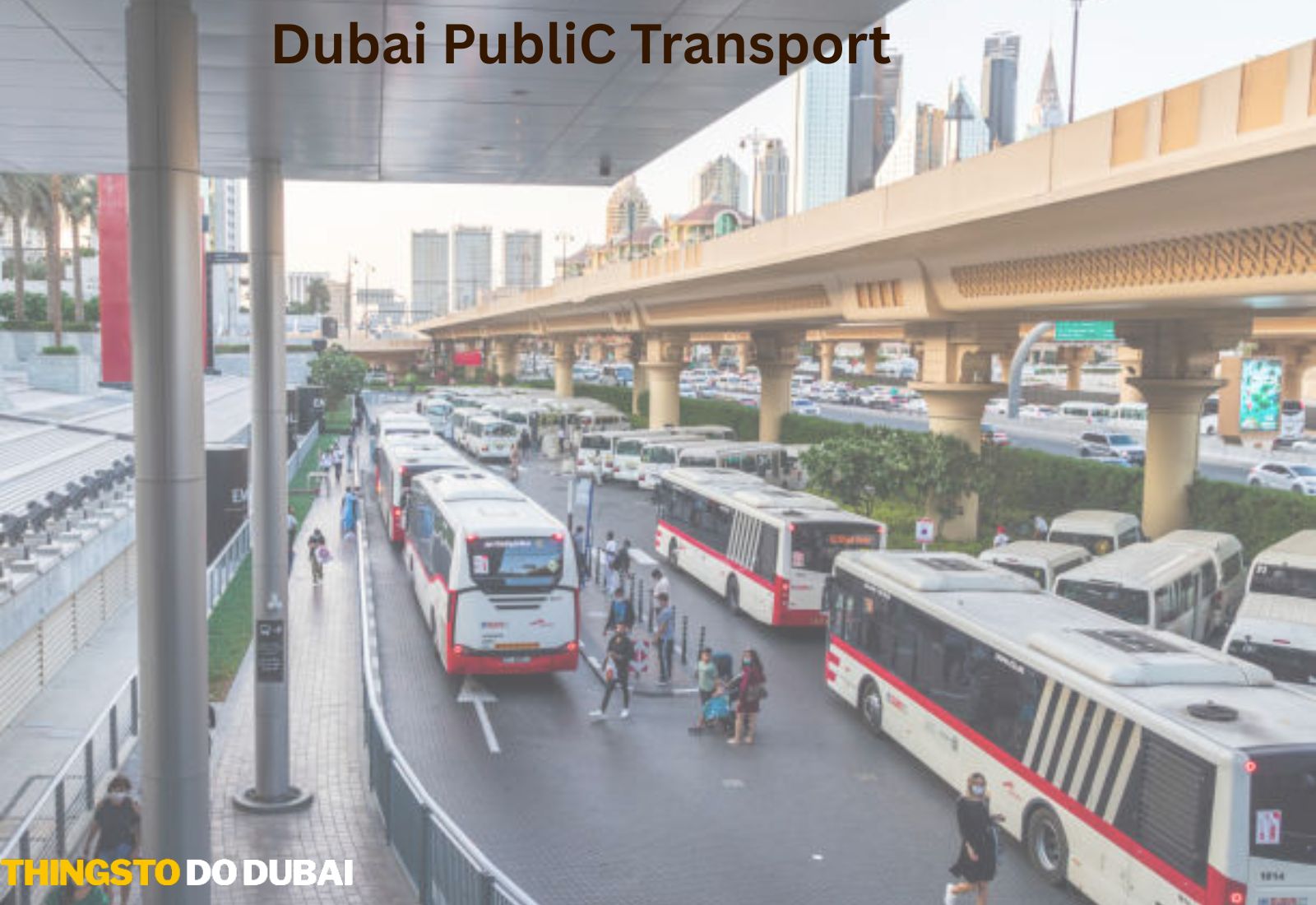
Dubai buses complement the Metro by reaching neighborhoods and destinations that are not directly beside a Metro station. Many routes connect with Metro stations, making the bus particularly useful for the final part of a journey.
How to Use Buses in Dubai
Plan the route before leaving. Check the correct bus stop and route number, then tap your Nol card when boarding. Follow the applicable checkout procedure when required by the service.
Dubai Bus Routes and Metro Connections
Metro and bus connections are especially useful when your hotel or attraction is several minutes away from the nearest station. Instead of walking a long distance in hot weather, a short bus connection can make the journey much easier.
When Taking the Bus Is Better Than the Metro
Choose a bus when there is no convenient Metro station nearby or when a direct bus provides a simpler route. Buses can also be useful for reaching residential districts and local areas away from the main Metro corridors.
Dubai Bus Tips for Tourists
Check current route information because schedules and routes can change. RTA advises passengers to use its S’hail app for updated bus information during periods when special schedules apply.
Dubai Tram and Palm Monorail
Dubai Tram for Marina, JBR, and Palm Areas
The Dubai Tram is especially useful around Dubai Marina, JBR, and nearby waterfront areas. It connects with the Metro and provides a convenient way to move around the district without using a taxi for every short journey.
If you plan to spend a day exploring the waterfront, the attractions and neighborhoods covered in this Dubai Marina guide can help you plan what to visit.
How to Use the Dubai Tram
Use your Nol card and follow the same basic tap-in and tap-out principle. Check the destination and direction before boarding and allow extra time when transferring between Metro and tram.
Palm Monorail for Palm Jumeirah
The Palm Monorail serves Palm Jumeirah and is separate from the core RTA Metro and tram network. It is particularly useful for visitors heading deeper into the Palm.
A dedicated Palm Jumeirah guide can help you decide whether the monorail fits your sightseeing plans.
When to Choose Tram or Monorail
Use the tram for convenient movement around Dubai Marina and JBR. Choose the Palm Monorail when your destination is on Palm Jumeirah and its route is more convenient than other options.
Dubai Taxi and Other Transport Options
When a Dubai Taxi Is the Better Choice
A Dubai taxi is often the easiest option when your destination is far from public transport, you are traveling with several bags, or you are traveling with young children. It also makes sense when several people are sharing the cost.
Taxi vs Public Transport in Dubai
Metro and buses are generally better for keeping costs low. Taxis are better for convenience and direct travel. The best approach is often to combine them rather than choosing only one.
For example, take the Metro across the city and use a taxi for the final short connection when walking or changing buses would be inconvenient.
Water Transport: Ferry, Water Bus, and Water Taxi
Dubai water transport includes services such as ferries, water buses, and water taxis. No card can be used on various marine transport services.
When to Use Taxis or Marine Transport
Use marine transport when the route matches your destination or when you want to make part of your journey on the water. Use a taxi when speed, direct access, or convenience matters more than minimizing cost.
Dubai Airport to the City by Public Transport
Getting From Dubai International Airport by Metro
Dubai International Airport has Metro access, making the Metro a practical option for many visitors staying near the Red Line. Before leaving the terminal, check the current station information and confirm that your hotel is convenient for the Metro.
If your hotel is far from a station, you may need a bus or taxi for the final section.
Airport Bus and Other Public Transport Options
Buses can provide alternatives depending on your terminal and destination. Because airport routes can change, check current RTA information rather than relying on an old travel guide.
Metro vs Taxi From Dubai Airport
The Metro is generally the better choice for travelers who want lower costs and whose accommodation is near a station. A taxi is more convenient for large bags, late arrivals, families, or hotels that require several connections.
Traveling With Luggage From the Airport
Avoid complicated routes if you have multiple large bags. Even when public transport is available, several transfers and long walks can make the journey tiring.
Choosing the Best Airport Transfer
For a hotel close to the Metro, use the Metro. For a hotel far from stations or a group with substantial luggage, consider a taxi or a combined Metro and taxi journey.
How to Get Around Dubai Using Public Transport
Step 1: Plan Your Route
Start with your destination rather than choosing a transport mode first. Find the nearest Metro, bus or tram station and then check the complete route.
Step 2: Choose the Right Transport
Use the Metro for longer journeys along its network. Use buses for local connections. Use the tram around Marina and JBR. Use taxis when public transport would require too many changes.
Step 3: Get Your Nol Card
Buy and top up your Nol card before beginning your sightseeing. Keep enough balance available for your planned journeys.
Step 4: Tap In, Transfer, and Tap Out
Tap your card correctly at the beginning and end of journeys. If transferring between services, follow the applicable time limits so connected journeys can qualify for integrated fares.
Step 5: Complete the Last Part of Your Journey
Expect some walking. A Metro station may not be directly outside an attraction. Use a bus, tram or taxi when the final section is too long or inconvenient.
Using Transport Apps and Route Information
Use current RTA information and route planning tools to check stations, bus routes, service changes and operating hours. This is particularly important during holidays when schedules can change.
Best Public Transport for Different Tourist Situations
Cheapest Way to Get Around Dubai
For most visitors, Metro and buses are the best choices for keeping daily transport costs down. Use taxis selectively instead of relying on them for every journey.
Easiest Way to Travel Around Dubai
The Metro is usually the easiest option when your destinations are close to stations. A combination of Metro and taxi is often more convenient for destinations outside the network.
Best Option for Major Attractions
Use the Metro for major attractions around Downtown, Deira, Bur Dubai and Marina where rail connections are convenient.
Best Option With Luggage or Children
Taxis can be easier when carrying heavy luggage or traveling with young children. They eliminate station changes and long walks.
Best Option During Peak Hours
The Metro can be more predictable than road travel when traffic is heavy. However, expect crowded trains during busy periods.
Best Option for Short Distances and Waterfront Areas
Use the tram around Marina and JBR. Walking can also make sense for short distances when the weather is comfortable.
Getting to Popular Tourist Areas by Public Transport
Downtown Dubai and Burj Khalifa
Use the Metro to reach the Downtown area and then follow signs or use a local connection for your final destination. If you are spending a full day there, explore nearby attractions together rather than traveling back and forth across Dubai.
Dubai Marina and JBR
The Metro and tram work well together around Marina and JBR. The tram is particularly useful for moving between waterfront locations.
Deira and Bur Dubai
The Green Line is useful for exploring historic areas. For a deeper look at attractions and neighborhoods, see this Deira Dubai guide. You can also explore Bur Dubai for information about the historic district and nearby experiences.
Palm Jumeirah
Use the Metro and connect with the tram or Palm Monorail depending on your final destination. Check the route before starting because Palm attractions are spread across different areas.
Dubai Mall and Major Shopping Areas
Metro access makes Downtown and Dubai Mall convenient for many visitors. Remember that large shopping destinations can involve substantial walking even after leaving the station.
Practical Dubai Public Transport Tips and Common Mistakes
Avoiding Peak-Hour Crowds
Travel outside the busiest commuting periods when possible. If you must travel during peak times, allow more time for crowded stations and trains.
Checking Station and Route Information
Always confirm the correct station, direction, and exit. A wrong station exit can add significant walking time.
Following Public Transport Etiquette
Follow signs and staff instructions. Do not eat or drink where prohibited and avoid blocking doors or entrances.
Planning for Walking Between Stations and Attractions
Dubai’s heat can make a short distance feel much longer. Check walking distances before deciding that a destination is close enough to reach on foot.
Common Mistakes First-Time Visitors Should Avoid
Do not assume every attraction is directly beside a Metro station. Do not forget to tap out. Do not travel without enough Nol balance. Most importantly, do not choose transport based only on price. The fastest cheap route is not always the most practical route.
FAQ: Public Transport in Dubai for Tourists
How do you get around Dubai without a car?
Use a combination of Metro, buses, tram and taxis. The Metro is usually the most useful option for major tourist areas while taxis solve last-mile connections.
Is public transport in Dubai easy to use?
Yes. The system is well organized and signs are generally clear. The main things visitors need to understand are Nol cards, zones, transfers and route planning.
What is the best way to get around Dubai?
The best option depends on your destination. Metro is usually best for longer journeys on the rail network, while taxis are more convenient for direct door-to-door travel.
How much does public transport cost in Dubai?
Silver Nol fares currently start at AED 3 for journeys within one zone, AED 5 across two adjacent zones and AED 7.50 for journeys crossing more than two zones.
How do you pay for public transport in Dubai?
Visitors generally pay using a Nol card or an eligible Nol ticket. The card is tapped on readers when entering and leaving applicable services.
Can tourists use the Dubai Metro and buses?
Yes. Nol cards are specifically available for visitors and can be used across Dubai Metro, buses, tram and marine transport services.
Is the Dubai Metro cheaper than a taxi?
For individual travelers making longer journeys, Metro and bus travel will usually cost less than taking taxis for the same route. However, taxis can provide better value for groups or destinations requiring several connections.
Conclusion
Using public transport in Dubai as a visitor is straightforward once you understand the Nol card, fare zones and connections between Metro, buses and tram. The Metro should be your starting point for many sightseeing journeys, while buses help with local connections and taxis provide convenient door-to-door travel. Marine transport adds another option for waterfront routes. Plan each journey around your destination, check current RTA schedules, and allow time for walking between stations and attractions. With the right combination of transport, you can explore Dubai efficiently without needing to rent a car.